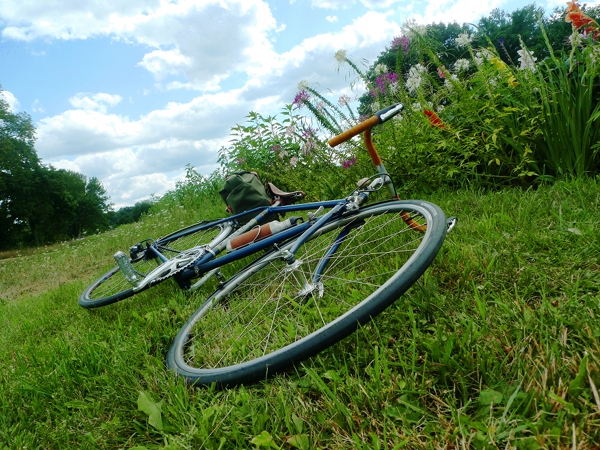
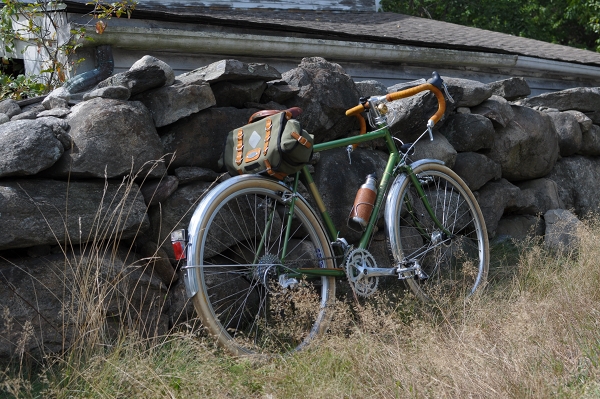
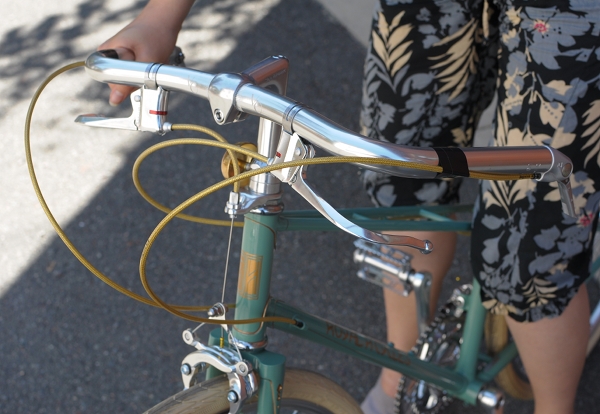
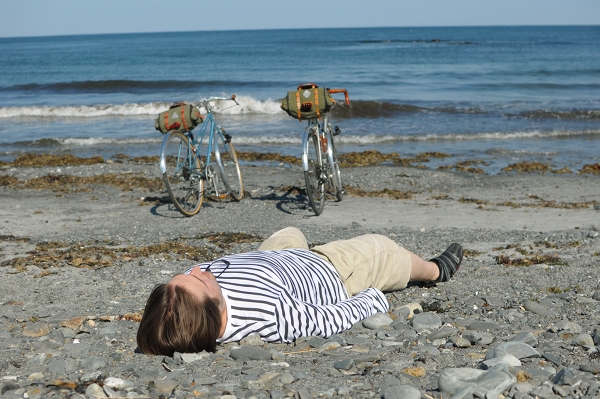
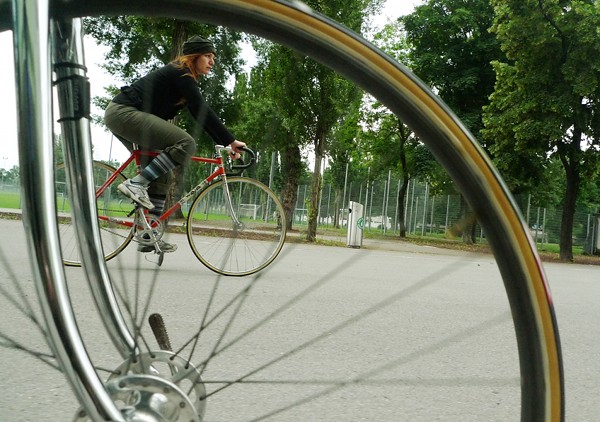
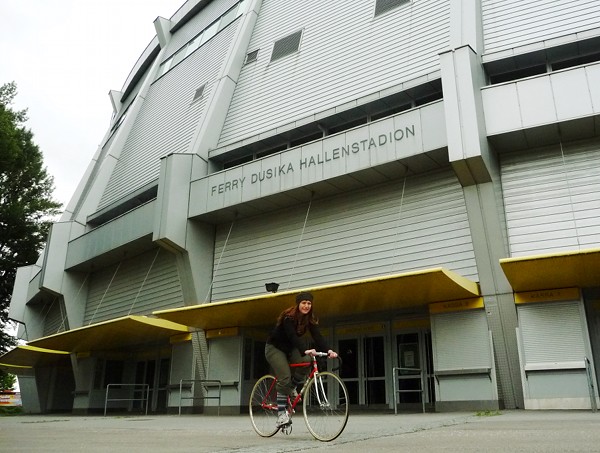
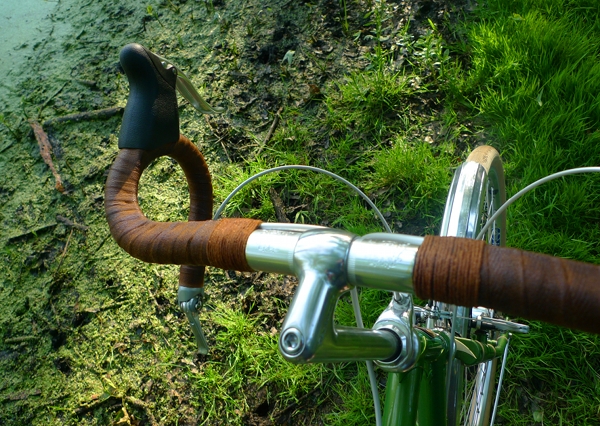
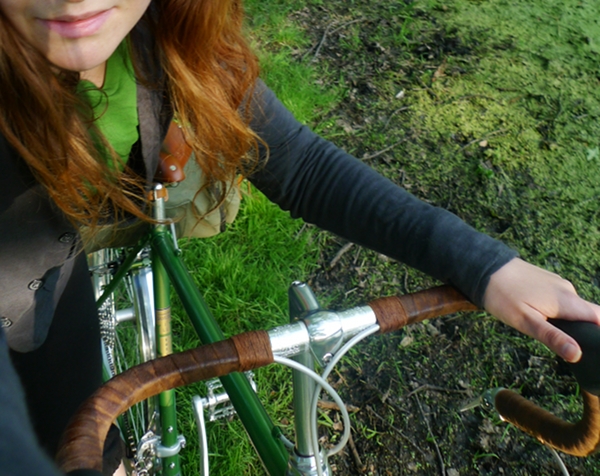
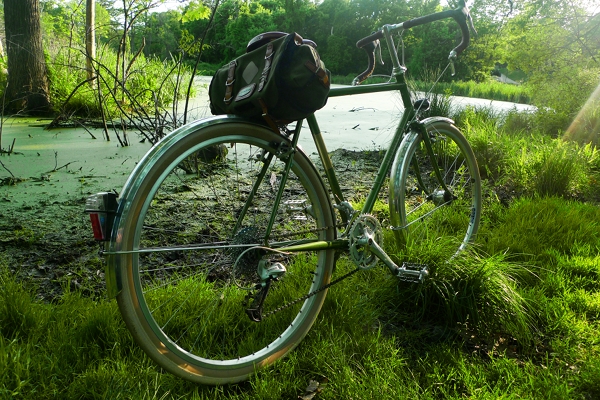
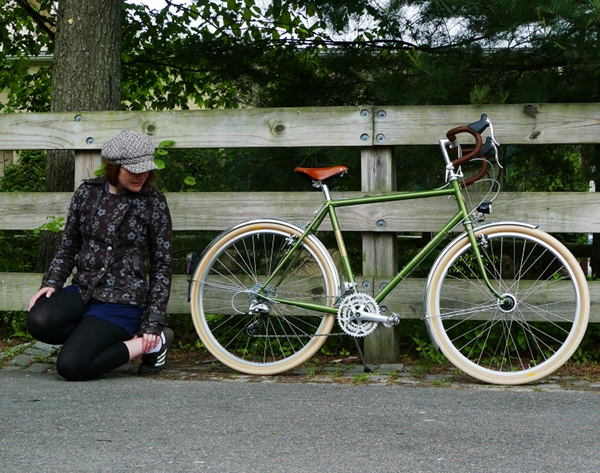
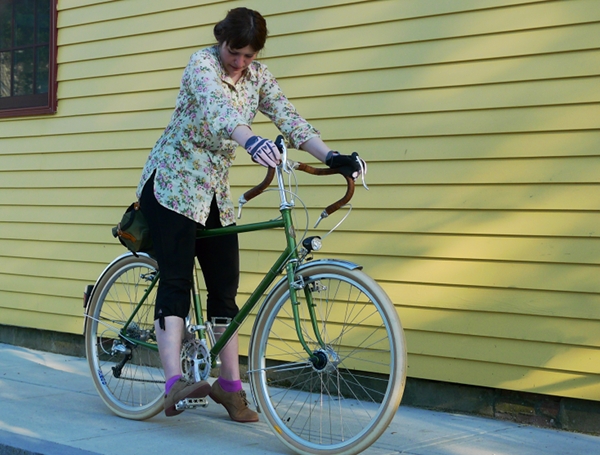
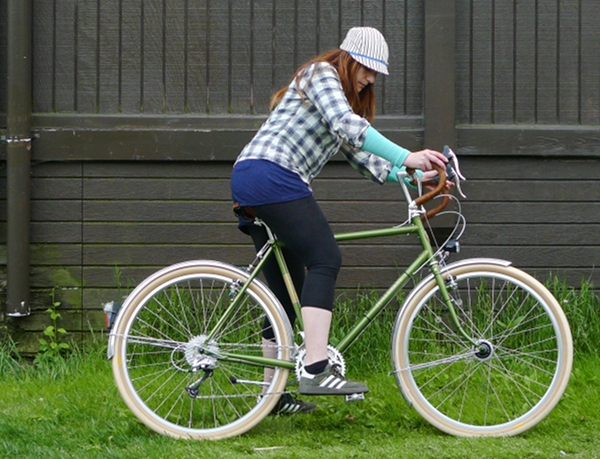
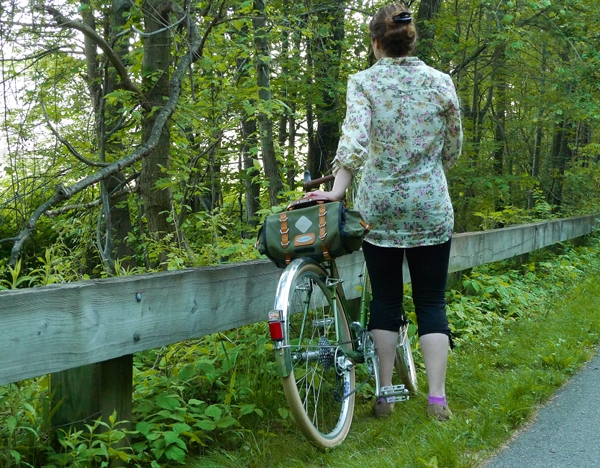
Almost every cyclist I'm friendly with loves to ride off road. And when I admit that I don't love it so much, the reaction is that of dismay. "What? But you like Rivendell! But you write about randonneuring! But you showed so much promise cycling on those scenic beach trails!" Well yes... And yet I prefer pavement.
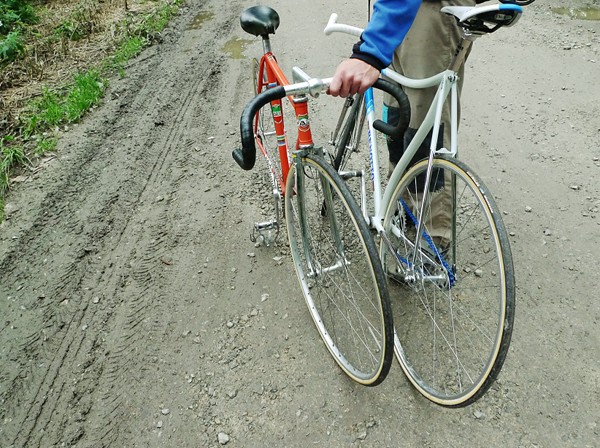
Of course, everyone has their own ideas of what "off road" is. For some, anything that's not paved qualifies. For others, only the really treacherous, narrow trails are worthy of the label. I tend to use the former definition, but often get corrected ("Oh, well that's not off road; that's just dirt roads!") - which of course only makes me feel more of a sissy. I can handle fire trails if they are packed dirt with occasional pebbles and roots, but I draw the line at loose gravel that slips out from under my tires, and trails fraught with large rocks and ditches that I need to navigate around at speed. It feels unsafe, and when I feel unsafe no amount of romantic photos or assurances that "it'll be fine!" from ride companions can induce me to go on. Maybe it'll be fine for them, but I need to think for myself and my brain screams "don't do it; you'll perish!"
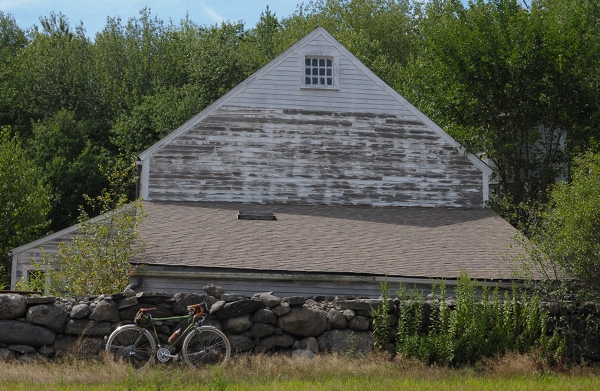
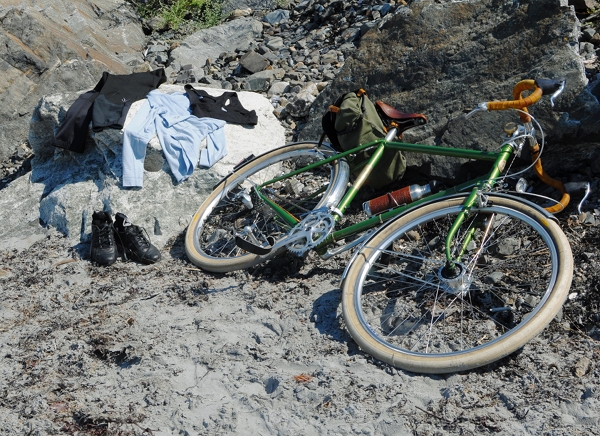
But maybe I exaggerate. When we were in Rockport last weekend, the Co-Habitant lured me onto some trails ("we'll walk our bikes to the water") and I ended up riding on 23mm tires over dirt and gravel. I've also found myself intentionally taking my bikes on unpaved parts of local trails lately, maybe to test the waters.
As August approaches, people are talking about the D2R2 (Deerfield Dirt-Road Randonnée) - a notoriously hilly, strenuous ride through Western Massachusetts and Vermont, held entirely on winding dirt roads. I considered trying to do the "easy" (40 mile) route, but based on the stories I hear even that might be out of my league. It would be good to read a ride report from someone whose comfort zone is similar to mine, to get an accurate idea of what it is really like.
But wait a minute, why would I even want to go to something like the D2R2 if I don't enjoy cycling off road? Maybe because I want to like it, or keep hoping that I'll like it if I just give it another chance. There is so much beauty that can't be seen from paved roads, and it's a shame to miss it. Now if only I could learn to climb and descend on loose gravel without panicking and getting off my bike immediately!
Showing posts with label trails. Show all posts
Friday, July 8, 2011
Wednesday, May 25, 2011
Misadventures on the MUP
Last evening was a low point for me... I yelled at someone on the Minuteman Trail. I was cycling home after a ride, and the trail was more or less empty. I am normally ever-vigilant for dogwalkers and baby carriages suddenly appearing out of nowhere, but this time I had let down my guard. I was going faster than I normally do on the trail, when from around the bend, three cyclists - traveling three abreast and taking up the entire width of the path - came barreling toward me at a similarly unadvisable speed. They were chatting and the cyclist who was headed for a direct collision with me had her face turned toward her friends instead of looking ahead of her. Time froze and I kept expecting that any instant now she'd see me and get out of my line of travel, but she didn't. Not wanting to end up in the bushes or in a pile of bikes and limbs, my mind went blank and I heard myself scream "MOVE!" in a tone of voice that was so menacing that I even scared myself.
It got their attention and a collision was avoided. But as I continued on my way, I heard a distinct "and a nice day to you, too!" from the direction of their receding forms. I felt a wave of shame wash over me. Sure, in a perfect world I would have yelled "excuse me" or "watch out" instead. But I yelled the first thing that popped into my head, and if I didn't we could have both been in the hospital right now.
Multi Use Pathways can be difficult for cyclists precisely because of situations like this. The trails are narrow and those who travel along them do not always behave predictably. Joggers wearing sound-proof earphones, rollerbladers veering from side to side, dogwalkers brandishing those terrifying invisible leashes stretched across the path, unsupervised children making spontaneous U-turns on their tricycles... It's a jungle out there. If I could easily do so, I would avoid MUPs entirely, but the alternative route out of town is 10 miles on a very busy road. So I try to be cautious, stick to a moderate pace and hope for the best. How do you deal with MUPs?
It got their attention and a collision was avoided. But as I continued on my way, I heard a distinct "and a nice day to you, too!" from the direction of their receding forms. I felt a wave of shame wash over me. Sure, in a perfect world I would have yelled "excuse me" or "watch out" instead. But I yelled the first thing that popped into my head, and if I didn't we could have both been in the hospital right now.
Multi Use Pathways can be difficult for cyclists precisely because of situations like this. The trails are narrow and those who travel along them do not always behave predictably. Joggers wearing sound-proof earphones, rollerbladers veering from side to side, dogwalkers brandishing those terrifying invisible leashes stretched across the path, unsupervised children making spontaneous U-turns on their tricycles... It's a jungle out there. If I could easily do so, I would avoid MUPs entirely, but the alternative route out of town is 10 miles on a very busy road. So I try to be cautious, stick to a moderate pace and hope for the best. How do you deal with MUPs?
Labels:
trails
Thursday, March 3, 2011
You Take What You Can Get!
Today was the first time in two months that I went on what can even remotely be described as a "recreational" ride. Having finished my errands, I continued onto the Charles River trail for a half hour - then turned around and rode back. The wind was brutal and the temperature around 30°, but the trail was finally free of snow and I couldn't resist it despite my continually running nose.
It felt weird to cycle "for no reason" after not having done it for so long! I kept thinking "wait, where am I going again?" before remembering that I wasn't headed anywhere in particular. But I'm sure I'll get used to it soon.
The Charles River trail now has less snow on it than the roads do - which is odd, because I didn't think they'd even plowed it all winter. Maybe it's warmer next to the river. As for the roads, the snow has mostly melted - but hardened snowbanks still pop up when you least expect them, making transportation cycling like an obstacle course that requires constant merging in and out of traffic. I keep looking out the window and hoping that finally, today cycling will be normal again. But it isn't quite there yet. You take what you can get.
Driver (good-naturedly): You trying to race me, hon? I'm pretty sure I'll win!
Me: What?... Oh. No, I'm trying to make sure that you see me and we don't collide when you turn right. If I'm further back you might not see me.
Driver: Huh? (thinks about it for a moment) Oooooh. Huh! Okay, that makes sense. And I've been wondering why you guys do that.For me, these kinds of interactions confirm what I intuitively suspect: Some of the safety maneuvers that cyclists take for granted as being logical and inherently understood by both parties involved, in fact often aren't. So here was this motorist, apparently wondering for God-knows-how-long why the heck all these cyclists need to make it a point of stopping slightly in front of him at intersections, and the reason simply never occurred to him until I explained it. And no, I don't think he was teasing me by pretending not to understand. Still, at least he was friendly and from now on he'll know. You take what you can get!
Labels:
Gazelle,
trails,
urban cycling,
winter cycling
Tuesday, September 14, 2010
Happy Trails! Tips for Long Rides
Though not all will agree with this, I believe that in order to honestly say that you are able to cycle a given distance, it has to mean that you are able to do it successfully. In other words, if you managed to complete a long ride, but could not walk the next day as a result, that does not count as "success"!
I consider my first half-century (50 mile) ride to have happened this summer - despite having once cycled that distance in Austria some time ago. That earlier trip was a disaster, and I wish somebody had warned me against it. Emboldened by having gone on a handful of short rides, one day I just kept going and going - and didn't stop despite feeling discomfort and pain. Riding a rental bike with a plush vinyl saddle and sub-optimal geometry, I pushed myself well past my limits, ignoring my body's warning signs. And after the ride was over, I could not cycle for over two weeks.
That incident served as a painful lesson: Being able to handle long rides was not about exceeding my abilities. It was about staying within my abilities - while working to gradually expand them. When I finally did my first "real" 50 mile ride this summer, I was ready for it and it felt fantastic. Only then did I feel that I could truly say "Now I can cycle a half century".
Having received emails asking for advice on taking long rides, I offer some tips based on personal experience. Think of these as food for thought!
1. Build up to it. Even if you think you can do it, don't start with a long ride. Start with short rides and gradually increase the distance. Ideally, a ride should still leave you able to cycle the next day.
2. Make sure your bicycle is comfortable. The only way to do this is to get to know your bicycle, which, once again, can only happen over time and over gradually increased distances. The way a bicycle feels on short rides is not an indicator of how it will feel on a long ride. It also takes time to break in a saddle and to "dial in" your optimal sitting position on a new bicycle.
3. Make informed and practical clothing choices. The very same pants that feel great on a 10 mile ride, can make your crotch bleed by mile 50 - as the seams begin to chafe against the delicate skin in that part of the body. By increasing distance gradually, you will be able to spot problematic tendencies before they turn into actual problems and cause damage.
4. Consider terrain. A hilly ride is far more difficult than the same distance covered on flat terrain. You may be perfectly capable of completing a 50 mile ride in Kansas, yet find it impossible in Vermont.
5. Shift gears. The longer and hillier the ride, the more you should be switching gears. Make it a point to switch to a lower gear when going uphill, even if it feels like you do not "need" to. Otherwise, you will waste your energy on tackling hills and will not have enough left to endure the ride. As a rule of thumb, it is good to aim for pedaling at the same rate throughout your ride. If you find your legs moving slower, because it is difficult to turn the pedals, that is a sign that you need to switch to a lower gear.
6. Expect to make adjustments to your bike, and possibly replacements. If something does not work for you, admit it and do something about it. This may include replacing components such as your saddle, handlebars, grips, gear shifters, etc. - or even your bicycle itself. Sometimes we read great reviews of things, and yet these things turn out not to be right for us. Get something that works for you.
7. Eat and drink. Cycling can suppress your appetite and trick you into thinking that you are not hungry... until you crash and find yourself completely unable to continue. This weird phenomenon can really sneak up on you. If you are going on a long ride, make it a point to snack when you take water breaks. Some people like energy bars and energy drinks, while others believe them to be unhealthy. I prefer trail mix or chocolate to energy bars. And adding some lemon juice and (a pinch of) salt to your water bottle makes for an effective, all-natural electrolyte replacement drink.
8. Most importantly, listen to your body and go at your own pace. Have realistic expectations and be patient. So you envisioned yourself crossing the Alps this summer, yet you can't manage more than 20 miles on your local rail-trail? So what! Enjoy those 20 miles and keep doing them over and over. One day you will surprise yourself.
Autumn is the best season of the year for cycling. Happy trails!
Labels:
comfort,
roadcycling,
technique,
trails
Friday, July 2, 2010
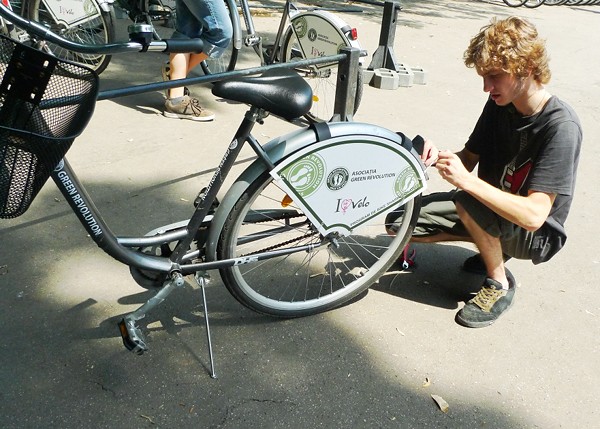
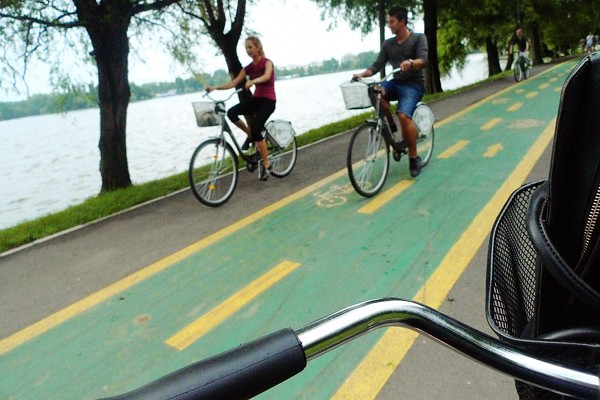
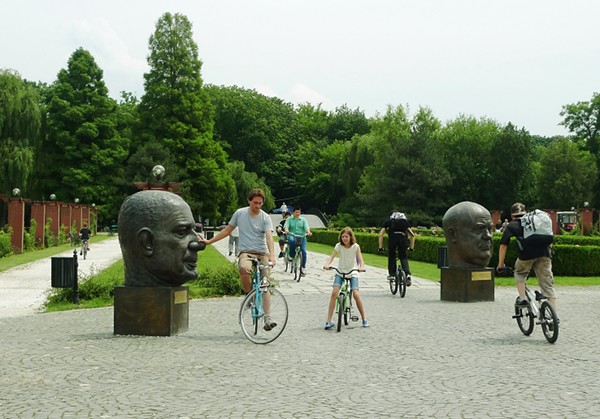
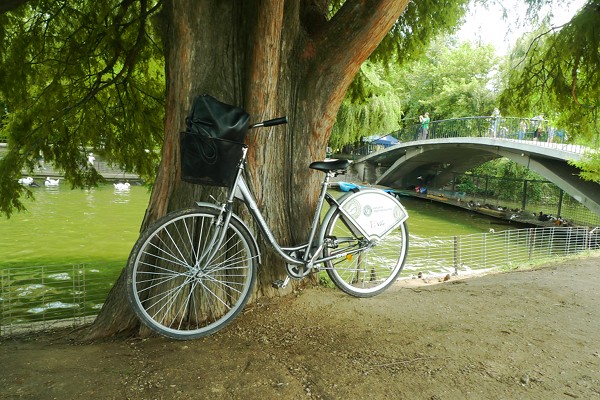
Bicycling in Bucharest: Here's How!
Wednesday, June 23, 2010
Slightly Off Track...
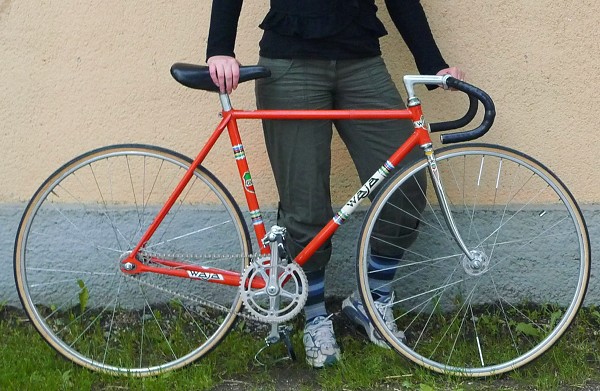
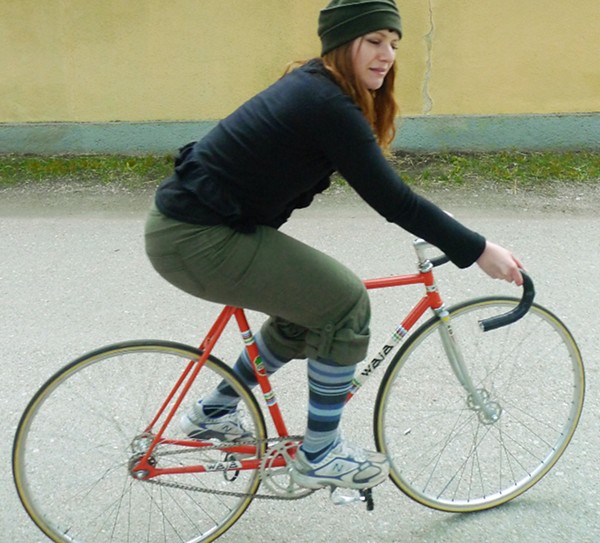
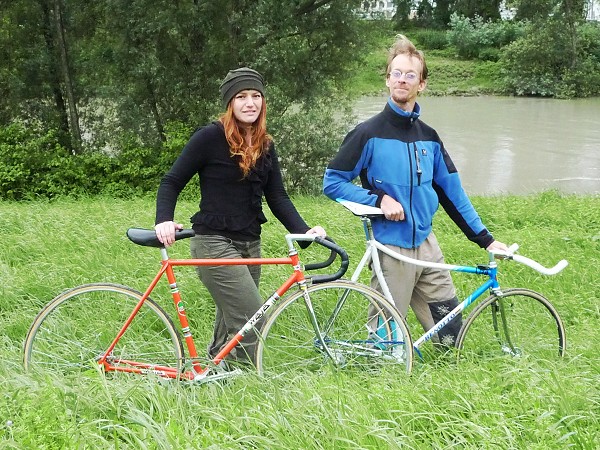
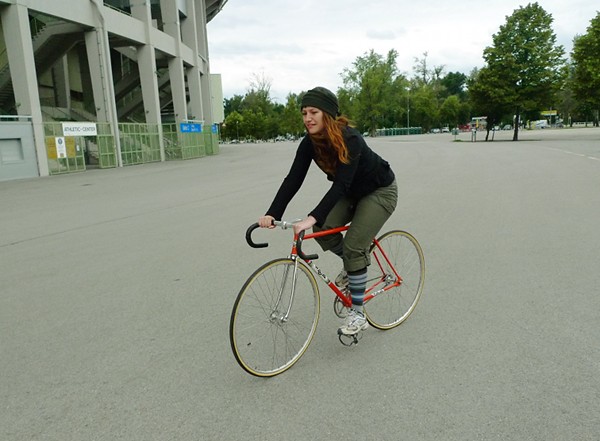
. The bike felt completely "normal" to ride. I expected to have trouble getting used to the inability to coast, but it did not need getting used to. It was not in any way difficult or strange, just felt natural.
. I do not yet understand the mechanics of this, but the fixed gear did make me feel far more in control than did any other bike I have ridden. I was able to go through tighter spaces and trickier corners without panicking. To be honest, I have always been somewhat apprehensive of coasting, because it makes me feel as if the bike can be reeling out of control at any moment. By contrast, the fixed gear feels safe and predictable.
. The stopping process is similar to a coaster brake: just pull backwards with your legs. The bike will keep going for a few revolutions, slowing down more and more with each until it comes to a stop.
. The only aspect of the bike that began to bother me after a while, were the handlebars - the track-style drop bars don't have sufficient "shoulders" for me to place my hands the way I like.
Labels:
bike friends,
fixed gear,
roadcycling,
technique,
trails,
Vienna,
vintage
Tuesday, May 25, 2010
Drop Bars: What Are They For?
After initially having set the handlebars on my Sam Hillborne quite high so that I could get used to them, I have now lowered them to a more typical position. Despite having done this, I think that there was nothing objectively wrong with my initial set-up. I received lots of comments and advice in my previous Hillborne posts, and one view expressed was that if I have to raise the bars so high, then perhaps I should not be riding with drop bars. This is an idea I very much disagree with, and here is why.
What is the purpose of drop handlebars? Many believe it is "to go fast" - that is, to achieve an aggressively forward-leaning position that would allow for maximum speed. And for that purpose, it would indeed make sense that the handlebars ought to be placed as low as possible.
However, while this is one of the things drop bars can be used for, it is by no means their only function or their mandated use. An equally important feature of drop handlebars is the unparalleled variety of ergonomic hand positions they offer - which is crucial for long rides. When cycling long distance, it is not only uncomfortable, but dangerous to use handlebars with limited gripping areas that allow for only one hand position. And by "dangerous" I mean that you can cause nerve damage to your hands. Drop bars, on the other hand, offer a continuous gripping surface with 5 distinct hand positions to switch between, greatly reducing the chances of this happening.
As I have mentioned before, I already have pre-existing nerve damage in my hands, so I feel hand "discomfort" (electric-current-like sensations running through my wrists and fingers) a lot sooner than those with healthy hands. This makes me an especially good candidate for drop bars when I go on long rides.
So what do ergonomic hand positions, nerve damage and touring have to do with speed or aggressive cycling? Absolutely nothing, and that is precisely my point. I have no interest in breaking speed records. All I want, is to cycle long distances without my hands ending up in bandages again. Drop bars are perfect for that, and whether they are placed high or low is completely irrelevant - as long as I am comfortable reaching all the available hand positions. Drop bars mounted high are better for touring than no drop bars at all. Sheldon Brown and Grant Petersen agree.
The perception that drop bars must be mounted as low as possible is an aesthetic preference rooted in racing culture and informed by the male anatomy (as males have longer torsos than females). But it's time to break that connection. Drop bars are fantastic for touring and exploring, and they can make your ride extremely enjoyable if used in a way that is right for you.
However, while this is one of the things drop bars can be used for, it is by no means their only function or their mandated use. An equally important feature of drop handlebars is the unparalleled variety of ergonomic hand positions they offer - which is crucial for long rides. When cycling long distance, it is not only uncomfortable, but dangerous to use handlebars with limited gripping areas that allow for only one hand position. And by "dangerous" I mean that you can cause nerve damage to your hands. Drop bars, on the other hand, offer a continuous gripping surface with 5 distinct hand positions to switch between, greatly reducing the chances of this happening.
So what do ergonomic hand positions, nerve damage and touring have to do with speed or aggressive cycling? Absolutely nothing, and that is precisely my point. I have no interest in breaking speed records. All I want, is to cycle long distances without my hands ending up in bandages again. Drop bars are perfect for that, and whether they are placed high or low is completely irrelevant - as long as I am comfortable reaching all the available hand positions. Drop bars mounted high are better for touring than no drop bars at all. Sheldon Brown and Grant Petersen agree.
Labels:
drop bars,
handlebars,
Rivendell,
roadcycling,
technique,
trails
Thursday, May 20, 2010
Drop Bar Diaries
Labels:
comfort,
countryside,
drop bars,
handlebars,
Rivendell,
roadcycling,
technique,
trails
Subscribe to:
Posts (Atom)