Showing posts with label travel. Show all posts

Tuesday, July 12, 2011

Ride to McGehee Catfish Restaurant Part 1


It was Saturday 8-29-2009 as I backed out my garage in Bedford Texas and was on my way with a sense of adventure gleaming n my eye. I had my IPod Nano playing 615 songs randomly through my Ink’d earphones. I glanced at the Yamaha V-Stars’ trip odometer and I only had 34 miles on this tank. No need to stop for gas before leaving, I thought to myself. The ambient temperature thermometer mounted on my handlebars read 80 degrees Fahrenheit and felt nice and cool as I rode away. I was leaving on my motorcycle ride to Marietta Oklahoma and specifically to McGehee Catfish Restaurant for lunch.

On my head I was wearing a cotton dew rag under my HJC Helmet, and my Oakley sunglasses. I had on a pair of blue jeans, a full sleeve cotton shirt, (with the sleeves pushed up over my elbows), my black leather FMC vest, and my Bates boots. I decided to use the crumby FieldSheer gloves; I might as well get as much use out of them as I can, before they completely fall apart. This trip I also remembered to coat all exposed surface areas with 45 SPF sun-screen, so as not to become a sacrifice to the sun gods this trip. For the record I should have re-applied before riding home, my face and nose did get some red.

For personal protection I had my Springfield XD .40 Subcompact in a C-TAC holster inside my right waistband, my Kel-Tec P3AT .380 in my left vest inside upper pocket, and my Kershaw Leek pocket knife in my left front pocket. Too bad I didn’t have room for my Smith and Wesson Boot Knife in these Bates boots, oh well. I had my phone, a Palm Treo, in my right vest pocket and along with a pair of compact reading glasses stashed away with my P3AT it allowed me to post updates of my ride on Twitter. In a pinch I could also throw it at an attacker, or just throw it like I’ve wanted to do on occasion. I wondered; does this vest make me look fat? I probably looked like a cross between one of the characters in the movie Wild Hogs and one of the personalities from the TV show Sons of Anarchy.

I hopped on 121 Southbound, hung a right onto 183 West continued onto 820 West before turning north on I35 W. Before long I was passing Texas Motor Speedway on the left and then the University of North Texas on the right. I was in Denton. I decided to stop and get a drink and refuel Mistress. I topped off the tank with unleaded, downed a Red Bull, texted my wife and was off heading north on I35 again.

I was making good time traveling at ~~ mph. I did manage to keep it under triple digits, barely. There were a lot of other motorcyclists out going the opposite direction and I tried to wave or acknowledge them all. I was passed by someone with Oklahoma plates in a hurry to get home, so I tucked right in behind them. You will be pleased to know that I did see one Texas State Trooper en-rout to Oklahoma. Fortunately, everyone had slowed down with the tell tale brake lights warning everyone. He was parked off the right shoulder down in a ditch or culvert and there was an 18 wheeler between us anyway. Before I knew it I was on the bridge going over the Red River and passing a large Welcome to Oklahoma sign on my right. Casino anyone?

It wasn’t much longer and I had arrived at exit 32 and was in Marietta. It is about 100 miles from my house to Marietta and the ride took around an hour and a half. I pulled into the McDonalds, parked and went in to get something to drink. I sat down and enjoyed an iced coffee with caramel while I texted my wife, got to check in with the boss, and checked my phones Google Maps GPS and indeed I was exactly where I thought I was. After that it was time to take a short tour through town.

I drove through downtown Marietta and tried not to blink so as not to miss it. Then I came back around coming down a side street and saw a museum. I had time to kill so I stopped in. It turned out it was the Love County Historical Society Pioneer Museum. They had an interesting mix of antiques, historical records and photos all dealing with Marietta and Love County. The volunteer on duty went out of his way to tell me some of the history of Marietta, including some interesting stories and strange characters as well as pointed out items of historical interest. After some time of browsing, visiting, and emailing my wife photos of some of the antique quilts it was time to leave.

I had asked directions to McGehee Catfish Restaurant to make sure I was headed in the right direction and decided to take a ride out there to scout it out even though they were not open for lunch yet. So I continued heading west and turned south on US77 which parallels I35 and then east on E2150 / McGehee RD which dead ends at the restaurant. Most of the Google Maps are incorrect, unless you look for the one that says Airport: McGehee Catfish Restaurant; the restaurant is at the dead end, not in the city of Marietta itself.

The restaurant scouted out I rode back to the town and walked around several stores to kill time until they opened for lunch at 1:00pm. After drinking a Monster energy drink at the Carl Jr.’s, texting my wife again, and browsing some of the local stores, I filled Mistress up at the Valero and headed back to McGehee’s noting that it had gotten a lot warmer, hot in fact, outside. A glance at the temperature reading showed it was now in the mid 90’s.


Ride on,
Torch

Tuesday, July 5, 2011

Bikes, Trains, Sailboats

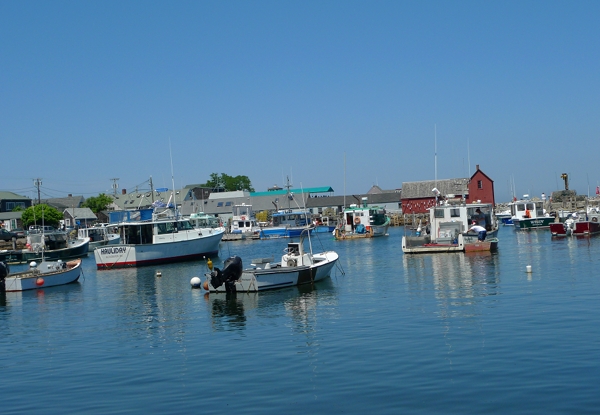
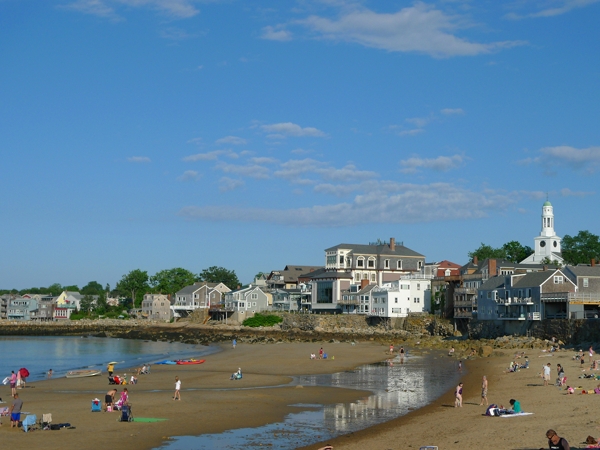
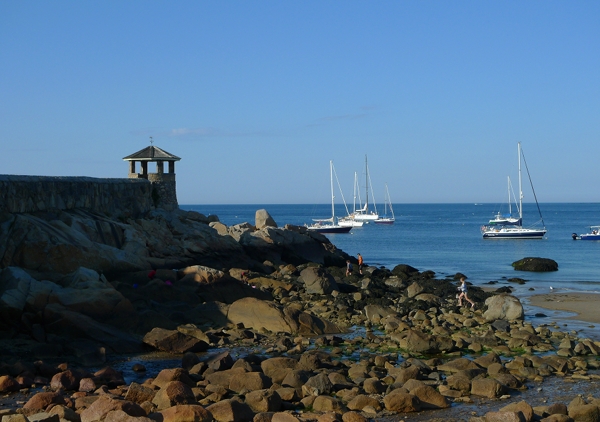
T-Warf, Rockport MA
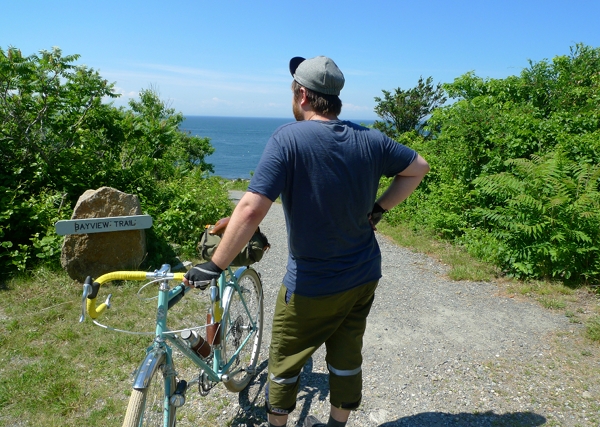
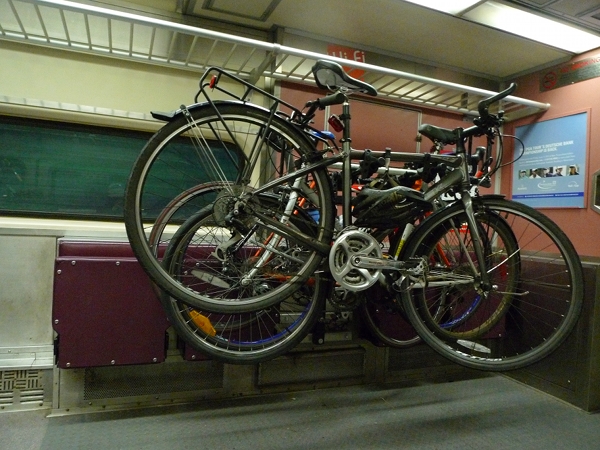
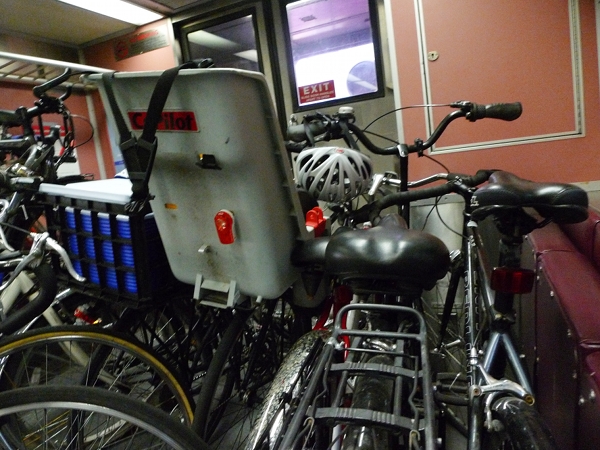
After months of deliberation and procrastination, we've finally done it: Traveled by train with our bikes. For a while now we have wanted to cycle around Cape Ann, which is a beautiful area about 40 miles North of Boston - accessible by the MBTA Commuter Rail via the Rockport line. A number of people we know have taken this trip with their bikes, so it seemed doable. Also, I was delighted to spot the following notice on the MBTA website: "Commuter Rail re-introduces The Bike Coach on the Rockport line for the summer season." Bike coach! No other information was provided, so I did some research. Turns out they have commuter trains with special cars dedicated entirely to bikes - with bike racks as far as the eye can see, like this. But I could not find any information regarding its schedule, and it seemed that only some weekend trains were Bike Coach trains. A call to the MBTA was fruitless, so we decided to just show up and hope for the best.

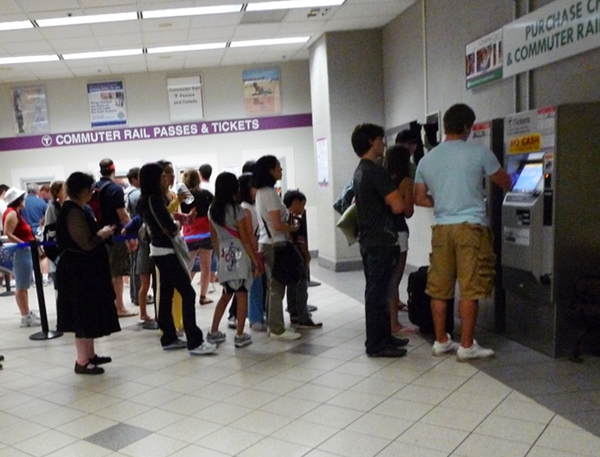
The commuter train to Cape Ann leaves from North Station, a 3.25 mile bike ride from our house through some of the busiest parts of Boston. I don't like cycling through the city on a roadbike, but on a Saturday morning the traffic wasn't bad. We arrived early, which was good as there was a line at the ticket machines. There were plenty of other people with bicycles. When our train arrived, the conductor came out and announced that all those with bikes must proceed to the first car of the train. Only those with bikes were allowed in that car. Only those without bikes were allowed in the other cars. The segregation gave us hope that this was the fabled Bike Coach, and we happily headed for the front car along with the procession of other cyclists. 

What happened next was rather stunning. The car we were ushered into had no accommodations for bikes what so ever - just a small corner of space at one end where a couple of handicapped seats had been removed. This was definitely not the Bike Coach. Nonetheless, everybody proceeded to drag their bikes on the train - more and more of them, until not only this corner, but the entire aisle was filled with bikes. When even that space ran out, new passengers began to pile their bikes on top of other bikes. Loud clunking noises filled the train as tubes smashed against derailleurs. 

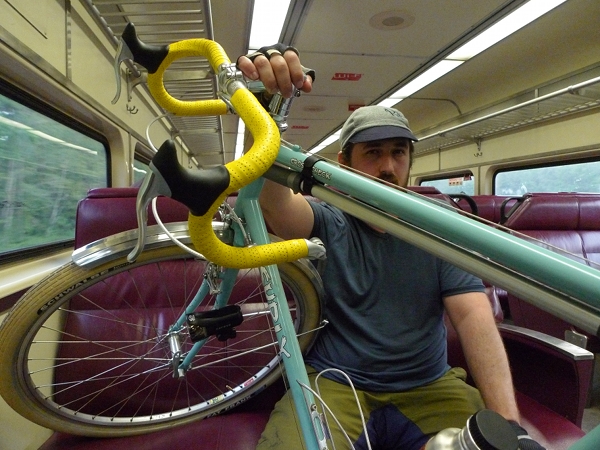
Not wanting our bikes damaged in the velo moshpit that ensued, we found a seat near the exit and sort of held our bikes on our laps the entire time. As you might imagine, it was uncomfortable to sit that way for an hour. But the alternative was to accept that a dozen 50lb mountain bikes would be thrown on top of our bicycles - which was not a viable option. So we tried to have a sense of humour about the whole thing and looked forward to reaching our destination while seriously discussing the possibility of Bromptons in the future. 

But no sooner had we reached Rockport than the train trauma was forgotten, as we were greeted with perfect weather and glorious coastal views. 

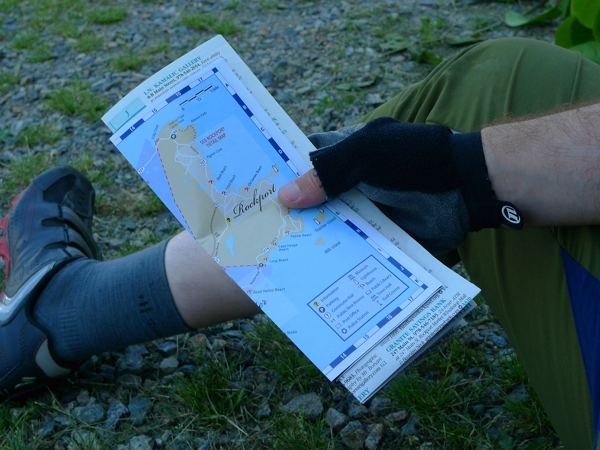
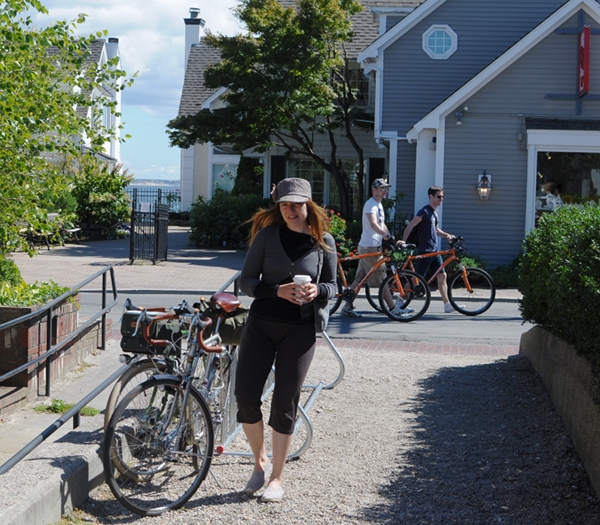
The Cape Ann peninsula consists of Rockport, Annisquam Village and Gloucester - each of them with beautiful scenery. Severed from the mainland by the winding Annisquam River, water views are everywhere. This was our first time in the area and we decided to do an exploratory loop along the coastline instead of a long-distance trip. The Cape Ann loop is about 20 miles, with mild but constant rolling hills, alternating between open water views and tree lined country roads. Especially considering the 4th of July weekend, the area was not crowded. Drivers were courteous everywhere except for the traffic circle in Gloucester, but even that was not too bad. Roads were good on the eastern side of the cape, but terrible on the western side. Navigation was intuitive - just follow the coastline! 

My Rivendell is in the midst of a small (but exciting) make-over, so I took the loaner Seven on this trip. Overall it was pretty good, though a burlier bike might have been a better choice on the pothole-ridden roads. We also ventured off road a bit, which was "interesting" on 23mm racing tires!

Cape Ann is even quieter and less commercially developed than we expected, a pleasant surprise. Lots of parks, meadows and nature reserves. Not too many parking lots. And "motel sprawl" is virtually non-existant - at least compared to places like Cape Cod, the NH Seacoast, and much of coastal Maine. 

Also, there are apparently sailboat races happening in Rockport - wonderful!

All in all, we loved the area and are now considering staying there for longer, instead of venturing further from home on vacation later this summer. After all - just load up our bikes on the commuter rail, it's so easy! Of course we'd forgotten about our train experience earlier that day. Or at least, we thought, there would surely not be as many bikes on the return trip. Or maybe we would finally get the mythical Bike Coach?

Nope, no such luck. On the return trip, passengers were once again segregated into those with bikes and those without, and this time the "bike car" had a car rack attached in the handicapped seating area. It accommodated 4-5 bikes, tightly squeezed, and was filled as soon as the train began to board.

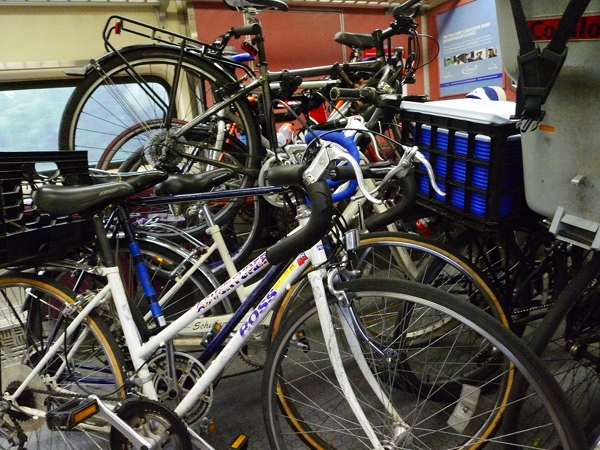
Minutes later, that pathetic little bike rack was surrounded by dozens of other bikes, stacked and thrown against one another haphazardly. 

Exits were blocked, aisles were blocked - no one seemed to care. When passengers with bikes needed to get on or off, they would simply throw the other bikes out of the way and the whole thing was like one huge pile of scrap metal. So we held our bikes on our laps again - hugging them ever closer to our bodies as other passengers kept trying to pile their bikes on top of ours (yes, even while we were holding our bikes on our laps!). It was a madhouse and probably violated all sorts of safety regulations. The MBTA clearly needs to have these alleged Bike Coach cars run with more frequency and on a predictable schedule. As we now understand it, the schedule is random and there is no way to time your trip to ensure that you will get a Bike Coach. Sounds improbable, but that's how it is!

Late in the evening, we rode home from the station along mostly empty city streets, recuperating from the train but also satiated from a day of exploring such a beautiful new place by bicycle. We only cycled 30 miles over all, and the point of the trip was mainly to hang out and get to know the area. Next time we will plan for a longer route. The North Shore is a great starting point for long distance touring: While there is no pleasant bicycle route North out of Boston, from Cape Ann we could just continue to cycle along the coast to Maine. Definitely something to consider, despite the less than ideal commuter rail experience.

What is it like to travel on a train with a bike where you live, and do you do it often?

Monday, May 2, 2011

Why Not Here? Pondering the Ingredients of a Cycling Town

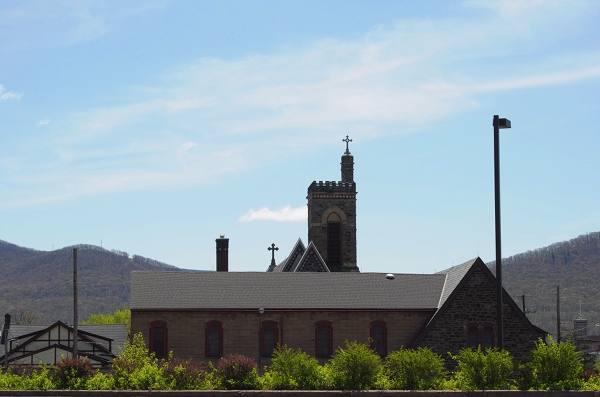
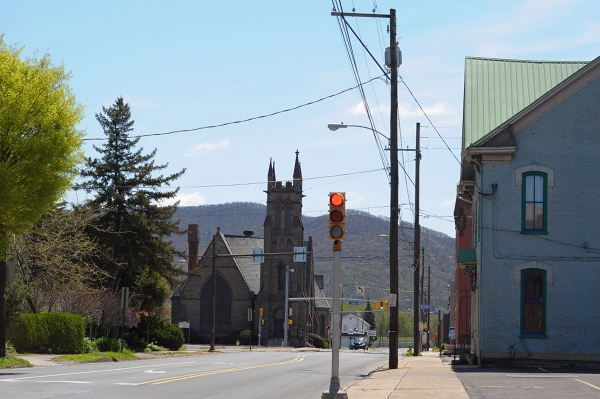
Having just returned from Central Pennsylvania, I am still trying to makes sense of my impressions. I was familiar with Lancaster County and the Poconos, but had never ventured west of these areas until now. While I'd imagined a wholesome and fertile land with dramatic mountain views, the landscape we encountered looked bare and depleted. We saw fairly few farm animals, and minimal vegetation. Many of the farms we passed seemed outright abandoned. Later we were told about the extraction of natural gasses that has become popular in the region, so perhaps this could account for it. It would also explain the enormous, brand-new-looking hotels that stood in sparsely populated areas, towering above the Methodist churches and the dilapidated barns.

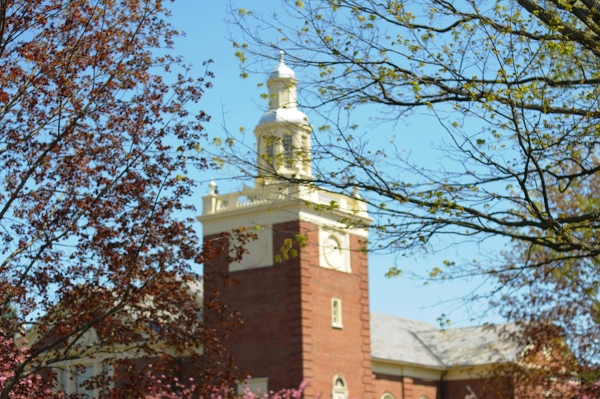
In the midst of all of this, we came upon a lively small town - a town with historical buildings, tree-lined streets, an active downtown area, and a picturesque Liberal Arts college with manicured grounds. Surrounded by mountains and farmlands, the town forms a microcosm of "culture" - offering the only sidewalks, storefronts, restaurants and cinemas for miles around. Exploring it with curiosity, it occurred to me that this was the sort of place a friend of mine refers to as "cycling-prone" - his theory being that "cycling culture" tends to develop in places that are structurally prepared for it, and where the population could benefit from it.

Among examples of structural preparedness he includes things like one-way streets with low speed limits. Check: This town is big on one-way streets, with speed limits under 30mph. Frequent street lights and well-designed intersections are also crucial, and this town has them. Large intersections involve dedicated left turn lights, which is helpful for cyclists as well.

There is also the concept of "manageable scale:" The argument is that cycling tends to be popular in small cities or towns with self-contained economies, because most commutes will be fairly short - yet still not quite convenient to make on foot. This town fits the bill perfectly: The population is around 30,000 and a great portion of the residents seem to live, work, and seek entertainment within the town's confines, simply because there is not much beyond it. And being in a valley, the terrain is mostly flat - making even the simplest single speed bicycle sufficient for commuting.

And then, there is the college - a small undergraduate institution with 2,000 full-time students who live on or close to campus year-round. College towns are supposed to be especially prone to embracing cycling, because it makes for a quick and inexpensive means of local transportation. College students also tend to be concerned about the environment, and some are drawn to cycling for those reasons. A quick glance at the college website shows that environmental issues are indeed prominent: Projects to reduce carbon footprints are announced, the benefits of a new recycling program are touted.

In short, all the ingredients are there for this to be a cycling town... and yet, it is not. I saw not a single transportation cyclist on the streets, and not a single bicycle locked up near the college campus or elsewhere in town. To me, this is interesting. Why no cycling here, but yes cycling in places like Hanover, NH and Ithaca, NY - where the towns and the surrounding landscapes are demographically and geographically similar? Sure, Central Pennsylvania can be called "old fashioned," and one could argue that cycling is a contemporary trend that will take a long time to reach here. But the same can be said of Northern NH: You won't see any locals outside of Hanover cycling, but within the town itself it is popular. Also, while I have not been to State College, PA - which is not far away - my understanding is that some students do cycle there for transportation as well.

I suppose my point is not so much to analyse this particular town, as to point out that the popularity of cycling cannot be explained with geography and demographics alone. Even with all the ingredients present, there is no guarantee that they will be utilised and combined into a cycling cocktail, if you will. I can only conclude that, in addition to the ingredients, there needs to be a catalyst to make it happen. To shake things up and get things started. And that catalyst could be anything - from an incoming class of trendy freshmen bringing their fixies to campus, to the college instituting a semester-based bicycle rental program, to the town suddenly deciding to paint bike lanes. I wonder whether that could happen in the coming years in this central Pennsylvania town and others like it.

Monday, April 25, 2011

On Living Locally and Seeking Continuity

I was having a political discussion with a friend over email, and in response to something I wrote he replied: "You know, it's really starting to show that you haven't been out of the US in almost a year." Ouch... But the "insult" aside, I realised he was correct: I haven't been out of the country since last July, which is unusual for me. Moreover, we have been without a car since December, making our travel radius limited to cycleable distances. Without explicitly being aware of it, I have transitioned from living "globally" to living "locally," and my friend's insinuation was that this has made me narrow-minded and provincial. Has it? I think not, but I also realise that I don't really care. My quality of life has improved as a result of the changes I've made since last year, and that's difficult to argue with.

We could go on forever debating the "moral" and "social responsibility" implications of living locally vs globally. On the one hand, those who lead lifestyles that rely on air travel are doing a great deal of damage to the environment. On the other hand, one could argue that some international jobs are "important" in their contribution to society, and the scale of this contribution outweighs the degree of environmental damage. But the trouble with these arguments, is that they inevitably lead us to a slippery slope. Who determines what's important? Who has the right to pass that judgment on others, and using what criteria? Are UN workers "good," but fashion reporters "evil"?  Is it "wrong to endanger the environment" by traveling to Shanghai just for fun, or is that outweighed by the positive effect of experiencing another culture, growing more tolerant and open-minded as a result? Impossible to say, without imposing our subjective sense of logic on others' sovereignty, which is not something I wish to do.

But the issue of living locally vs globally has personal, psychological implications as well, and these have been on my mind lately. I have an unusual personal history, and have basically never lived in any one place for more than several years at a time. As a result, my life has been fragmented and unstable, which I do not feel is ultimately good for me. When I remember things from my past, I sometimes get confused about the location of an event, and even about the language that was spoken. With my friends, relatives, experiences and memories scattered all over the world, it is difficult to maintain a sense of continuity and even a coherent sense of self. Forming healthy attachments to new people and places is challenging, and replacing the physical reality of personal interaction with virtual communications is isolating.

As we lose our sense of "continuous living," our notions of contact grow increasingly abstract - and not just contact with other people, but contact with our surroundings. I remember a post by Dottie at Let's Go Ride a Bike some time ago, where she describes the lifestyle of her family in the North Carolina suburbs as "traveling from pod to pod." The home is a pod. The workplace is another pod. The restaurant, also a pod. And because of the vast, highway-navigated distances between each, there is no clear sense of what happens in between; it is kind of a dead space, almost a virtual space. I found this imagery to be both frightening and relatable - a reflection of my own anxieties about what our lifestyles are doing to the way we connect with the physical world.

I thought that I might feel limited and stir-crazy once I stopped traveling abroad, and even more so once we began living without a car. Instead I am feeling as if some long-neglected human aspect of me is waking up. Living locally and all that it entails - seeing the same people, experiencing the change of seasons while staying put, and developing a feel for manageable distances - is giving me a sense of continuity that I have been lacking.

Monday, September 20, 2010

Mobile Home

It can be said that one reason people enjoy commuting or traveling in a car, is that the car functions as an extension of their home while they are away at work or on the road. They keep a myriad of personal belongings in the car - from food and drinks, to changes of clothing and footwear, to reading material and selections from their music collection. Those who have children or pets often have toys and other objects associated with them scattered in the back. And then of course there are the familiar smells: Whether good or bad, the interior of a car takes on a distinct scent associated with its owners' activities and lifestyle. In essence, the car really does attain aspects of the driver's home over time, and this undoubtedly contributes to the emotional attachment many feel toward their vehicles. The Co-Habitant's dayjob involves extremely long shifts (12 hours is typical), and his colleagues routinely nip out to the car during breaks to retrieve various items and drop other items off. To do so is comforting when away from home for so long. This is also why the Co-Habitant equipped his Pashley with both a saddlebag and handlebar bag, despite a relatively short commute: It was important to create a similar "homey" environment for his bicycle.

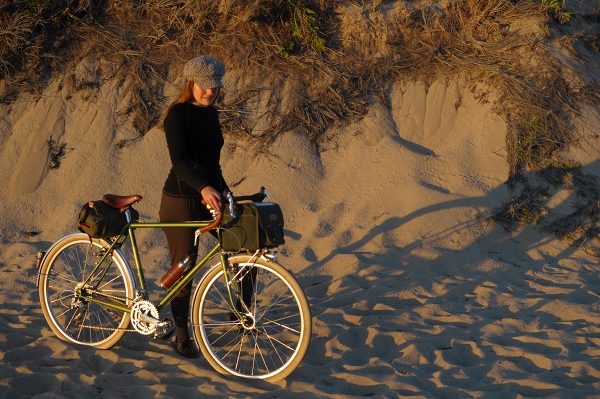
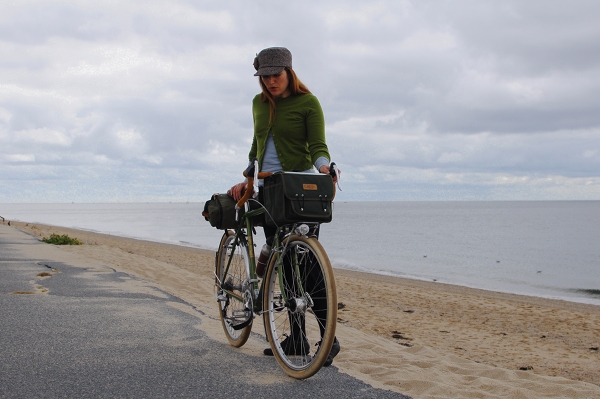
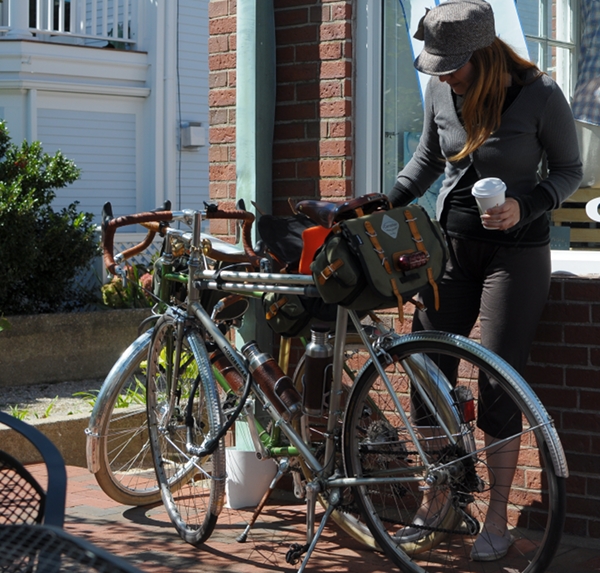
In my earlier post about handlebar bags, I mentioned the appeal of the idea that the bicycle can be turned into a mobile home - ready to go anywhere while still allowing the cyclist to feel as if their life is coming with them, rather than being abandoned. Now that I have installed a handlebar bag on my own bicycle and have found myself in a situation where turning said bicycle into a mobile home is necessary, I truly understand what this feeling is like. While on Cape Cod, we are typically away from home from morning till late evening - during which time we work, go on rides, and do various things in town. All of those activities require different items to be taken along, including clothing, equipment and food. At this time of the year, there are also significant fluctuations in temperature in the course of the day (mid 40s- upper 80s) which must be taken into consideration. To my delight, the combination of a roomy handlebar bag and saddlebag can accommodate all of these concerns.

Typical contents of my handlebar bag: sweater, down vest, 2 extra hats, waterproof jacket, costume for photo shoot, props for photo shoot, make-up, shawl to use in leu of beach blanket, swim suit, flip-flops, extra pair of socks, 2 books, notebook, pen case with 2 pens, bar of chocolate, gloves, sunscreen, deodorant, DZNuts, saddle cover, money and ID. Notice that the bag is not even full.

Typical contents of my saddle bag (now converted into a camera bag) are our photo equipment: This time, a digital SLR, a Medium Format film camera, 10 rolls of film, and, just for fun, a toy camera.  We have a second Medium Format film camera that could also fit instead of the toy one.

The Co-Habitant carries his own clothing, our tool kit and medical kit, and both of our laptops. He only has a single saddlebag on his roadbike, so the laptops he transports in a messenger-style bag on his person - which is the one glaring imperfection in our set-up. Next time we take a trip like this, he will have some sort of handlebar + saddlebag set-up as well, where the handlebar bag is smaller than mine, but the saddlebag is larger - the type that can fit laptops and will require a rear rack. I think that both the larger Rivendell and the Ostrich saddlebags will fit this purpose, but any other suggestions for future are welcome.

Of course, turning my otherwise light Rivendell into a "mobile home" has made it nearly as heavy as a typical Roadster - but the bike seems to handle no differently as a result. The longer I own this bicycle, the more I love it - which brings a new shade of meaning to "home is where the heart is".

Thursday, September 16, 2010

Car Free, Skirt Free and Exhausted!

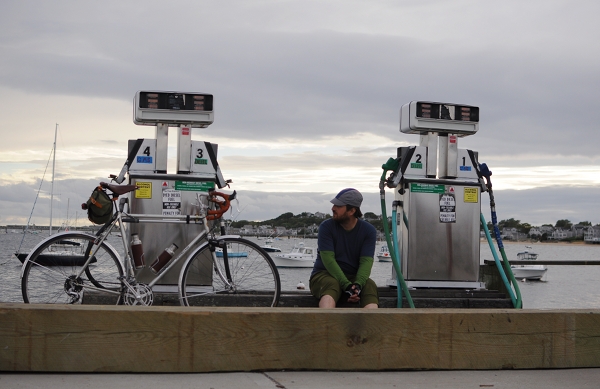
For the remainder of September, we are staying on Cape Cod - and this year's experience is both a joy and a challenge, since we are getting around exclusively on our bicycles.

We are staying on the edge of Provincetown, about 2 miles from the town center. Two scenic, but hilly miles. The town bordering Provincetown is Truro - which is not really a town at all, but a long stretch of dunes, salt water marshes and beach-front properties. The next closest thing to an actual town is Wellfleet - and that's 15 miles away. Fifteen very hilly miles.

Needless to say, I am pleased with the bicycle I ultimately chose to take to the Cape: "Graham Greene," my Rivendell Sam Hillborne. Though not optimal for cruising through the center of Provincetown itself, it is indispensable for pretty much any other kind of cycling we do here - from transportational cycling to any destination on the Outer Cape (as the tip of the Cape Cod peninsula is known), to the series of long rides we have planned in our free time. I remembered this area being hilly from the time we stayed here with our bikes last summer, but I convinced myself that I was exaggerating. But now it is clear that my memory had not been exaggerating at all: It is darn hilly here;  hilly with a capital "H"!

Although last summer we rode our bicycles on the Cape frequently, they were not our exclusive means of transportation: we simply weren't in good enough shape to handle it. However, this summer it is bikes only - and even now our physical abilities are being challenged.

Every morning begins with our cycling into Provincetown for breakfast, work, and various errands.

Our bicycle bags are packed with everything we might need for the day, including camera equipment (thanks to the Zimbale camera insert I recently received - and stuffed perversely into my Carradice saddlebag) and several changes of clothing to accommodate changing weather conditions and different activities.  After that, we go about our day, cycling from one place to another and covering at least 15-20 miles purely as back-and-forth transportation. 15-20 very hilly miles, in case I failed to mention that!

On several occasions, we have had the opportunity to take long rides: We have gone on two 30 mile rides and one 60 mile ride so far (more on that later!). The goal is to do a century (100 mile ride) during our stay here.

For me, the weirdest aspect of riding a roadbike exclusively, is my resulting skirt-free wardrobe. But for a few weeks, I can live with it. Ultimately, my stay here will serve as a test of how well I can manage in a rural, hilly, isolated environment... with only my bike to rely on. While for some, a remote oceanfront location is associated with "Vacation", for me it is associated with "Home" and I miss it terribly. I am finding it increasingly difficult to cope with living in the city, even an interesting one like Boston.  Something has to change - including my own endurance, if I am serious about living someplace like here and I want to continue cycling. I won't deny that I am utterly exhausted from the time I've spent here on my bike. But I am also excited by the mere fact that I have been able to do it so far. Wish me luck!

Amusingly, though there is no overhead light at our place, there is internet reception. Lovely Bicycle will continue as always, scribbled by candle light.

Sunday, August 29, 2010

Cycling and the Beach

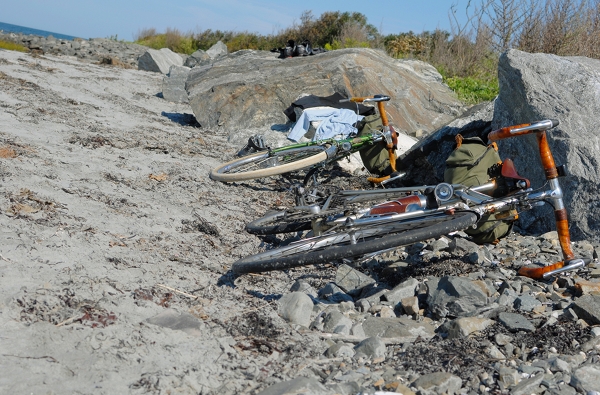
If you live in a beach town, it is easy to hop on a cruiser and pedal to the shore, have a swim, more or less dry off, and pedal home. But what about incorporating the beach into long, strenuous and hilly touring style-rides? This has been our dilemma when taking trips to Maine this summer. In the absence of folding bikes (and frankly, I don't think folding bikes would be appropriate for the terrain here), we strap our roadbikes to the car, and get around entirely by bike once we arrive to our "base" location. In rural Maine, everything is far away from everything else - at least by Boston standards - and it is normal for us to cycle 5-10 hilly miles from one destination to another, multiple times in a day. We often pass our favourite beach in the area, but swimming can seem like such a project when your bicycle bags are already stuffed with photo equipment and other things, and the beach has no changing rooms. 

Plus, when a 10 mile ride with plenty of uphill lies between the beach and the nearest town where you could freshen up, believe me that you don't want any sand to be stuck in your body's crevices, and neither do you want to pedal in a bathing suit. The Co-Habitant has tried wearing his swim trunks on the bike, and regretted it. 

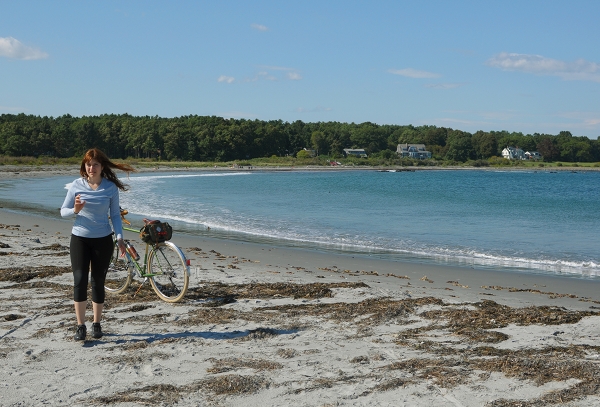
So here is my solution: I bring a bathing suit and a thin Pashmina or wrap instead of a towel. These take up almost no extra space in my saddle bag. Once at the beach, I remove my shoes and socks, wrap myself in the pashmina, and change into my bathing suit underneath it. If you don't have a pashmina or wrap, a long oversized t-shirt can work as a "changing tent" as well. After swimming, I "air dry" while either walking around or sitting on rocks (rather than sitting on sand); then I reverse the "changing tent" process. After this, the bathing suit can be wrung out, placed on a rock to dry off a bit, then placed in a plastic bag and packed away into the saddle bag together with the pashmina. After de-sanding my feet and putting my socks and shoes back on, I am ready to keep cycling. All this is a surprisingly low-hassle process. 

Of course, one thing to make sure of before you stop at a beach like this, is that your water bottles are full. Also, never try to prop up your bike on the sand using a kickstand; carefully lay it down instead (drivetrain side up). Even if it seems as if the bike is stable on the kickstand, the sand's consistency changes with the wind and the tide, and the bike can easily fall. Oh, and if you go swimming, leave your bike as far from the water as possible - the tide can come in faster than you think!

Swimming in the ocean and cycling are two of my favourite activities, and it feels wonderful to combine them. Interestingly, the ocean water seems to be a great complement to high-intensity cycling - relaxing the muscles and giving me extra energy to go on. Anybody else have this experience?  

Saturday, August 7, 2010

Atlas Rider is Heading to South America

 
Atlas Rider is Heading to South America

A fellow Blogger and Rider, Bill Dwyer from Atlas Rider, is preparing to head out on a trek by motorcycle through and around South America. Bill will be video-documenting his trip on YouTube. All the details can be found below in Bills official press release:


Contact: Bill Dwyer
Tel: 708-280-9115
Email: dwyer.bill@gmail.com
Website: http://www.atlasrider.com/


TRAVELING OFF THE GRID, ON YOUTUBE

A motorcycle journey through Latin America documented on YouTube

On August 15th Bill Dwyer sets off for an eight month trip that takes him from America to Argentina, spanning over 20 countries and 25,000 miles. Without a cellphone, and infrequent internet access he will no longer always be "connected" or "on the grid." He travels alone, but brings along a virtual audience for the ride through documenting his journey on YouTube.

As a software developer, Bill grew weary of his corporate job. He sold most of his belongings and traded his cubical for the open road. Food, gas and shelter will be his only concerns. No more timelines to follow or deadlines to meet, only serendipity creates the destiny of his road map.

Perceptions of Mexico and Latin American countries as a seething breeding ground of violence have been widespread. Bill believes that people and the world around us are not as dangerous as we sometimes are lead to believe. The success of his journey should prove to be a reminder that among a seemingly hostile world there is still some good out there.

Bill is an avid adventure motorcyclist and blogger for 3 years. He has built up an audience from all walks of life and continues to entertain, educate and inspire them to take the plunge and seek out adventures of their own.


View Larger Map

Here is the link where Bill made his blog announcement: http://www.atlasrider.com/?p=1234

###

If you would like more information about Bill Dwyer's journey you can visit http://www.atlasrider.com/, or to schedule an interview with him, he can be contacted at 708-280-9115 or by email at dwyer.bill@gmail.com.

So, go visit Atlas Rider and get signed up to follow along on his journey. Bill is on all the social medias so hook up with him and tell him Torch sent ya!

Ride on,
Torch

Thursday, August 5, 2010

The Voyager Princess: Two Thousand Miles on a Pashley!

[image via Katie Doncaster]

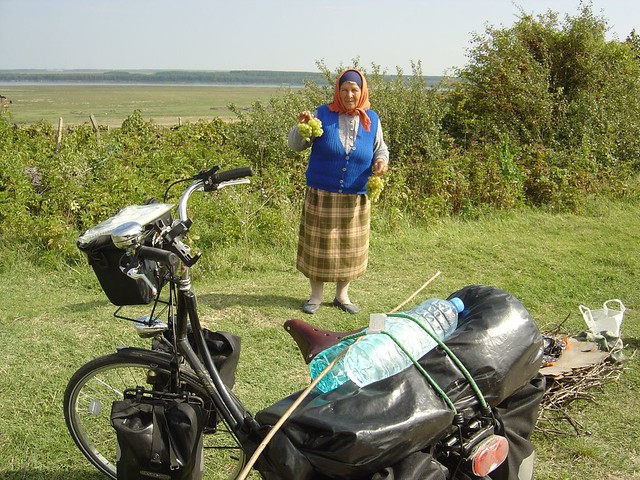
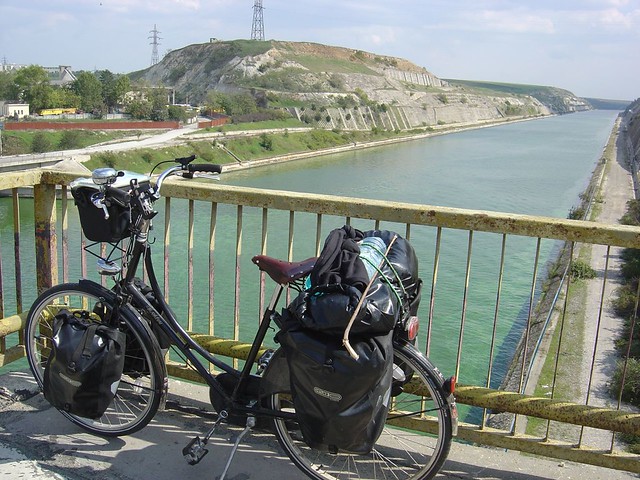
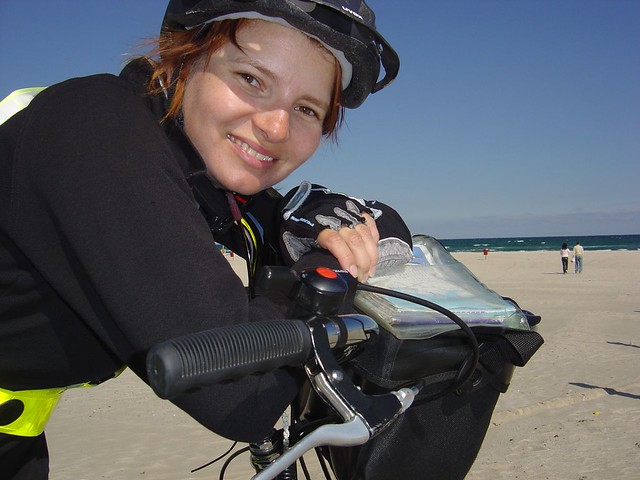
I have been wanting to feature this story for a while, and it now seems like a good counterpoint to my earlier post about long distance cycling and upright bicycles. Not everybody finds it necessary to use a bicycle with drop bars for touring - especially not Katie Doncaster, who travelled on her Pashley Princess Sovereign from Strasbourg, France to Nessebar, Bulgaria. 

[image via Katie Doncaster]

This is Katie's Pashley, named Mathilda. As you can see, she sightly modified it for touring in terms of accessories and luggage: She added extra pannier hangers, a waterbottle mount, and a handlebar bag instead of the wicker basket. But the upright sitting position of the bicycle has very much been retained.
[image via Katie Doncaster]

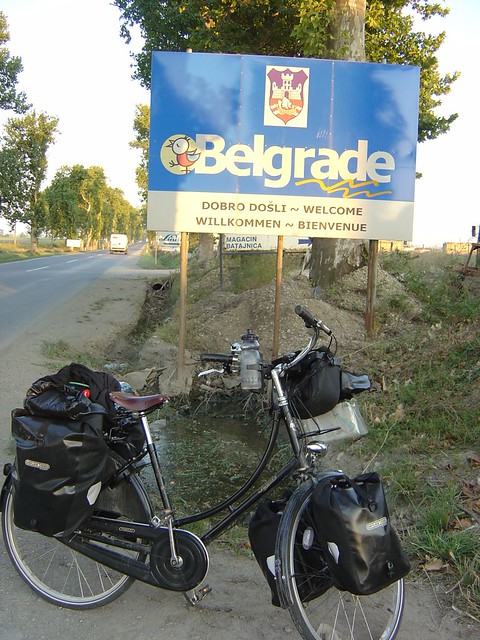
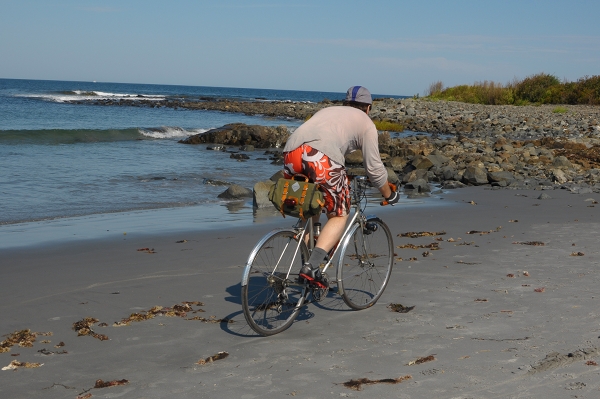
Katie and Mathilda travelled a total of 3,900 km (2,423 miles) together, passing through France, Germany, Austria, Serbia, Croatia, Bulgaria and Romania.
[image via Katie Doncaster]

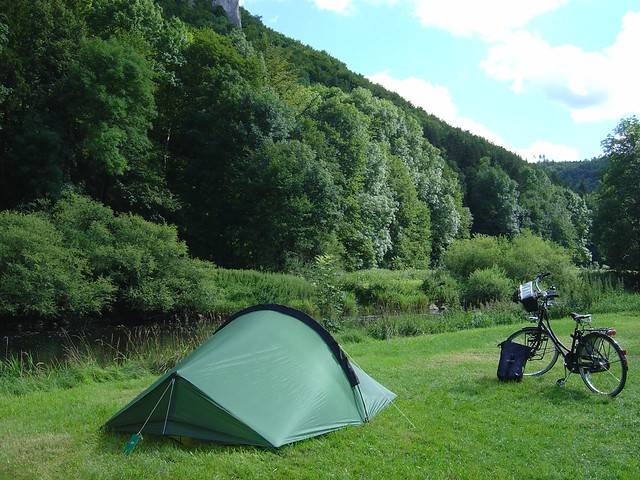
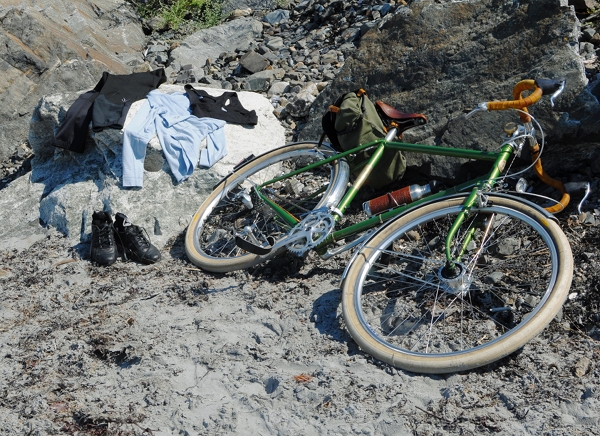
Nights were mostly spent camping, with all the necessary equipment carried on the bike.  Much of the trip was over flat terrain, but there were a couple of spots with some hills as well.

[image via Katie Doncaster]

Katie's route took her through Austria along the Danube Bikeway, and it was neat to see some familiar places in her images. The most I have ever cycled on this route was 50 miles, which is laughable compared to the length of her trip.

[image via Katie Doncaster]

I am amazed by Katie's accomplishment - who wouldn't be!  2,423 miles on a roadbike designed for touring would have already been beyond impressive. But to cover that distance on a Pashley... I put that in the category of "jaw dropping".  Just to remind you, this is a 5-speed upright bicycle that weighs over 40lb (unloaded) and offers only one hand position on the handlebars. I would not be able to do it.  But everybody is different. If Katie did it, it's certainly possible. Only you can determine what is possible (and comfortable) for you, and you never know until you try!  Anybody planning a cycling adventure before the summer is over?