Showing posts with label fixed gear. Show all posts

Monday, May 2, 2011

Luscious ANT Truss Bike: My Dream Test-Ride

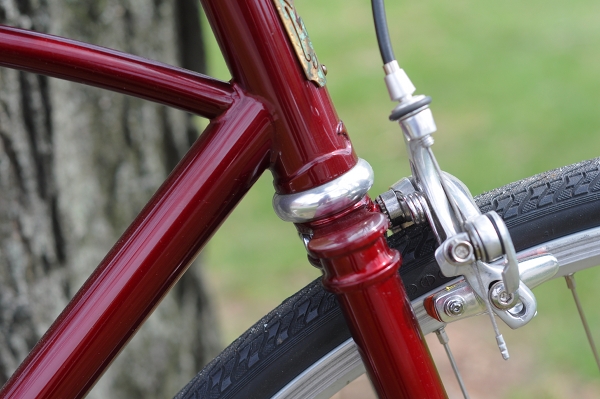
A little while ago I finally test rode an ANT Truss Bicycle for the first time, and the memory now seems like a dream. I cannot describe how much I love this frame design, specifically as executed by ANT. I have a separate post about truss frames, so I won't go into it again here. But something about that truss, in combination with the double plated fork crown, just "hits the spot" for me visually, and I've fantasised about riding one more times than I care to admit.

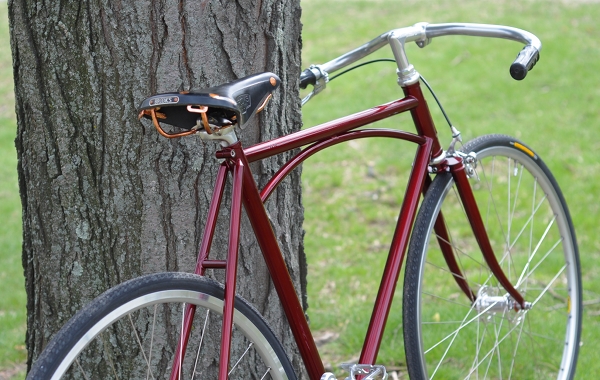
Luckily, I know Jim A. - a great mechanic at Harris Cyclery - who owns a glorious truss frame ANT, which I was just able to ride. In retrospect, I can just kick myself for not taking the pictures before lowering the saddle, because the bike looks better with more seatpost showing. But in my excitement I was not thinking clearly and I hope you can overlook this aesthetic blunder.

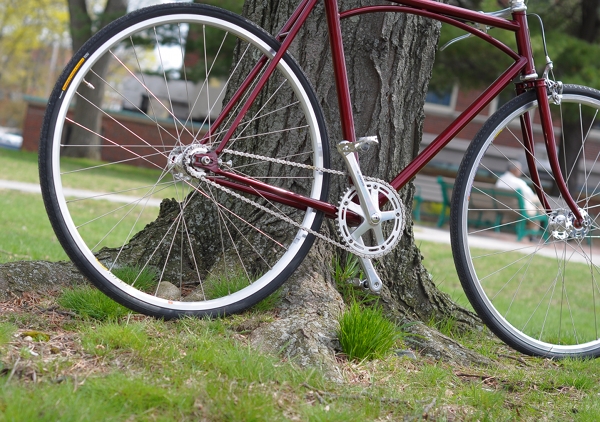
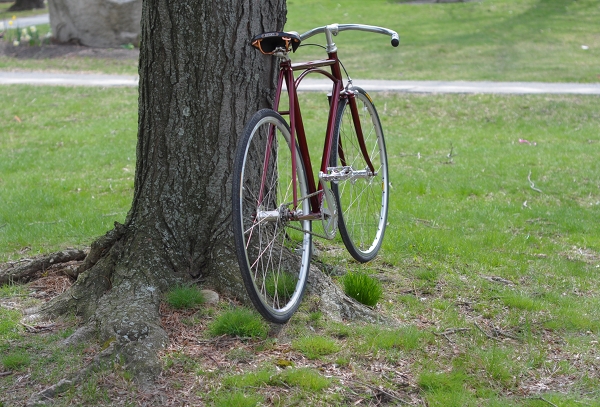
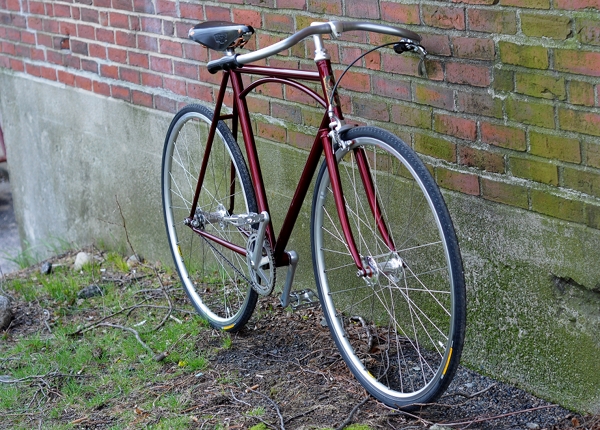
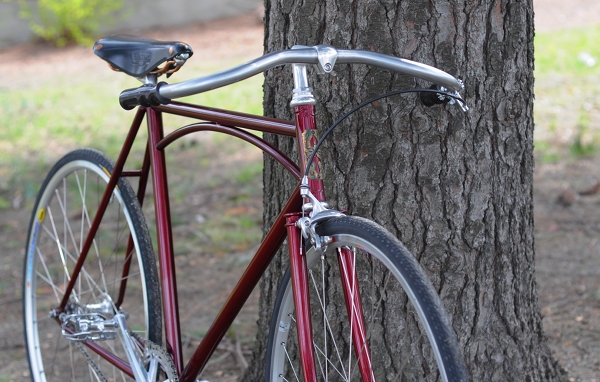
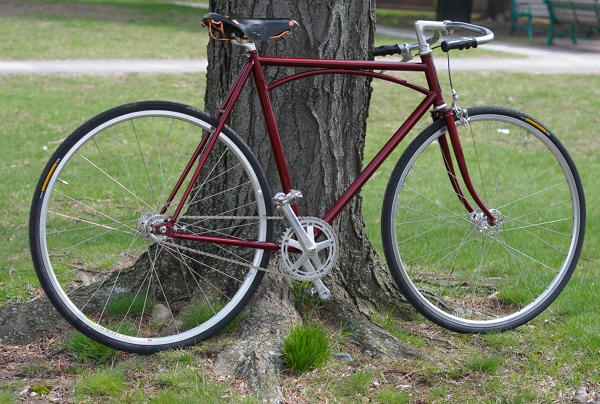
Jim's ANT was built in 2007. It is a 53cm frame with 700C wheels, built for fixed gear.

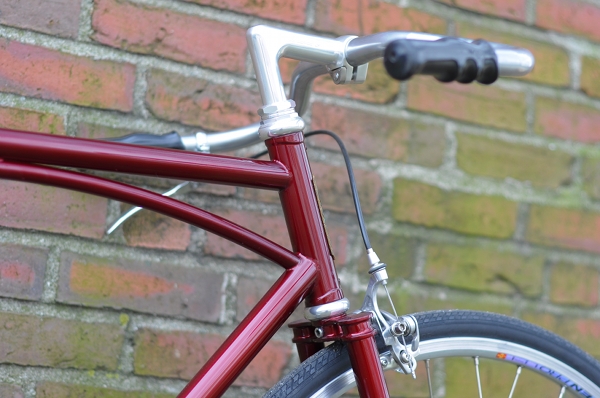
The paint is liquid coat and the colour is a shade of dark cherry that appears to drip seductively as it catches the light.

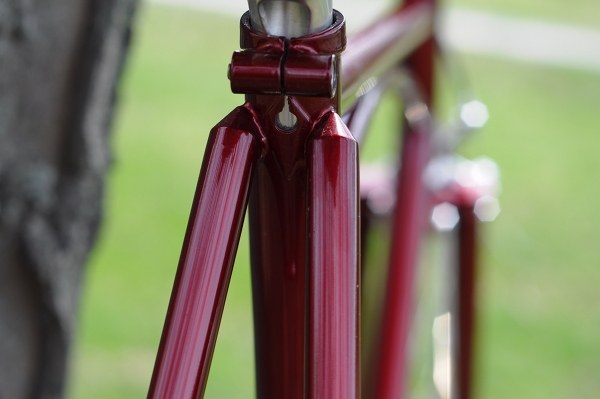
Photographing this part felt a little wrong, but I decided an invasion of privacy was in order here to show the full darlingness of this sexy creature.

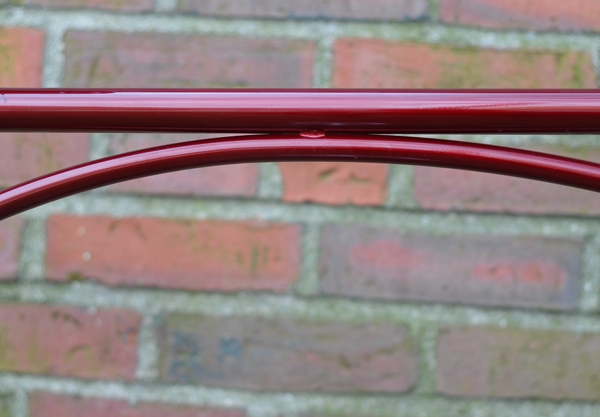
As I've written before, the truss frame is one design that I actually prefer to be TIG-welded (or fillet-brazed) as opposed to lugged, because lugs - to my eye - would look too busy here. The key for me is that these welds to be cleanly done, and this frame does not disappoint in that respect.

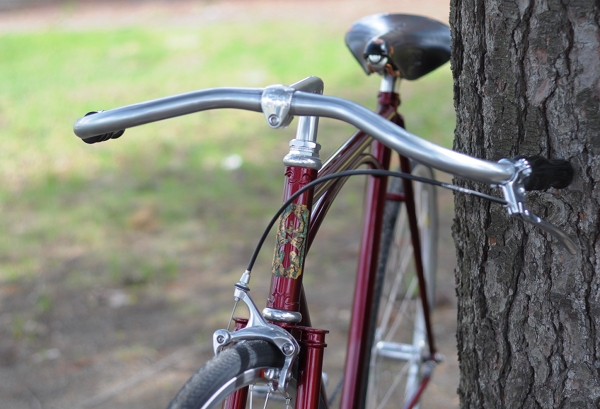
Jim A. set up this bicycle very similarly to the way I would have done. The upside-down Nitto Albatross handlebars strike the perfect balance between aggressive positioning and comfort. The single front caliper brake and the fixed gear rear wheel are uncluttered, simple to operate, and in keeping with a vintage look. I would put the brake lever on the right handlebar, but otherwise would set everything up just the same.

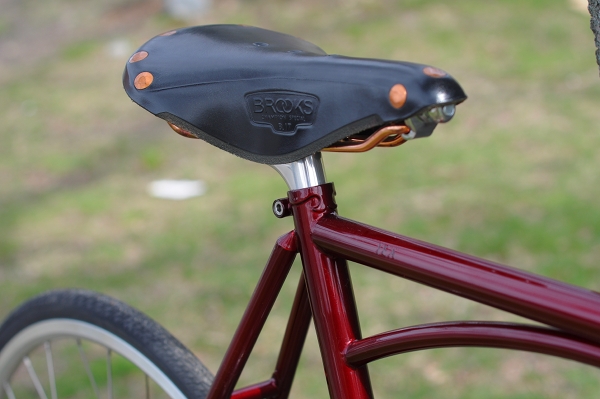
The copper rails and rivets on this Brooks B17 complement the frame beautifully. Those are Jim's initials carved into the toptube, in case you spotted them.

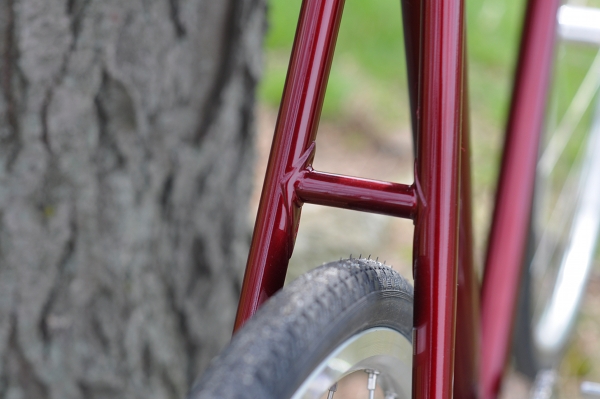
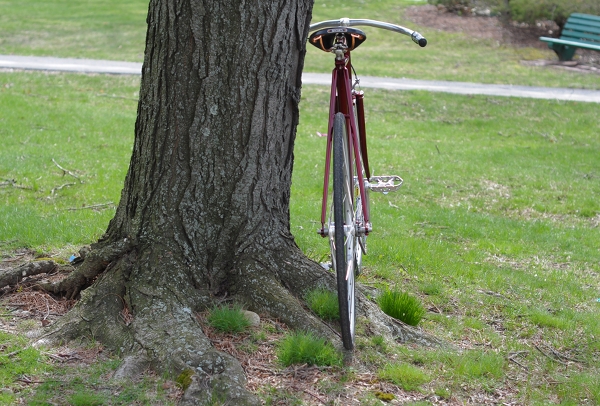
Rear brake(less) bridge. Though I have seen some truss frame bicycles equipped with fenders, racks and all sorts of extras, I think it looks best without - pathracer style.

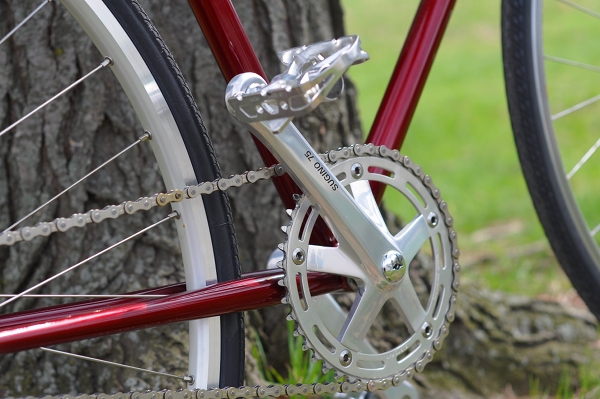
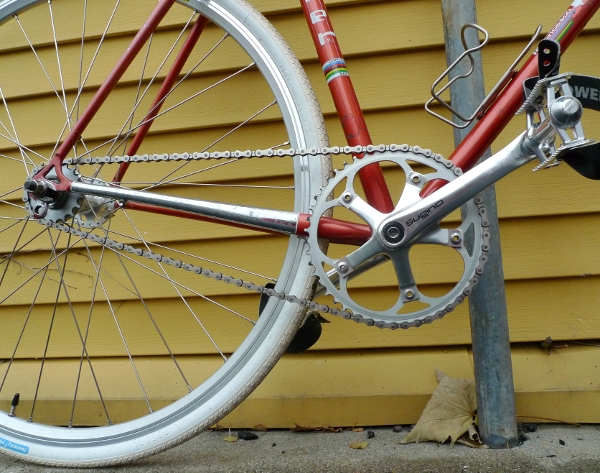
The Sugino 75 is a really nice track crankset that the Co-Habitant thinks I ought to get, should I ever upgrade my fixed gear roadbike. Truthfully, I kind of don't get what the big deal is with this particular crankset, but sure - it looks nice enough.

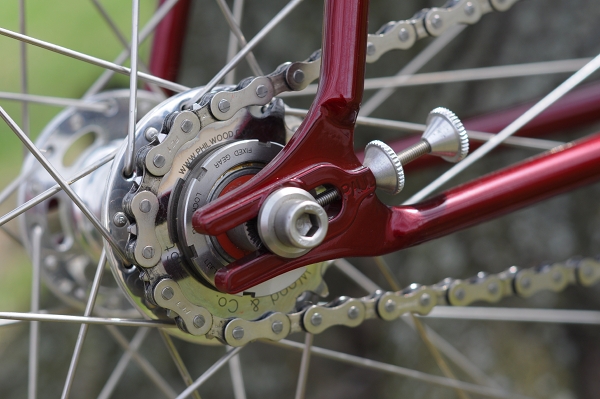
These Paul dropouts are beyond "nice" though: I'm afraid I will salivate if I look at these for too long. Mmmm!

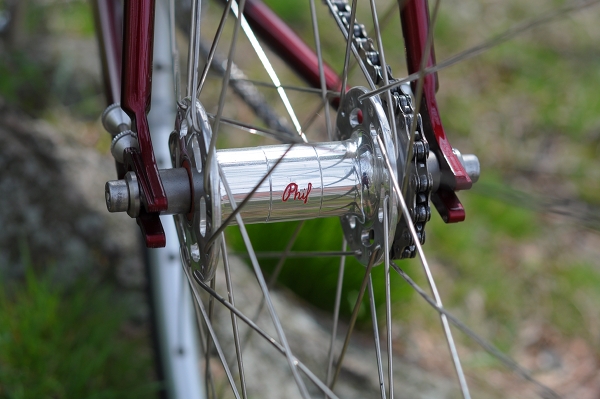
I wasn't especially attracted to Phil hubs until I saw this on Jim's bike. Gosh, this just looks so perfect.

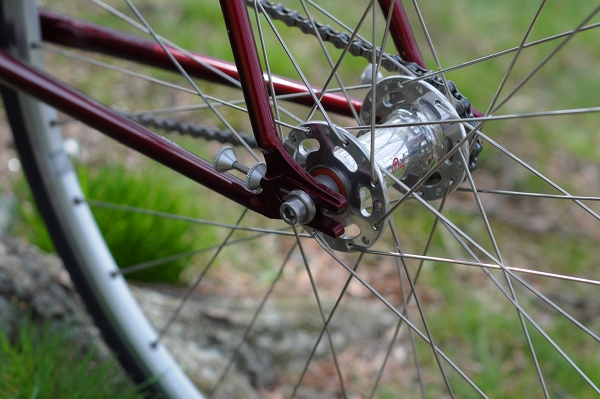
And from another angle...

I rode Jim's truss bike briefly and slowly - It was in such perfect condition, that I was scared to death to let anything happen to it. Sadly, there was no one around to photograph me, as Jim was working and the Co-Habitant was busy buying components. But just imagine me looking both ecstatic and terrified as I pedaled this graceful machine along West Newton side streets, past pensioners and mothers with baby carriages... Of course they all wanted to ride it. As their eyes followed the glistening Phil hubs with longing and admiration, I felt like the luckiest girl in town.

I don't know how useful it is to review a custom-built bicycle, and one ANT truss frame may not necessarily feel or handle like another. But in case you are curious...

The first thing I noted, was that the bicycle felt significantly lighter than I expected it to. I guess because of the truss construction, I assumed that it would be on the heavier, clunkier side - more like a roadster. But this truss was whippet-sleek, lightweight, elegant and compact.

I got on and was surprised at how far forward I had to lean in order to reach the handlebars - Jim must have used a long stem to compensate for the swept-back Albatross bars. The aggressive posture made it easy to accelerate once I began riding and to go faster than I had intended. It was at this point that I realised how unaccustomed I'd gotten to riding fixed gear without foot retention, and also to the brake being mounted on the left. Thankfully, I figured it out in time to stop for the next red light - but after that I slowed down and was more careful. The ride was comfortable - nothing hurt and there was no excessive strain or pressure on any part of my body. For a bicycle with 28mm tires, it did not feel harsh over bumps. It felt stable, but then I tend to feel more stable on fixed gear bikes in general, so I don't know how telling that feedback is. Having never ridden a vintage pathracer, I cannot compare it to one - but I am fairly certain that the geometry of the ANT truss frame is modern and does not emulate actual vintage pathracers.  If I had to categorise the handling, more than anything it felt like a light and fast "casual" bicycle for those who are used to roadbikes but want something a bit gentler and more upright for Sunday afternoon rides with friends.

While some might question the practicality of a vintage-styled pathracer in an era when racing is done with dropbars and commuting is done with fenders and racks, I think that's beside the point. The classic truss frame pathracer is an idealised examplar of what ANT can create, and I find that appealing. Not all bicycles need to be versatile and practical in every respect. When I get my ANT, it will be almost exactly like this one - just because I want to support and celebrate what I believe to be Mike Flanigan's craftsmanship at its best.

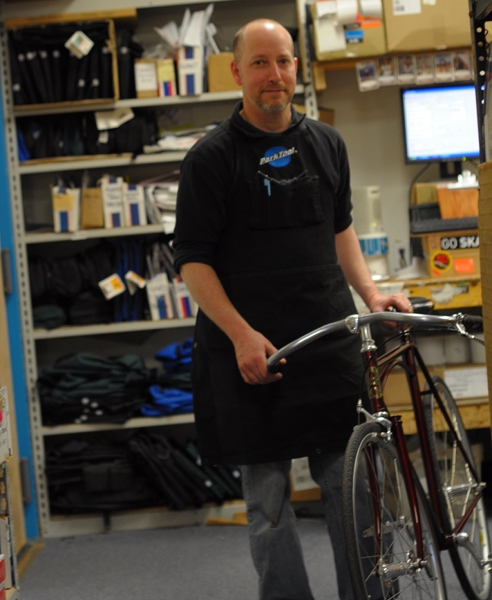
Though I only managed to take this shabby picture of Jim A. with his bike, some day I will meet him outside of work and take a nicer portrait. Until then, I thank him for entrusting me with his Truss. This is truly one of my favourite bicycles.
Tuesday, April 12, 2011

Bike Fit: A Case of Evolving Preferences?

Last weekend we finally picked up my Francesco Moser fixed gear roadbike from Harris Cyclery, where it sat most of the winter after getting its bottom bracket replaced. I haven't been on this bicycle since December, riding the slightly-too-big-for-me Bianchi instead. And now that the Moser is back, guess what? It feels small! I was warned that this would happen once I got used to a larger frame, but it's still hard to believe. How can I feel cramped on a bike that felt "perfect" last year?

In addition to having a shorter top tube than the Bianchi, the Moser is also set up with a shorter stem. The difference between the total distance from the seat post to the handlebars on the two bikes is 3cm - which seems like a small number, but feels quite otherwise, at least to me. The handlebars on the Moser are also set quite a bit lower, which I think contributes to the cramped sensation. Combined with the lower bottom bracket, I almost feel like an adult on a miniature pony when I mount the smaller bike after the larger one. Would a longer stem alone solve this, or have I "outgrown" the frame itself? At the moment, both my Bianchi (with a 55cm top tube and 8mm stem) and my Rivendell (with a 57.5cm top tube and 6mm stem) feel just right, but how can I trust that "just right" feeling when it keeps changing?

It is said that preferences in bike fit "evolve" over time. But does there eventually come a point when they stabilise?  How many times in your cycling history has your idea of comfortable bike fit changed?

Tuesday, November 23, 2010

Advice from Fixed Gear Experts? And a Look at MKS Stream Pedals

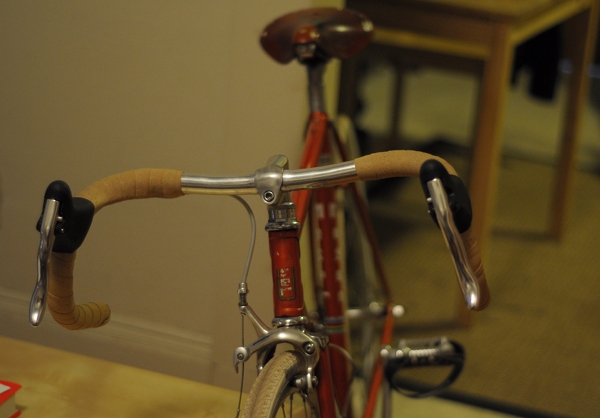
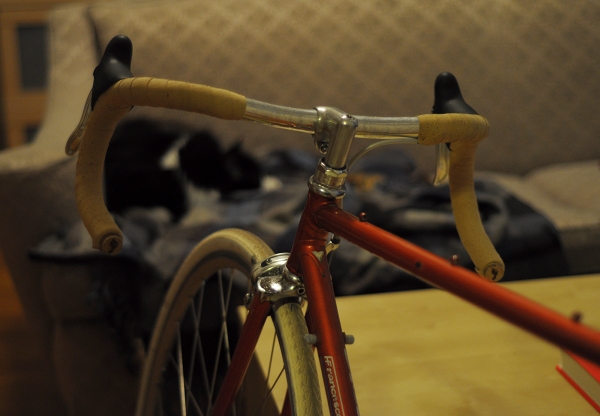
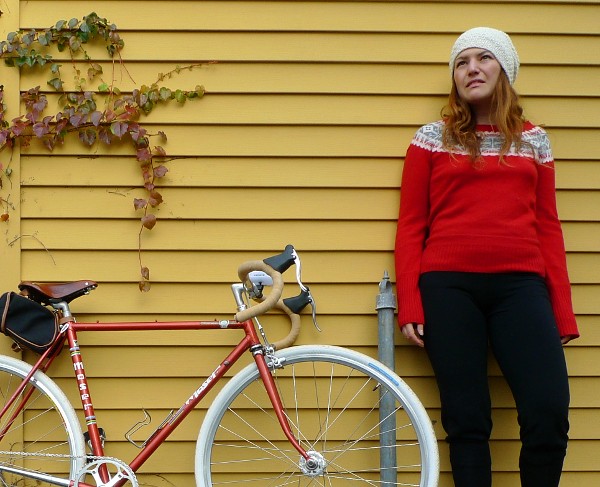
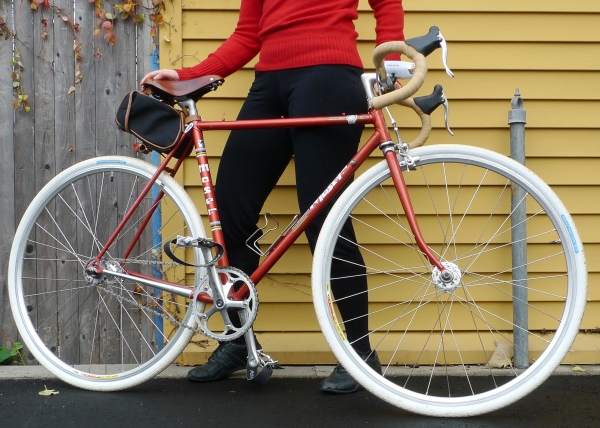
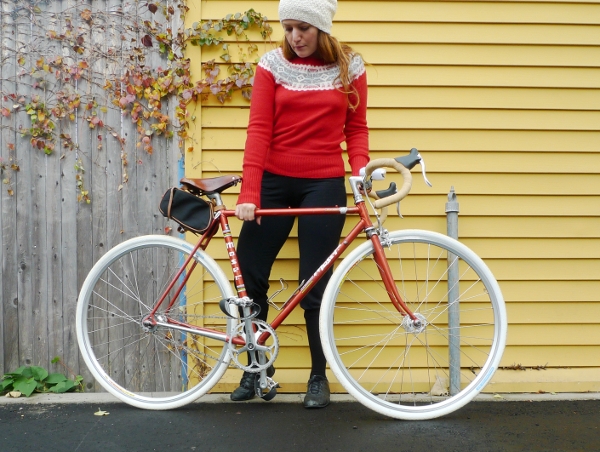
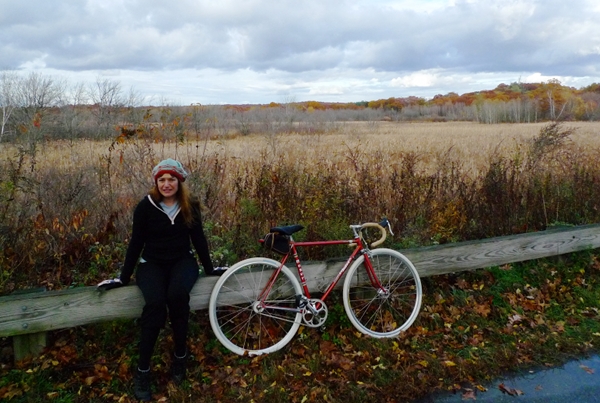
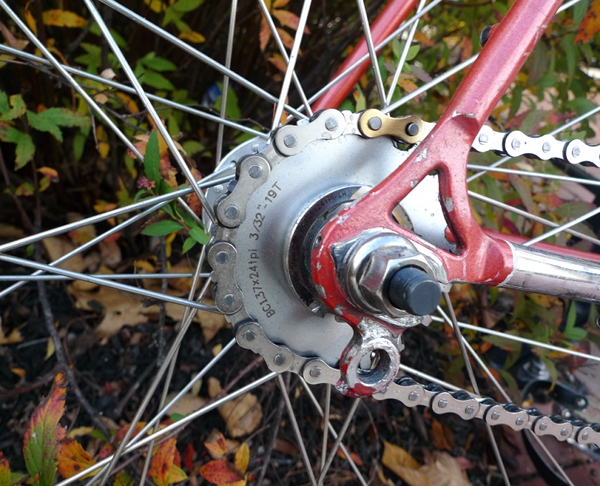
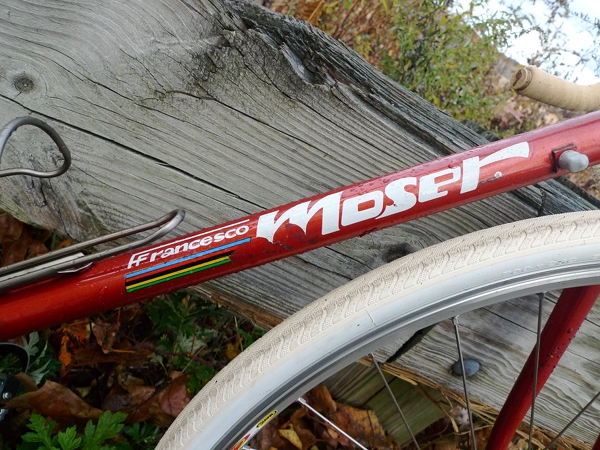
I have been riding my Francesco Moser roadbike as a fixed gear since July. I love this bicycle and ride it considerably more than I thought I would. For an aggressive roadbike, it is puzzlingly comfortable and easy. My bicycle handling skills have improved thanks to this bike and I have grown very attached to it.

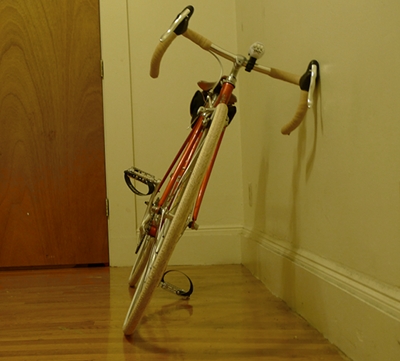
But here is the problem - or rather what I keep hoping is not a problem, and would like your opinion about: The frame has a low bottom bracket. In our innocence, we did not notice this when we were building it up, and I don't even think the person who gave me the frame noticed quite how low it was. The bike originally came with skinny tubulars, but we fitted the frame with 700C wheels and 28mm tires - which raises the bottom bracket off the ground more than originally.

The cranks are 165mm, which is already as short as I can reasonably go with here, and just recently I switched the pedals (originally MKS "Touring") to the narrower MKS "Stream". All of this has helped ward off "pedal strike," but I still worry whether it is safe. A couple of people have taken one look and told me that I should get a different bike, with an expression of concern on their faces. Others have told me that it's not too bad and there should be no problem as long as I am not too aggressive on turns and don't take it on the velodrome.

So my question: Is there an objective way to tell? How high should the bottom bracket be off the ground in order for a fixed gear bike to be "safe"?  And "aggressive on turns" seems like such a subjective concept. I think of myself as a bad cyclist and I think of my speed as slow - but I am not sure how to quantify these things. Once I get going, I like to ride 15-18mph on this bike. But I am consciously very careful on corners and slow down on them due to paranoia over this issue.

So far, the MKS "Stream" pedals (purchased from Cambridge Bicycle) seem to have made a big difference, and I am keeping my fingers crossed that perhaps they solved the problem. This is what the lean of the bike used to be in order to get pedal strike, but the Streams have improved things considerably.

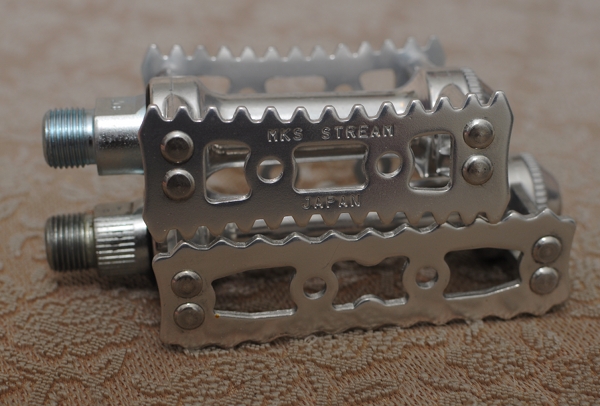
Here are the MKS "Touring" (left) vs the MKS "Stream" (right) pedals side by side. As you can see, they are very similar except for the size.

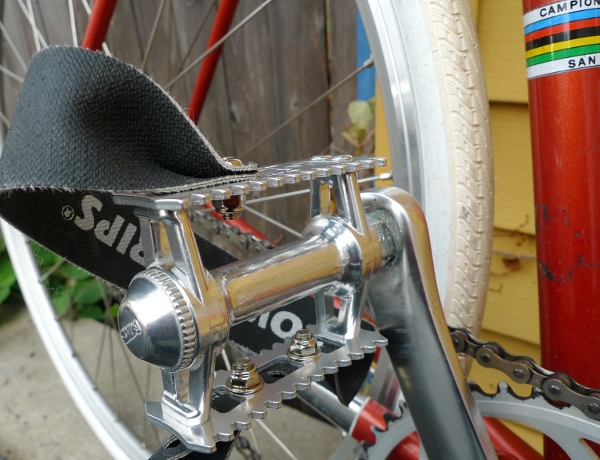
The MKS Streams are basically touring-style pedals that are the size of track pedals. They are comfortable and accept both toe clips and Power Grips. I was worried that my feet might feel cramped on them, but I have felt absolutely no discomfort so far.

Here is another size comparison.

And notice the difference in teeth. The Streams are more grippy.

The ride quality with the new pedals feels the same as previously, with the benefit of additional "room to breathe" on turns. But is it enough?  If I do need to start thinking about a new frame, I doubt that I can find something as good as the Moser (Columbus tubing, Italian quality) in anything resembling a reasonable price range. My best bets are probably to look into Mercian or to wait for the Rivendell "Simpleone".  And if you can recommend a vintage model that resembles the Moser in ride quality but has a higher bottom bracket, I am of course all ears. I do not want a new fixed gear roadbike. I love this one and would prefer to ride it forever. I just want to know whether that is a good idea.

Saturday, November 20, 2010

Over the River and Through the Wood: the Season of Lone Travelers

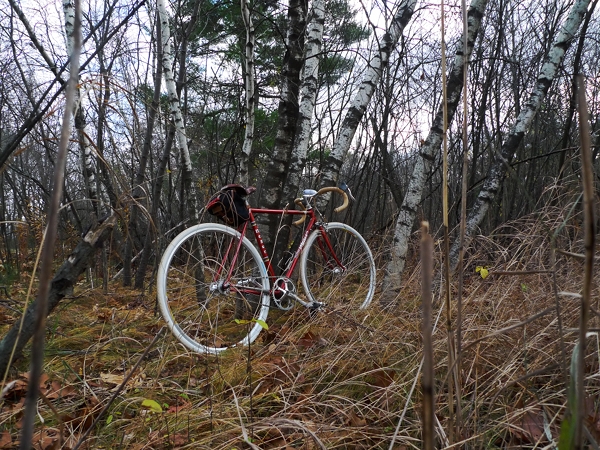
Yesterday I cycled to a wooded area 15 miles away to take pictures for a backdrop for a painting I am working on. I needed some detailed shots of birch trees, and November is the perfect time to get them - With most of the foliage gone, the birches stand out tall and lean, every detail of their beautiful bark crisply outlined against the bare landscape.

All in all, this is such a quiet time. A deep hush has fallen over the forest as it braces for the fury of winter storms. There is even a particular sound that goes along with this state of things - like a very quiet ringing.

Now that we are getting into late November, the number of cyclists out there - especially outside of the city, on the hilly roads and on the trails - has dwindled down remarkably. And those who remain apparently feel a sense of comradery with their fellow lone travelers, as I have never gotten so many comments from passing roadies before.

First I was asked by a cyclist where I got my Moser and how I like the bike. We discussed that for a bit, with him concluding that he must find a vintage Moser frame for himself (he-he, I am such an enabler!). Later, another cyclist (of the "pedantic retrogrouch" variety) was indignant that I was not only riding an Italian racing bike as a fixed gear, but that I fitted it with "rando-bars" (a French style of drop handlebars with a curvature better suited for long distance touring). I did not really know what to reply to that accusation except "yes".

And later still, I was complimented on my "trackstand" at a traffic light, which made me question whether I understand what trackstands are. I was pretty sure that a trackstand is when you are actually able to stand still, as a sort of balancing trick. I cannot do that at all. But I play games at intersections, where I cycle so slowly that I am basically moving forward mere millimeters at a time until the light turns green. It may look like a trackstand to an unscrutinous eye, but I am definitely cheating. But anyhow, my point really is that I haven't had verbal exchanges like these with other cyclists until now - whereas yesterday alone I had nearly half a dozen. The few cyclists who are out there this time of year must be feeling especially lonely.

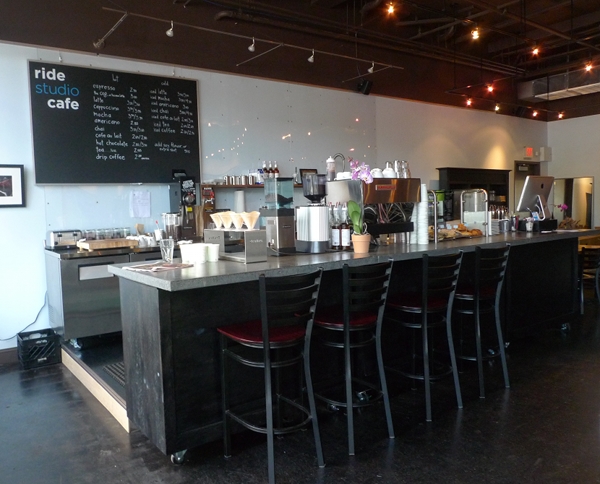
On the way back from my photo trip, I stopped by the Ride Studio Cafe that I wrote about earlier, when I saw through the window that their coffee bar was open. I just want to say one thing: If I could count on their in-house coffee shop consistently being open, I would go out of my way just to go there. They serve good coffee and hot chocolate - and they have back issues of Bicycle Quarterly! Once settled in, I had to almost forcibly pry myself away. Funny, because I remember reading Bicycle Quarterly last year and finding the articles difficult to understand, whereas now everything makes sense and seems terribly interesting. I should probably start subsrcibing to it.  And for those who have been reading BQ all along: Could you tell me in what issue I can find Jan Heine's review of a Rivendell? I am pretty sure he wrote one, but haven't been able to locate it.

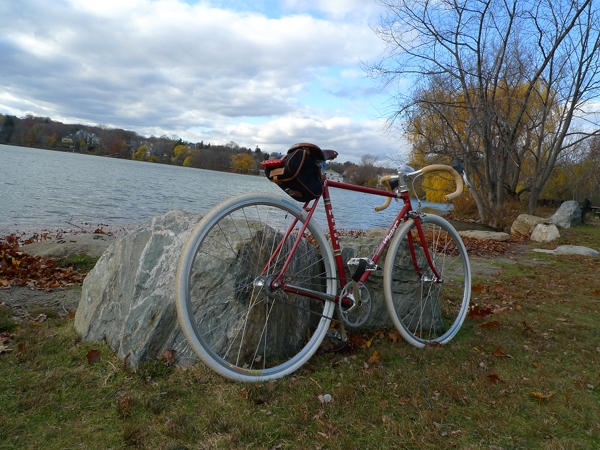
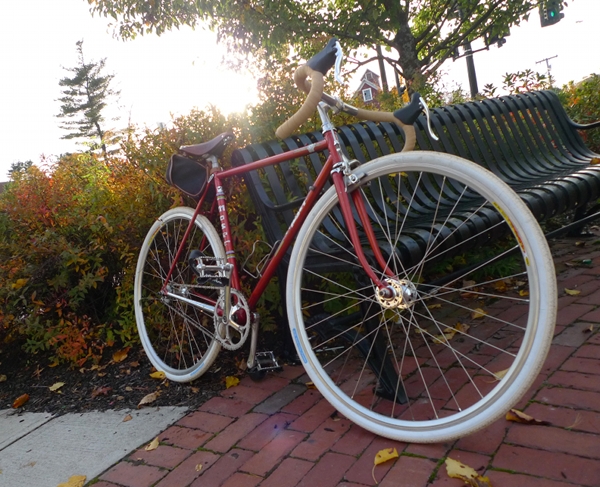
As I needed to run some additional errands in different parts of town, I ended up spending the entire day on my bike  - which made me realise just how quickly both the temperature and the light conditions can change this time of the year. I am paranoid about getting stranded in the dark, so even for my sporty bicycles I carry at least some battery-operated lights that I can quickly attach to the handlebars and to my saddlebag. As winter approaches, I somehow find myself riding this particular bike more and more - so maybe it is time to find a more permanent and attractive lighting solution for him (bottle dynamo on a fixed gear, anyone?).

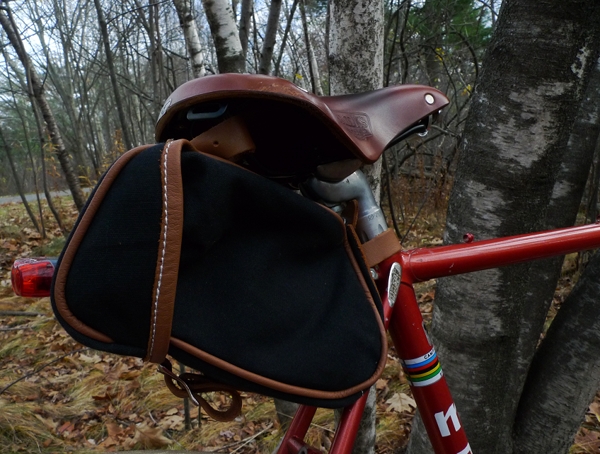
And it is surprising how much stuff my tiny saddlebag can fit, as long as I don't need to carry my laptop around. Perfect for a short trip by a lone traveler on a late November day.

Friday, October 29, 2010

Happy Feet

Today was the first time I felt well enough to ride a roadbike since having gotten sick last month. It was only 26 miles, but it felt great to have my full lung capacity and energy back.

Continuing with the Italian theme, I took Francesco - my fixed gear stallion. How happy he was, basking in the precious minutes of sunshine in between thunderstorms.

Riding a fixed gear roadbike is an experience that fills me with a special kind of enjoyment - I think because it combines the sensations of walking and flying (fly-walking?).

I was worried that I might be too out of shape to make it, but I had forgotten how comfortable Francesco is. The 26 miles of pedaling felt like a stroll in the park. Although, I have learned by now that even if I feel "fine" riding fixed gear while I am actually doing it, it does take more out of me than a free-wheel bicycle. I usually sleep longer after such a ride, and sometimes I am sore the following day.

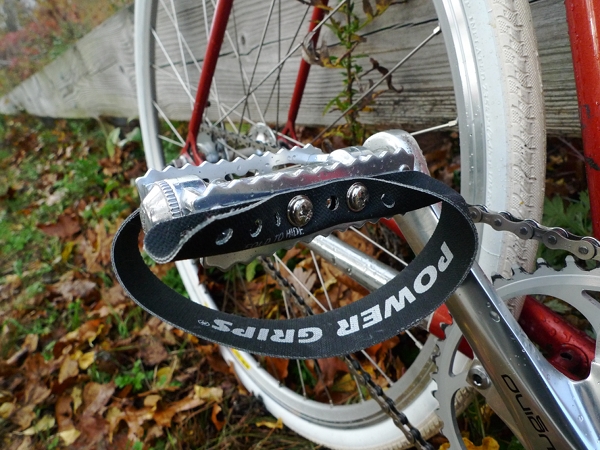
One thing that has improved my comfort level with fixed gear cycling considerably, are these "fixie" Power Grips. I wrote about the standard Power Grips here, and since my initial review I have become addicted to these things. The fixed gear version differs from the standard model, in that it makes it easier to insert and remove your feet while pedals are in motion. I cannot tell what it is about the design that makes this possible, but none the less it seems to work. I insert my right toe at the starting position and start cycling slowly while nudging the left pedal with my left toe - then swiftly insert the toe into the left grip on the first stroke. After some practice this became a familiar and instinctive sequence of movements - though it definitely helped that I was already comfortable using this system on a free-wheel bike prior to trying it on a fixed gear.

Now that I am able to use foot retention on this bicycle, I am no longer apprehensive about cycling over bumps and potholes or going downhill at high speeds. The experience is pretty much perfect and very enjoyable. One thing in particular I have noticed, is how easy it is for me to ride "in the drops" - Francesco almost seems more stable when the handlebars are held this way than higher up. Is that possible?

And another interesting thing: I find it much, much easier to get out of the saddle and pedal standing up on Francesco than I do on my other bicycles. Is it the fixed-gearness that is facilitating this or the geometry? As I've mentioned before, I have a terrible sense of balance, and that is what I believe normally prevents me from pedaling while standing up. But on this bicycle, it seems not to matter.
It rained on and off for the duration of our ride, and the colourful leaves strewn over the trail turned into a mess of a slippery carpet. Was I so excited to be riding Francesco that I began to imagine things, or is it easier to ride in slippery conditions on a fixed gear bike? I have read comments about traction before, but I admit that I don't understand them. Could somebody explain it in layman's terms?

As I prepare for some more pruning of my bicycle overgrowth, it is clear to me that I "need" a fixed gear roadbike. So while I am now considering selling my Trek - which has been fun, but not essential - I will definitely be keeping the Francesco Moser.

In the long run, however - maybe a couple of years from now - I will probably want to replace it with a "real" fixed gear bicycle. Mainly, this is because the Moser's bottom bracket is not as high as it should be - and even though my lean on turns is not aggressive enough to warrant worrying about pedal strike yet, it would be better if this wasn't even a potential issue.

But for now, Francesco is my dashing Italian gentleman and I thank him for my happy feet.