Showing posts with label Art. Show all posts

Wednesday, January 19, 2011

Bicycle Portraits in Ambrotype and Tintype

I've been helping a Lovely Bicycle reader with the process of ordering a custom bike, and he sent me something rather wonderful as a Thank You gift.

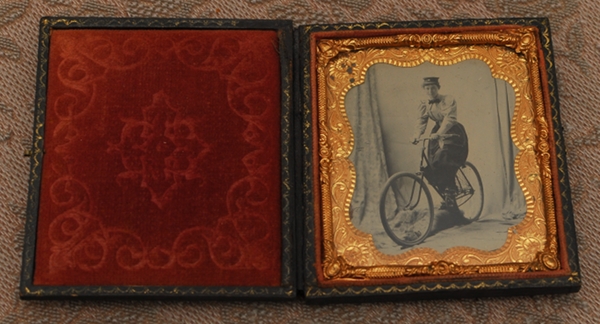
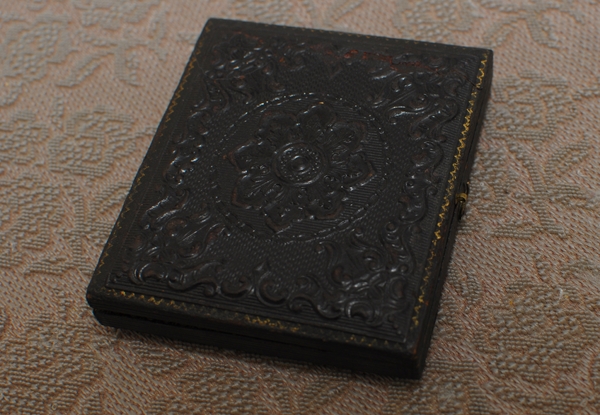
It's a beautiful little antique case, about 4x3", with the tiniest, delicate latch closure.  And inside of it, there is this:

An ambrotype portrait of a young lady on her bicycle, c.1893-94. The ambrotype  is one of the oldest methods of photography, where the image is captured as a positive on glass using a wet plate process. Being on glass, ambrotypes are extremely fragile, which is why they were preserved in these enclosed, padded cases. And even with these careful storage methods, not many of them remain. This is a fine gift indeed, to say the least - especially for one obsessed with both bicycles and photographic processes.

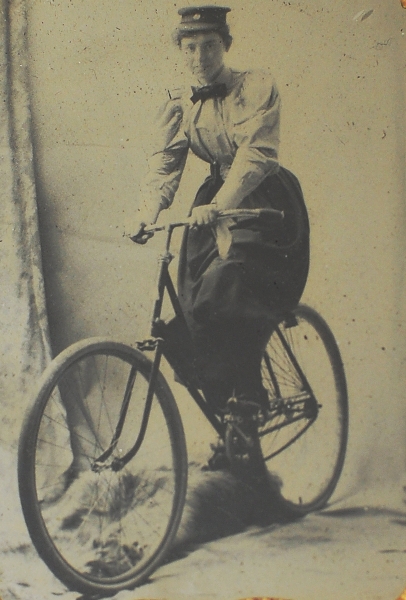
Here is a close-up of the image itself. I cannot remove it from its case, so excuse the murkiness. Notice that it is a mirror image - the drivetrain is on the wrong side. The first commercial freewheel was produced by Sachs in 1898, which means that this lady and others of her era were riding fixed gears. Also, notice the absence of fenders, but the presence of dress guards - at least her muddy skirt would not get stuck in the spokes? Otherwise, the bicycle is a fairly classic lady's Roadster (and apropos the earlier gender discussion - yes, these were made specifically for ladies).

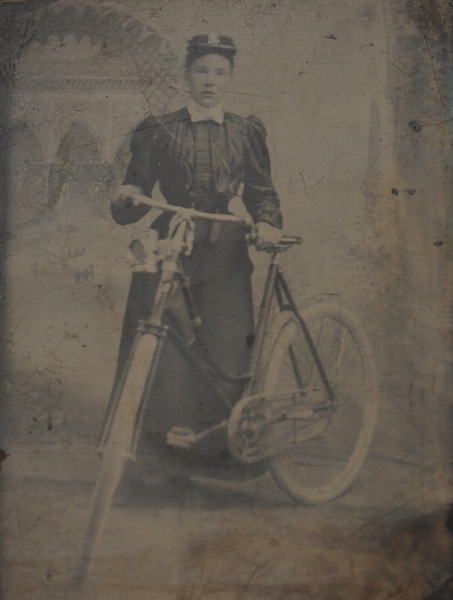
The encased ambrotype came in a set with a free-standing tintype - another positive photographic process, this one created on a sheet of blackened iron. Just amazing. Again, there is the mirror image effect. The bicycle here is similar, but with a fancier chaincase and with a headlamp. The person who sent me these pictures believes the women might be bicycle messengers, though it is also possible that the caps represent cycling clubs that were popular at the time. I must admit that I liked the image of them cycling on fixed gear loop frames through the city delivering letters.

With the rising popularity of flickr, many vintage bicycle photos have been getting scanned and placed on the web in the course of the past several years. And it always amazes me to see specifically the portraits of young ladies posing with their bicycles in a proud and stately manner. Getting one's photo taken was a special occasion in the 1890's, something that was only done once in a great while. And opting to pose with a bicycle in one of the few photos that would ever exist of you, seems telling of the relationship the person in the portrait had with their machine. The word ambrotype means "immortal impression" in Greek, and these ladies wanted to be together with their bicycle for eternity. Was it a status symbol, or an object of obsession? Probably both. And I wonder how the digital bike portraits of today will be interpreted 120 years from now - that is, if they remain at all.

Monday, December 6, 2010

Bicycles and the Human Figure: Do We Look Better on a Bike?

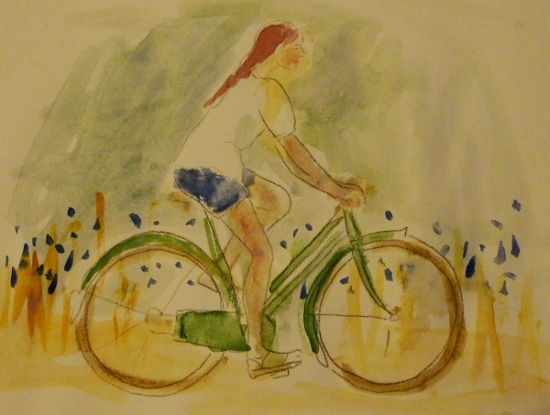
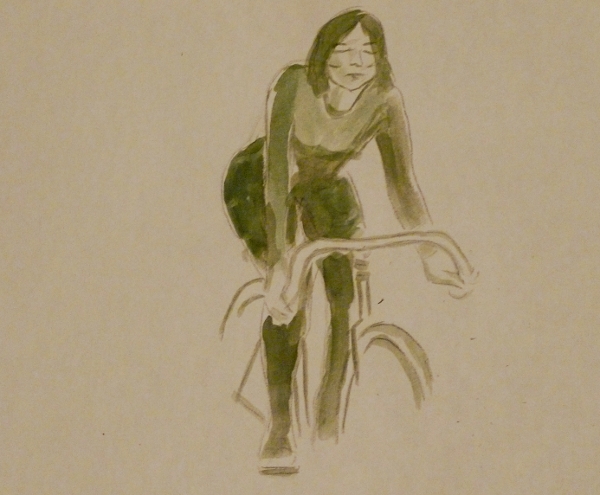
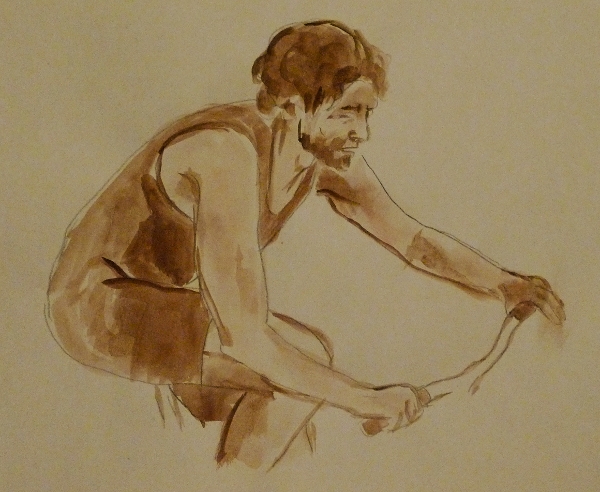
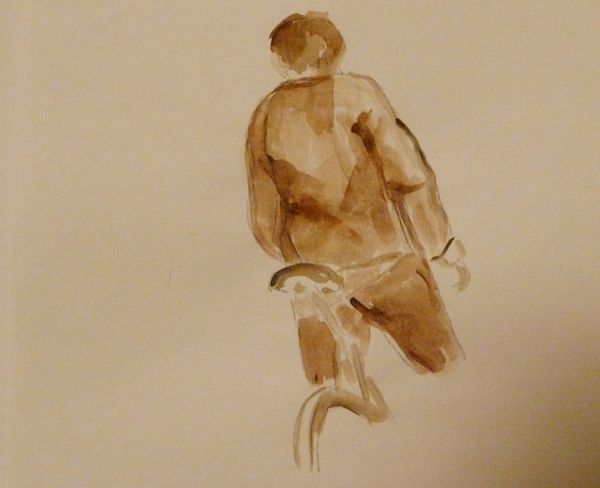
I have never drawn or painted bicycles before, but am now starting a commissioned painting that will include two female cyclists - so I've been making figure drawings and sketches of people on bikes. It has been interesting to study the postures our bodies adapt while cycling - and especially interesting to note the inherent attractiveness of those postures. 

When it comes to the female figure, our positioning on a bicycle tends to really accentuate the waist-to-hip ratio - which, according to evolutionary psychology, is the greatest implicit indicator of "femaleness" to the male.

Cycling also tends to make the legs look longer and leaner - another evolutionary measure of attractiveness, for both genders (researchers believe that long legs may have been indicators of hereditary longevity).

When we cycle, the muscle tone in our arms and legs is accentuated - a general sign of health. In males, this can also serve to suggest strength - which, according to evolutionary psychology once again, females are pre-disposed to respond to.

Finally, being on a bicycle raises the figure higher off the ground, literally making the cyclist seem taller - another advantage for males. The added height also makes the cyclist more noticeable, regardless of gender - placing their body on a moving pedestal of sorts.

Of course, these things aren't simple formulas and there are many factors to consider in addition to the evolutionarily built-in heterosexual responses to each other's bodies. But generally speaking, there is a great deal of evidence that our postures and body language implicitly communicate sexual appeal and social roles to others. Maybe "you look better on a bike" is not just a catch phrase!

One thing my cycling sketches have taught me, is that drawing the human figure on a bicycle is not easy -  which makes it especially admirable that Mr. Rick Smith is able to do it nearly every single day with his comic Yehuda Moon and the Kickstand Cyclery!

As you may have heard, the folks at the Kickstand are having a Virtual Alleycat Race, powered by cycllelicious. If you are taking part, then you have arrived at the Lovely Bicycle checkpoint. You are probably looking for the link to the next checkpoint, but hang on - you're not getting it yet!

Here is what to do:

1. To qualify for the Best Checkpoint Comment Prize, please leave a comment on this post with your name and registration number. The comment must be left between 10am Eastern Standard Time on December 6, 2010 and the same time on December 13, 2010.

2. Lovely Bicycle is having its own mini-contest as part of the Alleycat, and the winner will receive a Mystery Prize. What the mystery prize is I cannot tell you, but if you like bicycles and art you might enjoy it. To take part, tell me what you like best about the way you - or others - look on a bicycle (this does not have to be physical - be as creative or abstract as you like). Please include your name and race number, so that I can identify you! The most compelling comment will receive the Lovely Bicycle Mystery Prize. Only Alleycat racers are eligible for this contest.

3. You would like the link to the next checkpoint now, yes? You shall have it just as soon as you answer a few questions [link disabled - the Alleycat is over, thank you for taking part!].

If you haven't registered for the 2010 Kickstand Cyclery Virtual Alleycat Race yet, register here now!

Sunday, June 6, 2010

Studio Bike

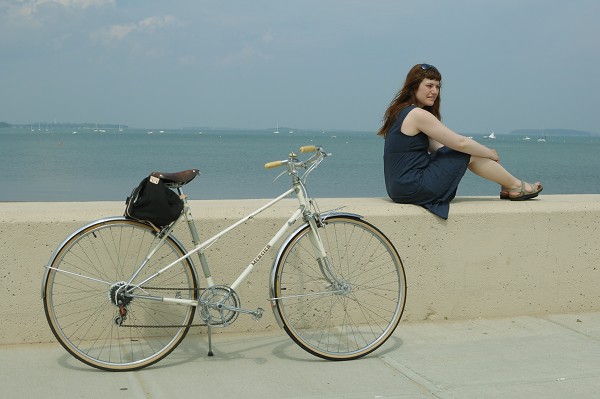
As mentioned previously, my beautiful Mercier mixte (now named Suzanne) was acquired and spruced up for the important role of Studio Bike. She lives full-time in our photography studio outside of Boston, and is there for me when I need her for local errands. These involve mostly coffee runs and scoping out photo-shoot locations, neither of which are too far from the studio. And thank goodness for that, because my initial impression of the area as "No Bike Town" has only been confirmed over the past two months.

I know it looks like a day at the beach, but honest - we've been working all through the weekend! Plus, this bit of sunshine was but a brief interlude between hurricane-like rains.

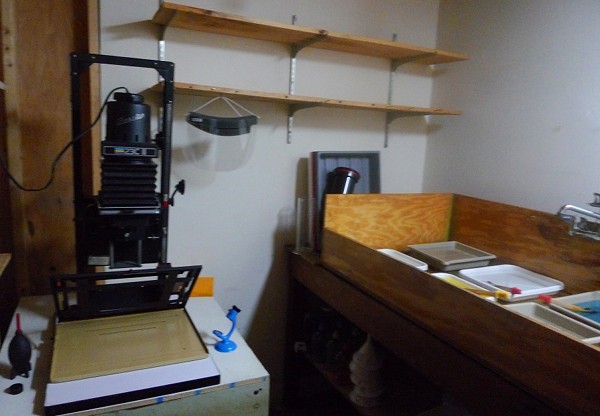
See? Hard at work. Mlle. Suzanne fits nicely in the narrow space between my desk area (a.k.a. negative-scanning station) and the wall. To the right is the Co-Habitant's desk (a.k.a. paper-cutting station), behind us is the darkroom, and in front of us is our studio-mate's work area - including a formal portrait studio that he has been operating for decades.

A portion of the dark room.

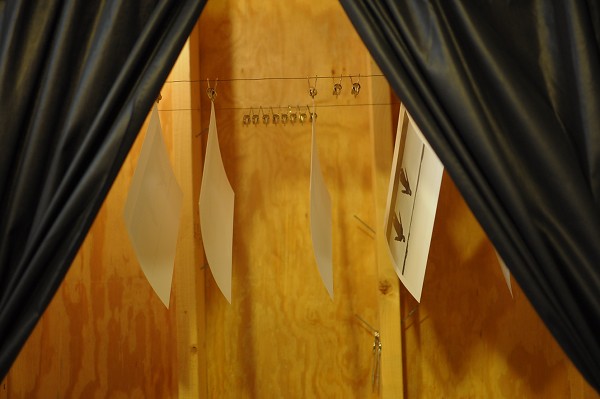
Drying area for negatives and prints. Suzanne is overjoyed to have access to this cool space and to work as an artist's assistant. And I suspect being close to the beach does not hurt either.

Sunday, April 25, 2010

No-Bike Town

Owing to a stroke of luck, we now have a new, wonderful photography studio. It belongs to an acquaintance whose partner has just retired - and so we took over the partner's share. The place is fully equipped with a darkroom and a portrait studio, and is located in a coastal town outside Boston - convenient as we often do photoshoots in that area.

The only problem? Well, something about this town just seemed off as soon as we got there.

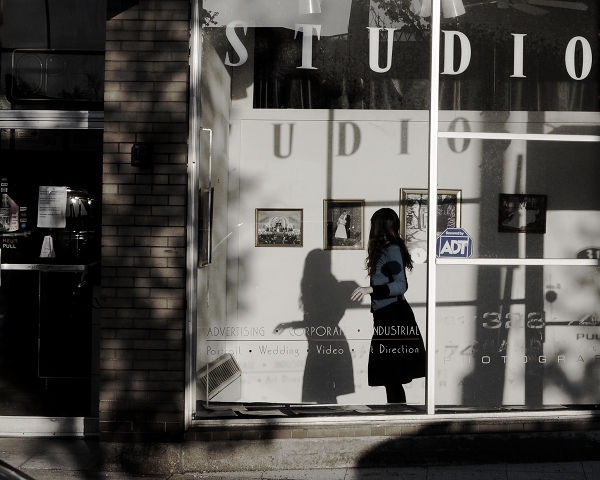
It was as if the shadows in the town center were extra shadowy.

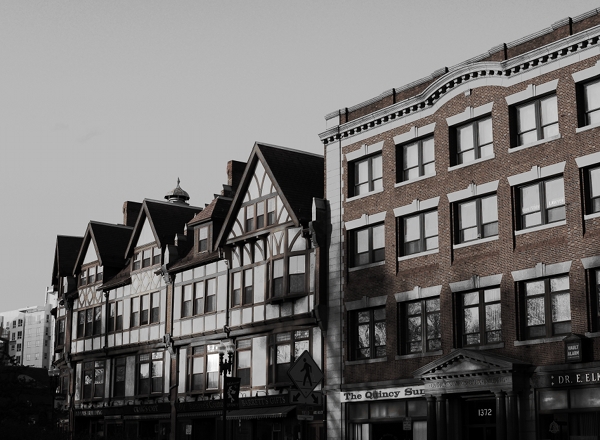
And the sun-lit rooftops exuded a sinister gleam.

Even the quiet side streets were eerie. What could it be?... Oh yes. There was hardly a bicycle to be seen! Honestly, I cannot remember the last time I saw a town with so few bicycles. Over the past weeks we have been moving our things into the studio and renovating the darkroom, and I've spotted a total of maybe half a dozen bikes in the streets during that entire time period -mostly being ridden on the sidewalks.

The studio is 14 miles from our house, but around the corner from a T-station - so the idea is to commute there by T and keep a bicycle on site as a Studio Bike. Initially I was hoping that I could perhaps cycle to the studio, and distance-wise I could do it. But the route seems to be beyond my current level of skill and bravery, involving busy roads with high speed limits and no shoulders. And given the No-Bike Town situation, I am beginning to question whether I will even be able to cycle near the studio itself, if only just for a coffee.

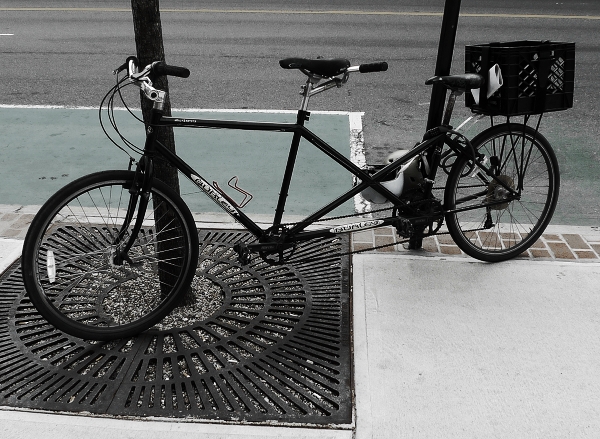
This singular bicycle stood out in No-Bike Town like a lone cowboy. It is an interesting Burley tandem, and I wonder how its owners feel about cycling in this area. More importantly, I wonder how the drivers in this area feel about cyclists - would they even know what to do if they saw me riding down the street? I guess I will soon find out...

Friday, March 5, 2010

Bike Reacts to Controversial Imagery

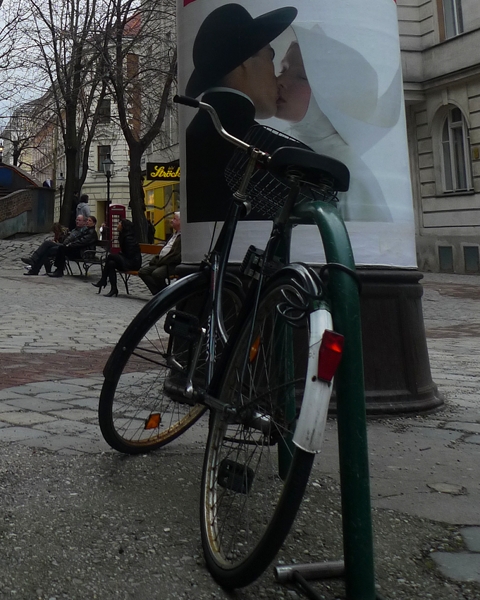
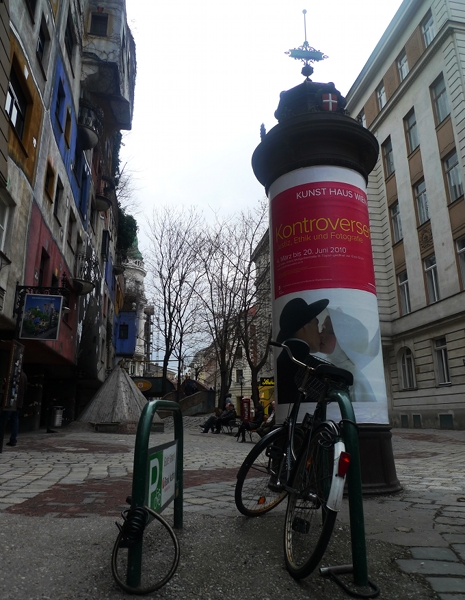
I was taking a walk around my neighborhood when I spotted a Dutch bicycle, looking disapprovingly at this poster. I am not sure whether the owner of the bike locked it up in front of the poster intentionally, but I couldn't get over the similarity of "colourways" and the bicycle's disapproving posture as it faced the image.

The poster is for an exhibition at the Kunsthaus Wien called Kontroversen - Justiz, Ethik und Fotografie ("Controversies - The Law, Ethics and Photography"). I hope to visit it over the weekend.

Monday, January 11, 2010

Review of "Spoke Count" at the Chorus Gallery

On Saturday night I stopped by the opening of Spoke Count, a group exhibition at the Chorus Gallery in Somerville Mass., which is affiliated with Open Bicycle. As someone who has both exhibited at and curated a fair number of shows, I thought it would be interesting to write an informal review of this one. Despite my friendly affiliation with Open, I believe that I can be objective, and I hope the organisers of the show will not take offense at anything expressed here.

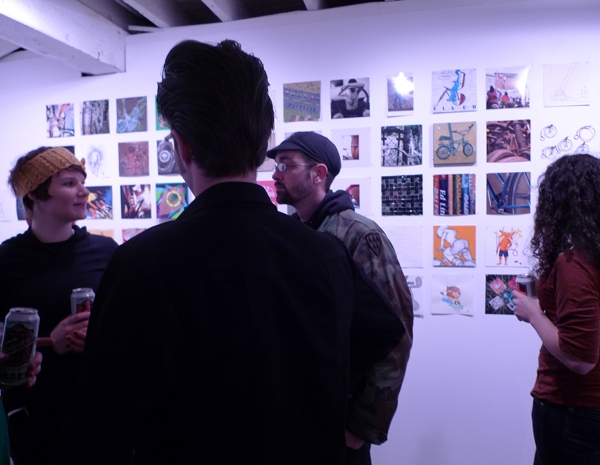
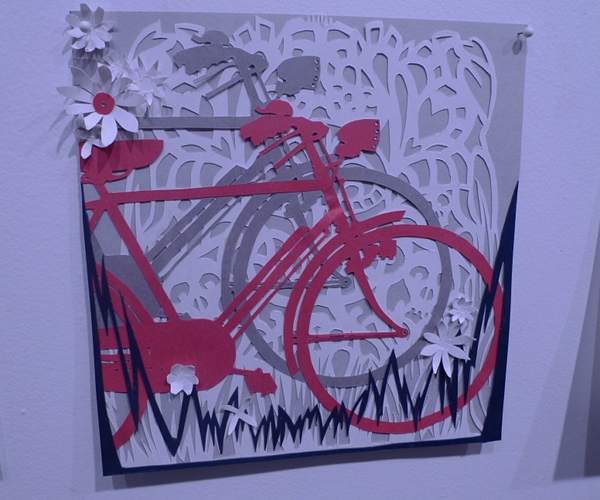
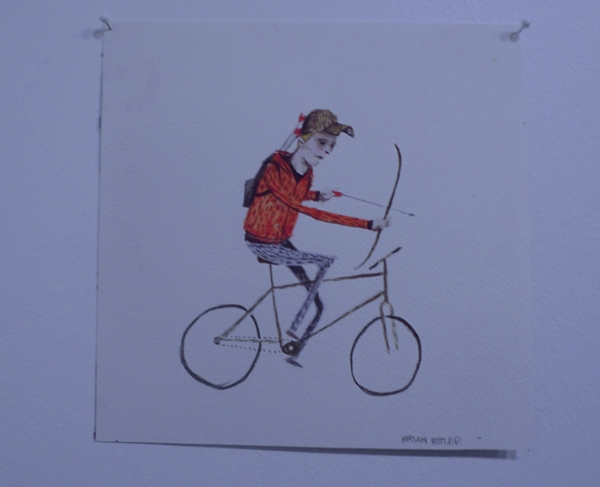
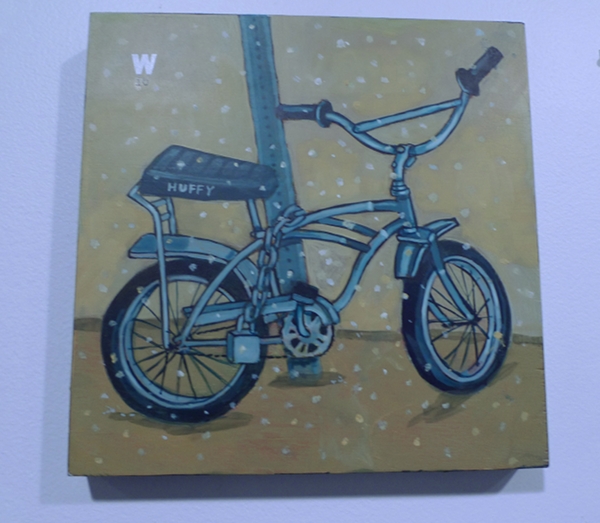
Spoke Count is a collaborative installation of over 100 small works about bicycles, submitted by local artists. Each piece is no greater than 8" in one direction and the work is arranged in a large grid along the gallery's main wall, in much the same manner as we are accustomed to seeing a set of "thumbnails" in a virtual image gallery.

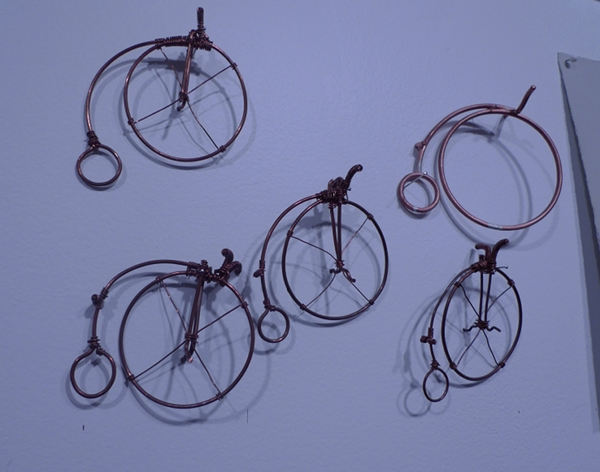
I felt that arranging the work in this way made an impact on several levels. In the most basic sense, it illustrated the sheer variety of possibilities when the concept of "bicycle" is evoked. Submissions included images of vintage 3-speeds, slick track bikes, stately roadsters, and even penny farthings.

Additionally, it showed the variety of personalities of the people who ride bicycles. The type of artwork a person makes, the colours they choose, the themes they portray - all of this is information that gives the viewer a glimpse of the artist's inner world.

There were many, many different inner worlds on display, rather than just some single stereotypical notion of "cyclist".

Indeed it was refreshing that the exhibition was not dominated by glossy images of excruciatingly hip young people doing excruciatingly hip things with track bikes. It really was representative of the community at large.

And the fact that all the pieces are the same size and priced equally, communicated the idea that everybody's vision of "bicycle" is equally valid, equally important, equally valuable.

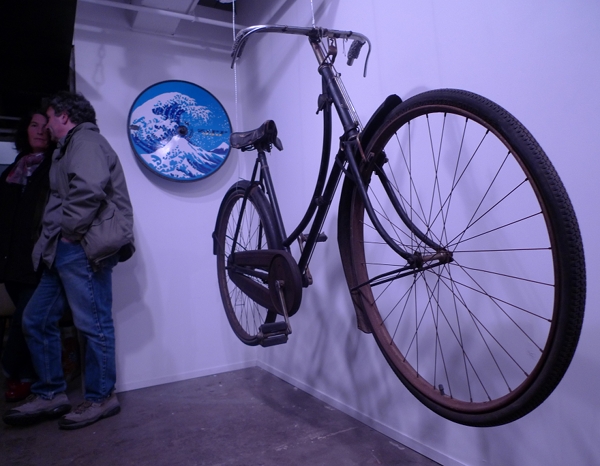
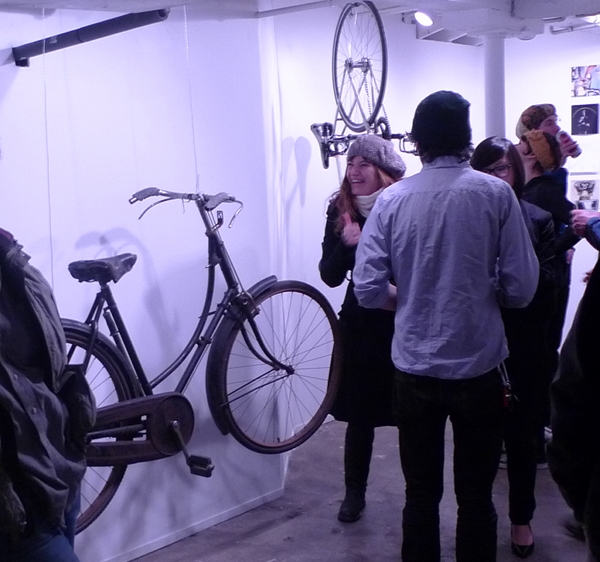
In addition to the grid of small works on the main wall, Spoke Count displays several bicycles that are of historical interest. These hang suspended from the ceiling, their gentle swaying evoking the comparison of cycling to the feeling of flying. Among the bicycles on display is my 1936 Raleigh Lady's Tourist (not for sale).

All in all, I felt that Spoke Count is a successful exhibition both in terms of the way it is put together and in terms of what it communicates. An additional question that is often asked in a themed show like this, is whether it stands on its own as an art exhibition per se, rather than just being a show for bicycle enthusiasts. For the most part, my answer to that would be "Yes". Joshua Kampa knows what he is doing when it comes to aesthetics and critical theory. And in terms of relevance, Spoke Count succeeds as a meditation on a significant social change that is currently taking place in the community. It is a small, cozy show that does not attempt any grand gestures. And yet it sends a strong, personal message.

In general, I would describe the Chorus Gallery not as a place that exhibits "bicycle themed art", but as a gallery featuring a diverse selection of young local artists whose work is occasionally related to the theme of bicycles or self-propelled movement. Having said that, one thing I believe would help the gallery affirm itself as a community art space, is making an effort to reach out to a more diverse audience. The openings at Chorus are always exceptionally well attended. But in some previous ones I have been to, there was a feeling that all the attendees knew each other and that the event was more of a party than an art opening. And while such an atmosphere is fun and full of energy, it can feel alienating to visitors who have come to see the art and are not part of "the scene". At Spoke Count, I noted a more diverse group of visitors than at previous openings, and I hope this trend continues. As a community art space in Union Square in Somerville, the Chorus Gallery has tremendous potential and I am looking forward to its future shows.
Saturday, January 2, 2010

Parka Time?

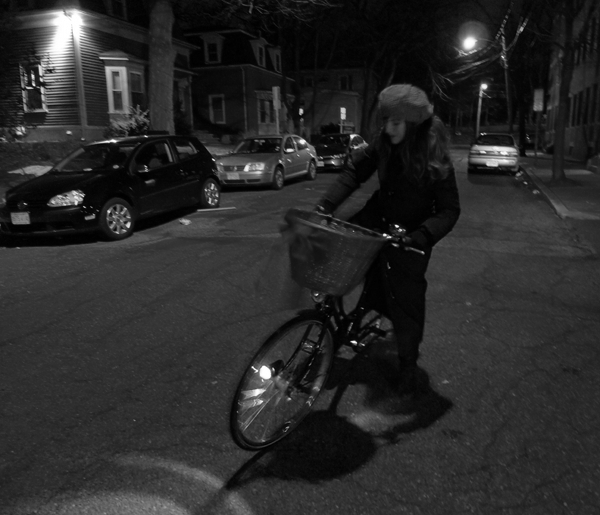
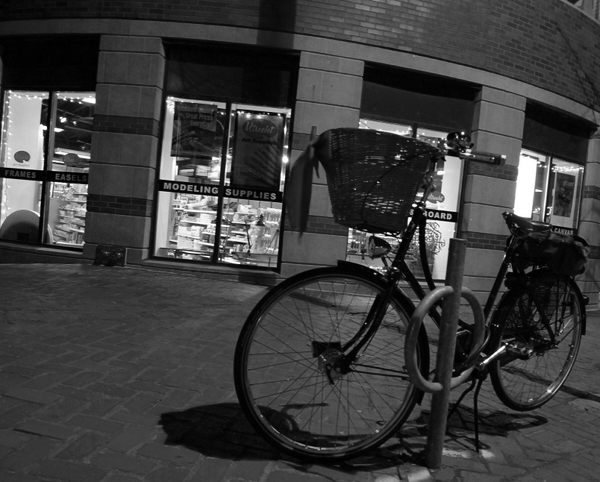
On one of the most frigid nights before 2010, we went on a late-evening errand to the art store. Not wanting to have yet another "I am too cold to enjoy cycling" experience, I resorted to my floor-length down parka.

It may seem improbable that one can cycle in a coat like this, but it is doable. What you need is the kind of parka that unzips both from the top and from the bottom. I simply unzip it from the bottom to create whatever size opening I need for pedaling.

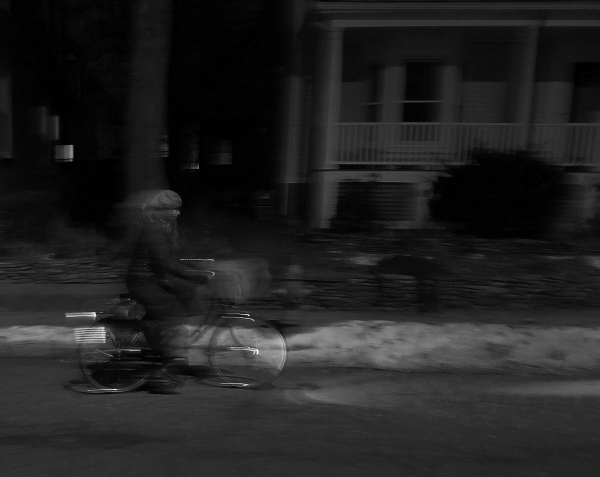
Bike and parka in motion. The shot is blurry but it shows off my headlight beams. The dynamo-powered headlight points forward (the beam furthest ahead of the bike), while the LED headlight points down at the road. This is essential when there are trecherous patches of black ice on the road, like now.
The art store is about a 20 minute walk from my house, or 5-7 minutes by bike. This is fairly representative of what my winter rides are like. Most of my current daily destinations are only 1-2 miles from my house, which makes for very short bike rides. For longer destinations, I used to rely on the Charles River Trail, which is not accessible once there is ice or snow on the ground - so in the winter I have not been going to those further-away places nearly as much.

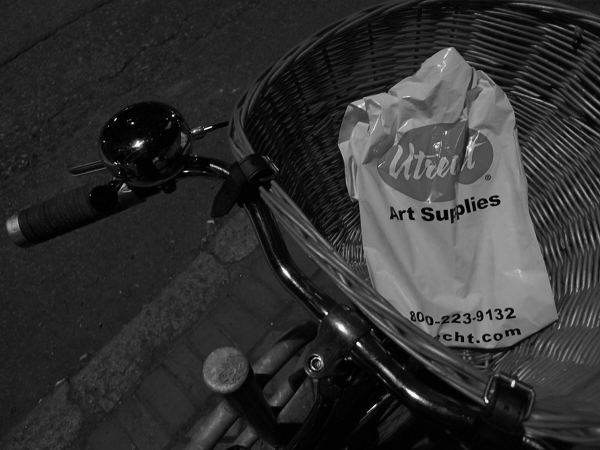
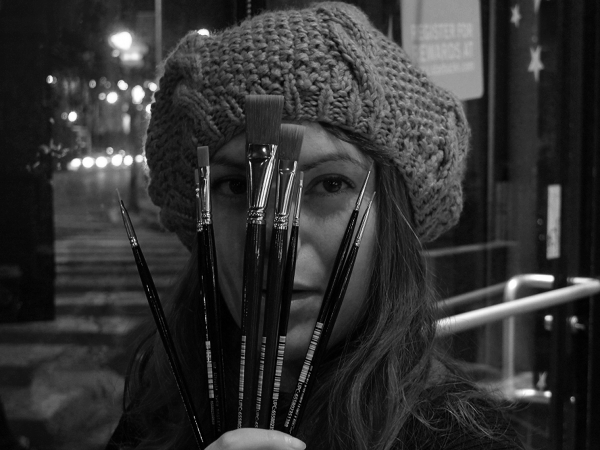
Goods from the art store. The small bag looks deceptively modest, but the content - paintbrushes - can be painfully expensive. The store was having a sale and this was the last day of it, so I am glad I remembered on time.

Happy with my new paintbrushes.

After the art store, we decided to experiment with what it would be like to take a longer ride in freezing temperatures, and rode for a bit on a major road that leads out of town, stopping at a coffee shop and then heading home. It was okay, but did not feel entirely safe. The right lane was like an obstacle course: clusters of hardened snow suddenly popping up, potholes, icy patches. In addition to the parked cars on the right and moving cars on the left, it was a bit overwhelming to constantly watch out for all this, especially after dark. The good news is that with the parka I was at least able to finally cycle in these temperatures without feeling uncomfortable. A parka may look silly on a bike, but so what!

Tuesday, December 1, 2009

The Bicycle as Art Model

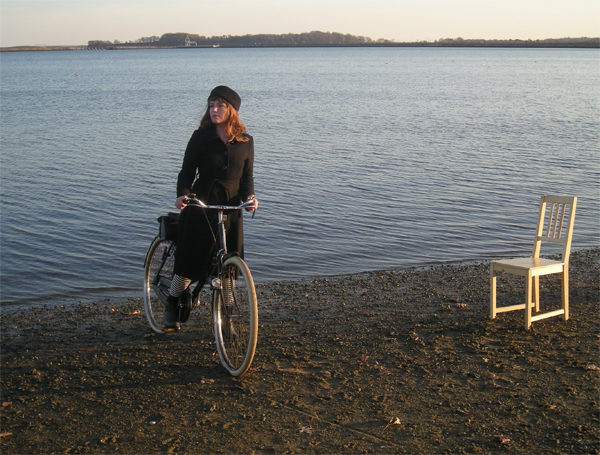
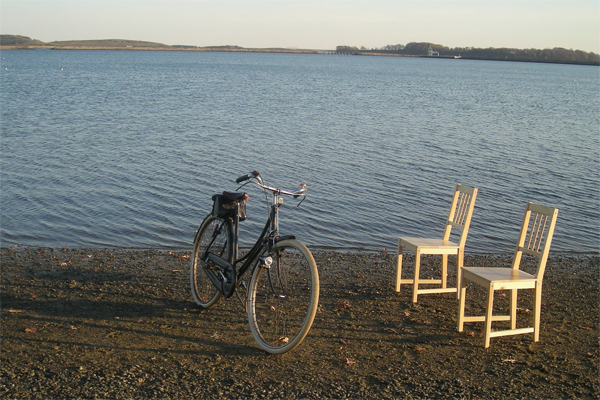
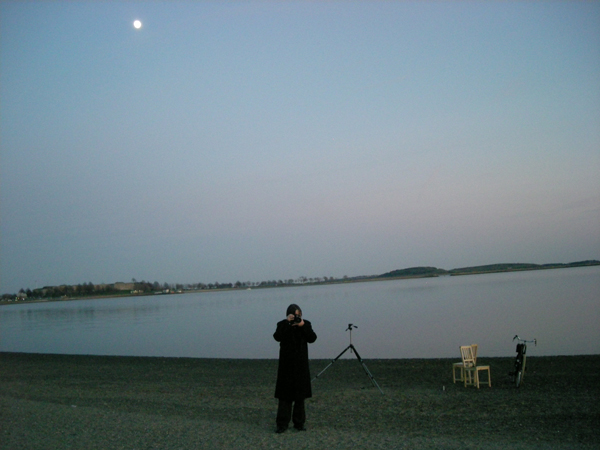
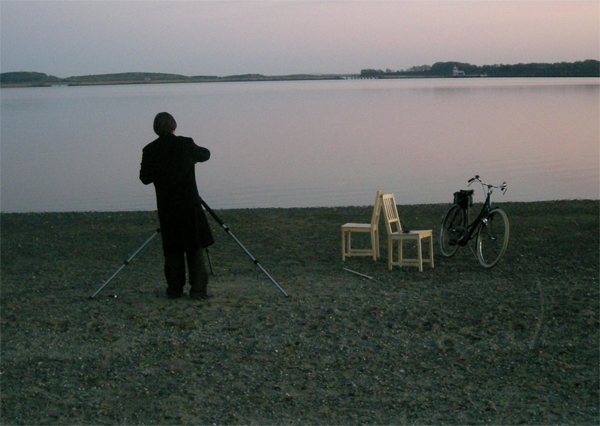
I try to keep my non-bicycle-related life separate from this weblog. However, I have already mentioned that I am an artist and support myself financially with an academic dayjob. Well, this week the bicycle world and my professional life collided. That is to say, I used a bicycle in one of my art projects. Here is the Co-Habitant dismantling the tripod after a photoshoot on the South Boston waterfront. And that's Velouria in the background, next to the two wooden chairs.

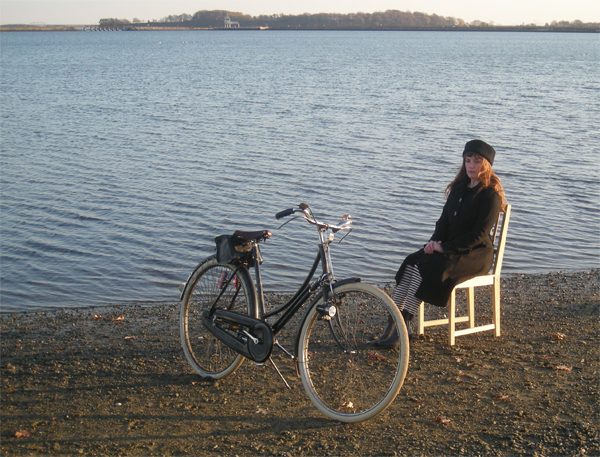
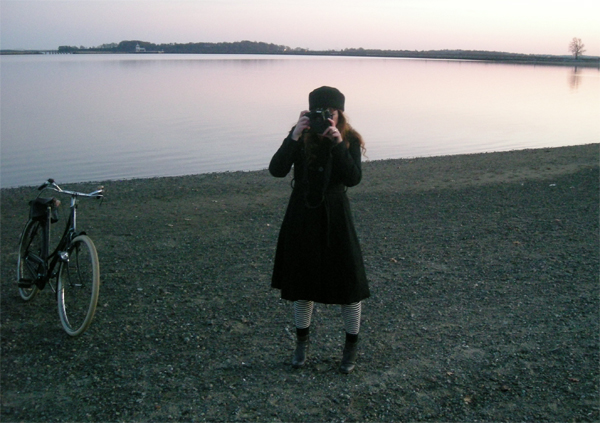
My art is a little difficult to describe. Technically, I am a painter. But before I paint, I create the fictional worlds depicted in those paintings by making series of photographic "tableaux-style" stills. This part is done by both myself and the Co-Habitant as a team: We work together, where he is the technical expert and I am the set designer. We both take the photos, but he is responsible for setting up the technical aspects of the shots and I am responsible for the composition. We use manual film cameras and usually black and white film. But we always have a digital camera along, because it is useful for testing out compositional ideas, getting a sense of the lighting, and so on. So these are some of the pictures off of the digital camera that were taken during the photoshoot. Some were for compositional and light metering purposes, but in others we were just fooling around.

The idea here was to set up an environment that combined notions of indoor and outdoor space.We then enacted a variety of metaphorical scenes using this set-up.

The above picture is an example of "bad composition" that we, thankfully, caught on the digital camera before wasting expensive film on these shots. See how my feet overlap with the bicycle wheel? That's no good; the chair should be further away. For things like that, a quick little digital camera is extremely useful.

A much better composition, for a different scene.

Well, that's enough of the pretentious artsy shots. Here is another one of the Co-Habitant after the photoshoot was done. I was very proud to have captured the full moon here.

And here I am. I really hope that Velouria does not let this shoot go to her head. It's one thing to be featured on a bicycle blog, but being an art model is altogether different!

Van Sweringen Photography: Yehuda approves!

How cool! I went to read the Yehuda Moon comic strip last night, and something on the website looked very familiar.

It took a while for it to hit me, but those are my photos used as examples of the Van Sweringen Flickr group. Thanks, Yehuda! So nice of you to pick my photos. From left to right, they are: Somervillain's Raleigh DL1, the Co-Habitant's Raleigh DL-1, and the Co-Habitant's Pashley.

The Co-Habitant's "track bike". I guess the Pashley does look very much Van Sweringen-ish, especially with those bags attached.

If you have no idea what I am talking about here, then clearly you are not yet addicted to the microcosm of Yehuda Moon and the Kickstand Cyclery. Do yourself a favour and pay them a visit; best comic strip ever!

Monday, April 14, 2008

Torch’s Motorcycle / Biker Art Links / Directory


Torch's Motorcycle / Biker Art Links / Directory:

A2k Motorcycle Patches

AD Cook

Airbrush Art

Airbrush Guy

AJ’s Art Works

Angry Pineapple Photography

Anita Carden

Arrow Art

Art Biker

Art Biker Blog

Art byVision

Art by Weeze

Artepfau

Art of Motoring

Biker Crossroads

Biplane Ventures

Bob Sofford Photography

Brian Casey

Bronze Bike

Bullivant Gallery

Chicks on Bikes

Chrome Grasshopper Custom Bars

Colleen Swartz Photography

Cruisin’ Goods

David LaFrance

David Mann

Daytona Thunderwear

Deborah Walsh

DN Graphics

Douglas Downs

Dream Machine

Duane Ballard Custom Leather
eMotion Motorcycle Art

Eric Herrmann

Edgewater Studios

F1 in Oils

Fine Airbrush

Garage Leathers

Gary Booth

Gary Rather

Glynn Kerr

Gordon Fraser Artwork

Grant Hood

Graves Graphics

Harry Did It

Hairy Designs

Hangout at Flames

Harmon Motorcycle Art

HD Art Gallery

Henley’s Kustom Painting

Hogwash Humor

Hot Brush’n

Ignition Gallery

Immortal Bikes

Iron Cowgirl Missy

Iron Plated

James "Kingneon" Gucwa

Jay Moody

J.D. Starr

Jeanette Tweddell

Jeff Cochran Speedking Photography

Jim Blanchard

John Guillemette

Killer Paint

King Lang Art

Lary Lockwood

Life Is a Road

Lin Beattie

Linkartworks

Liquid Illusions

Mark Patrick Studio

Max Port

Michael Lichter Photography

MotoGP Paint

Motorarts

Moto Paint

Motorcycle Art

Motorcycle Art Drawings

Motorcycle Memories

Motorcycle Posters

Motor Marc Art

Neil Peart

Night Rider Jewelry

Over the Chrome

Pageant Paintwork

Personal-Artspace

Peter Hamlett

Phil Aynsley Photography

Photo Cross Action

Photocycles

Posson Sculpture

Rob Kinsey

Rod Organ

Ronnie Cramer

Sara Liberte

Stefanie Aziere-Stattler

Scott Jacobs

Silverwood Art

Steve Dunn

Steve Whyman

Style Saver Scarves

The Artistic Biker

Tire Rings

Total Biker FM

Tripple Sixers

Twist of the Wrist II

Urban Biker Goddess

Wesley Baker

Woodcycle Art


email me to add your site.

Ride on,
Torch


Reblog this post [with Zemanta]