What luck I have. Beset by medical and dental problems simultaneously, the past few days have left me drained. We went for a super slow ride on Saturday, but even that was difficult to manage in my drugged up, diminished lung capacity state. But when we passed
Cambridge Bicycle I knew there was one thing that could make me feel better. A basket. Of course. What better cure for life's woes?
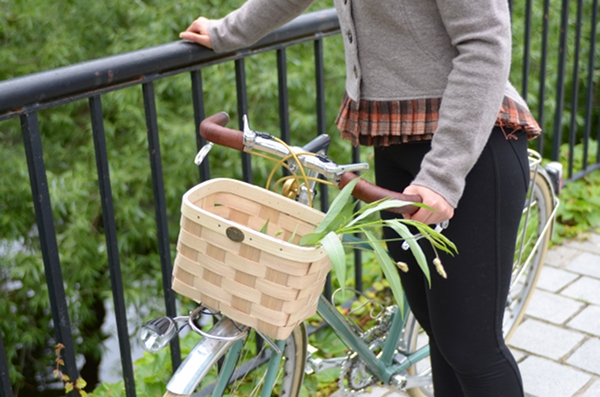
I have been eying this particular basket for months, and finally she is mine! It is made by the
Peterboro Basket Company in New Hampshire, out of locally harvested White Ash. I think the model is
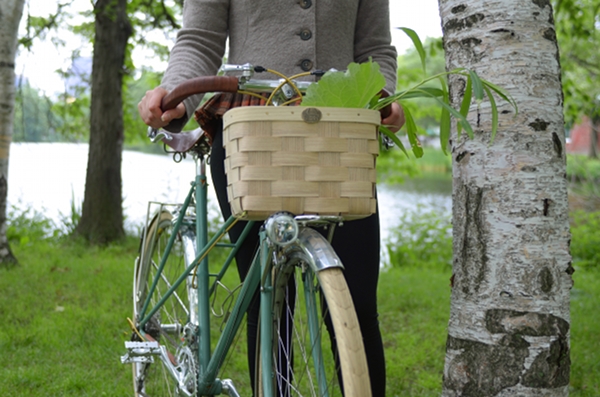
this one. This basket is small, boxy, with a rectangular footprint, and it does not taper from top to bottom - which was exactly the style I wanted for this bicycle.
I refer to this as Basket 2.0, because I did not get along that well with the
large wicker basket on my formerly-owned
Pashley, and eventually
removed it. This time around I looked for attributes that I hope will work for me.
For one thing, the
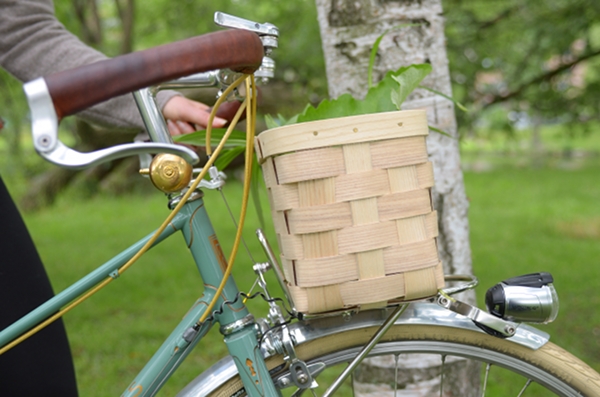
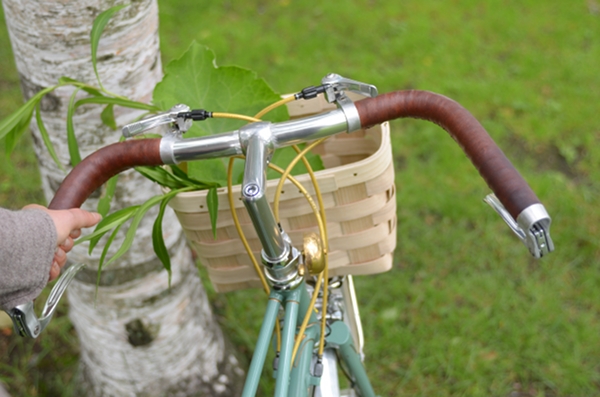
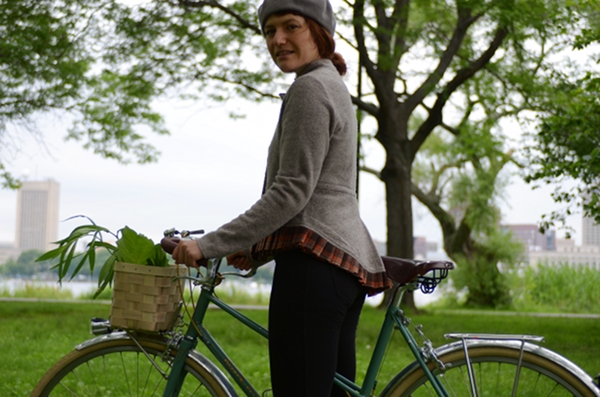
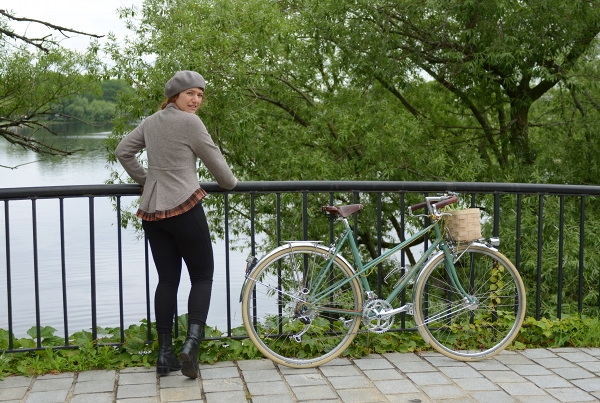
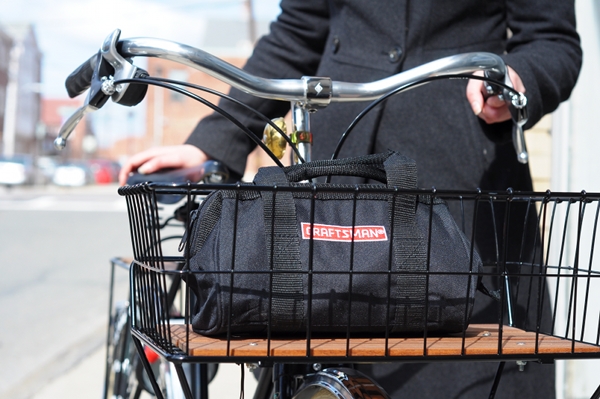
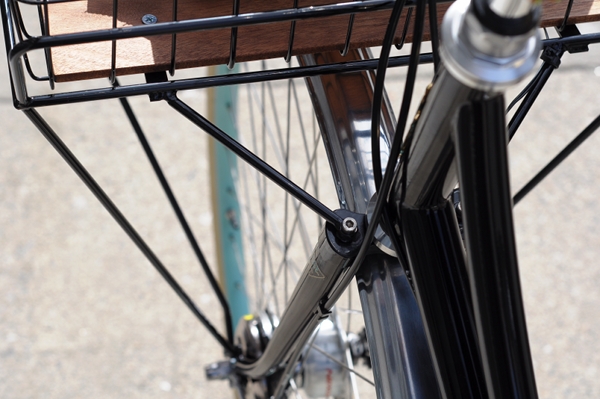
Peterboro basket is fairly small, with a low profile and sides that don't stick out too far. It is also feather-light, made of such thin slivers of Ash that it almost feels like Balsa wood. Finally, we attached it directly to a front rack and not to handlebars, which minimises its impact on steering. Though the basket came with leather straps and metal buckles, we removed these and fastened it to the rack with zip ties. The straps and buckles were heavier than the basket itself, so doing this really made it weightless, as well as eliminated any potential jiggling.
Cambridge Bicycle were nice enough to give us a handful of zip ties and some wire cutters, and we installed the basket right outside the shop in a matter of minutes.
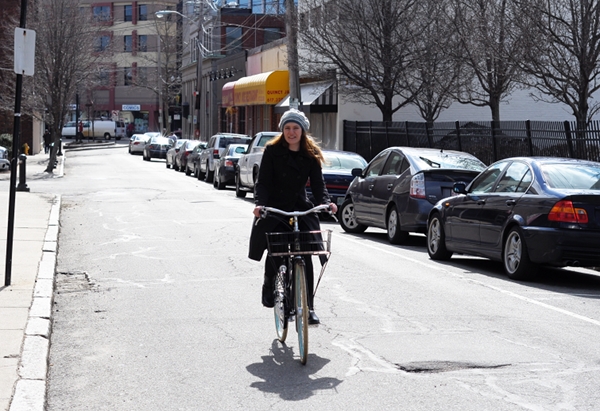
When the basket is empty, I cannot feel it on the bike at all. It does not cause the wheel to flop to the side when the bike is parked.
It also leaves the frontmost tip of the tire unobscured, so that I can still see it while cycling. When a huge basket obscures the entire front wheel, I have a harder time feeling connected to the steering, but this is not an issue here.
When the basket is full, the weight feels well distributed and does not interfere with either steering or balance. With dimensions of 10.25" x 7" x 7" it is not meant to carry large objects; I have a rear rack and panniers for that. But the squat, boxy shape allows it to accommodate more stuff than you might think. As pictured above, the basket contains a huge portion of smoked salmon, a bucket of cream cheese, an economy pack of cheese sticks, a blueberry encrusted "goat cheese log," and a flower bouquet. There is room for more.
Since I am now using the mixte predominantly
as a transportation bike, I wanted to maximise its utility as such. This basket provides a useful space for a jacket, camera, small handbag, or even a quick grocery store purchase, without impacting handling or (to my eye at least) marring the looks of the bike. The Co-Habitant wasn't too crazy about the look at first, but it grew on him. What do you think? What front-mounted basket systems have you used on your bikes, and have they ultimately worked for you? The difference between this set-up and the large, handlebar-mounted basket I used to have on the
Pashley Princess is like night and day.






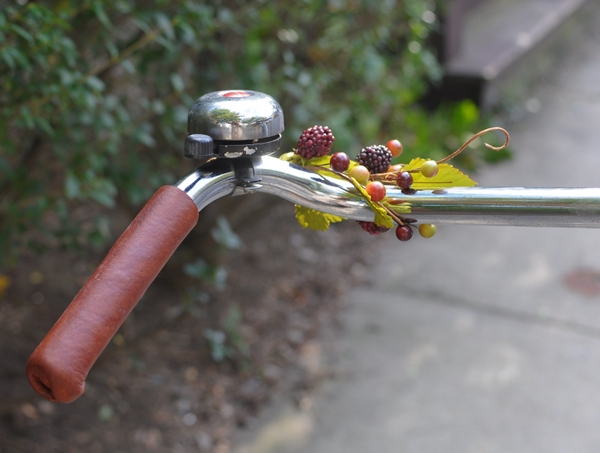
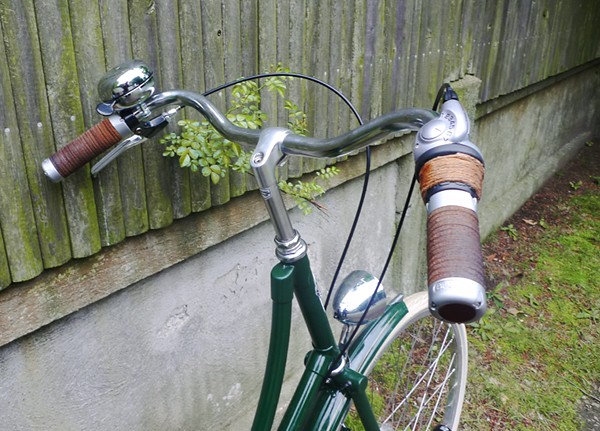

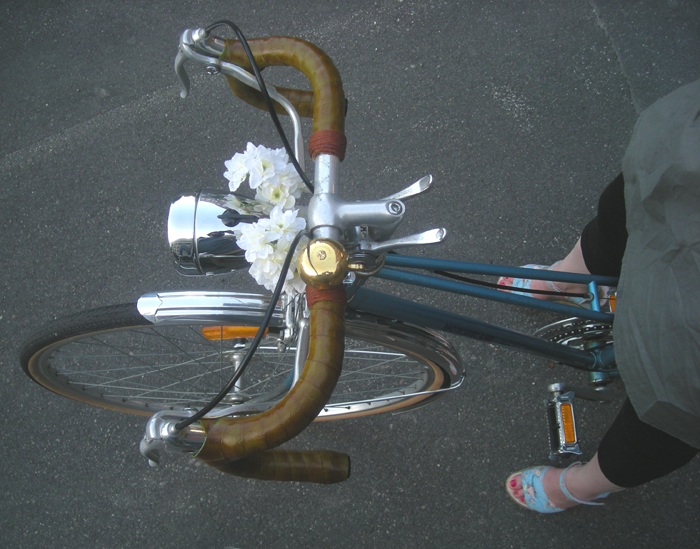 In theory, I love the look of shellacked cork grips and shellacked cork bartape. In practice, I found that the feel of shellacked cork is too glassy and slippery for my liking. The more layers of shellac, the nicer the cork looks... and the worse it feels to my hands. I really wanted to like it, but it just does not work for me. I prefer un-shellacked cork, shellacked cloth tape, leather grips, and even plastic grips.
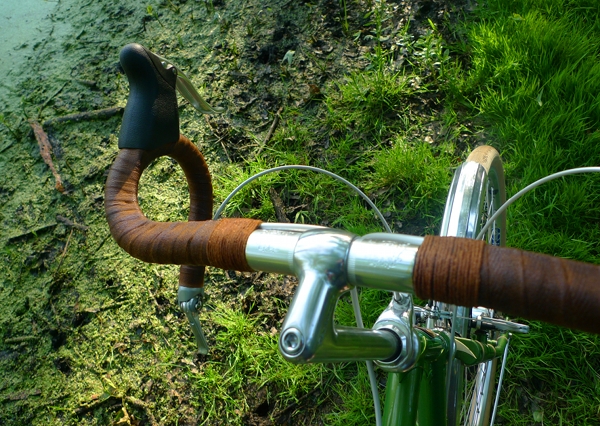 Inexpensive cloth tape with just a couple of thin layers of shellac. Not as fancy and shiny, but my hands prefer it.
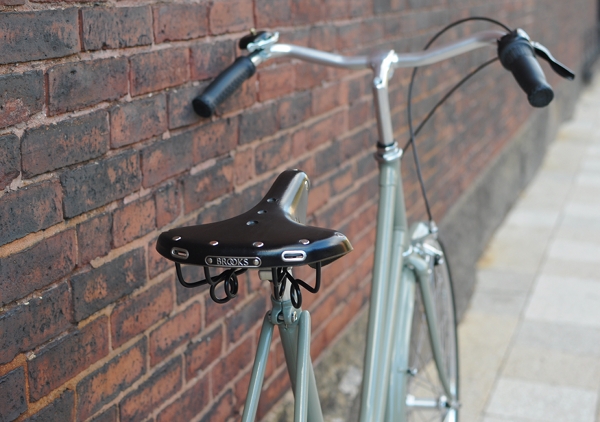
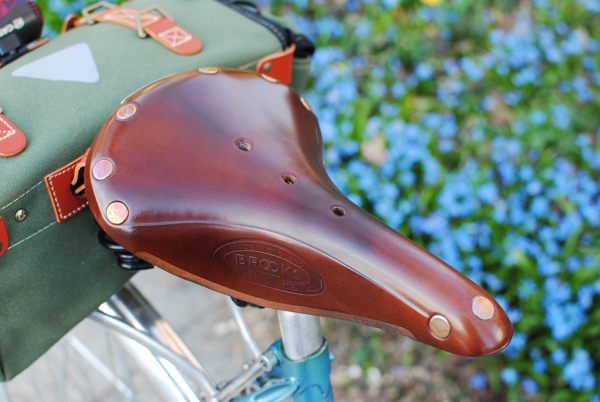 The "Special" version of Brooks saddles. I love the look of Brooks "Special" saddles with their pretty copper rivets - so much so, that last summer I paid a bit extra for a Flyer Special for my vintage Motobecane mixte, instead of getting the Standard. I have since learned that the Special versions of the saddles are apparently made of a thicker leather. In theory this is a good thing, as the saddles are more durable. In practice, it has proven impossible for me to break in my Flyer Special! A year later, and it still hurts.
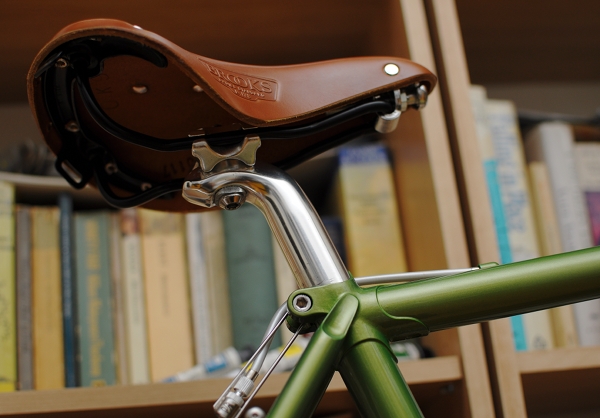 The B17 Standard on my Hillborne has less of a "wow" factor, but I don't care: It took me a week to break in this saddle!
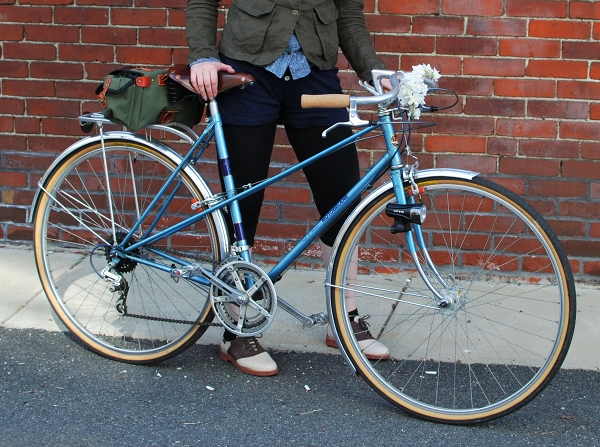 Last year, Honjo fluted fenders seemed like such a beautiful choice for Marianne. But while they truly are picture-perfect, they did not stay that way for long once I began riding my bike. The long smooth fluted surfaces of these fenders showcase every micro-scratch, and after a few months mine began to look pretty beat up. By contrast, the Co-Habitant's hammered Honjos disguise scratches and dents, as they are essentially "pre-dented". Though I prefer the look of the fluted model, I regret having bought such expensive fenders only to have them look battered. You live, you learn.
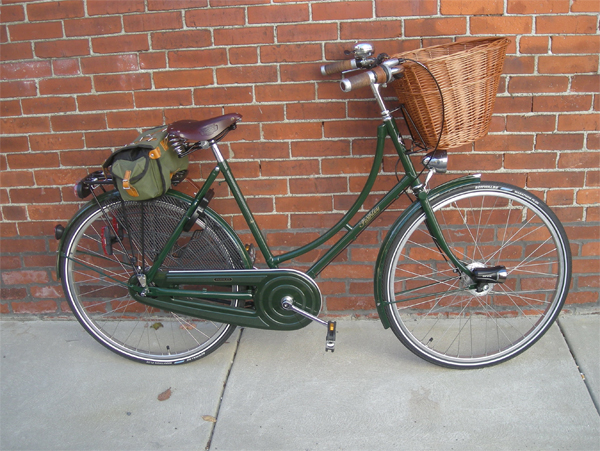 And then of course there is the lovely front wicker basket - that ultimate symbol of civilised, romantic cycling. Alas, it was not meant to be: experience has shown that I prefer the front of my bike to be free of large wicker objects, no matter how beautiful.
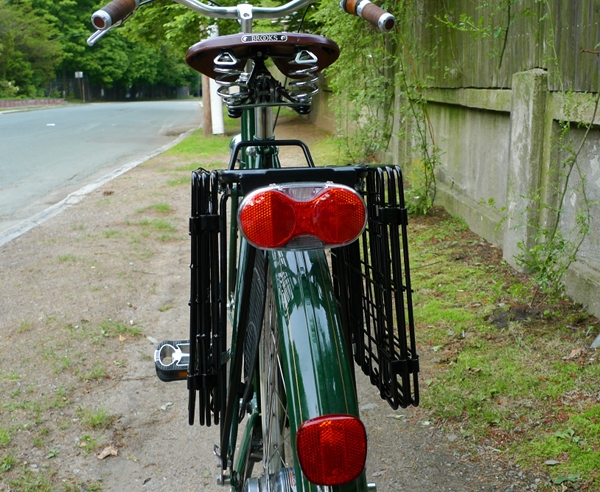 Instead, these rear folding baskets have proven to be just the thing for me. Not as cute as a wicker basket in the font, but they suit me better.
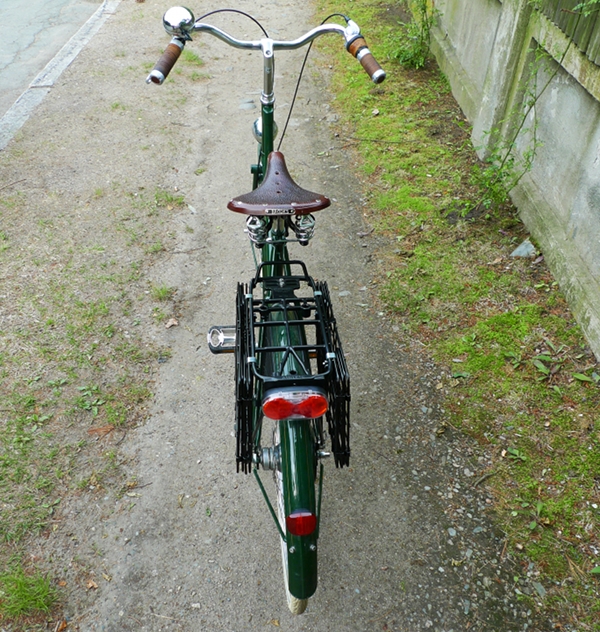 The Wald folding baskets are perceived as practical and inexpensive, but unglamorous. People tend to put them on their old 3-speeds and beater bikes, but rarely will you find them a "nice" bike. I too would have been reluctant to install them on the Pashley. But having used these in Austria on Jacqueline, I saw that they can look elegant on the right bicycle.
 The Co-Habitant carries one of those multi-use tools at all times, so he installed the baskets for me as soon as we bought them.
 Each basket mounts to the rack via 3 bolt-on metal brackets (which are included): two on top and one on the bottom.
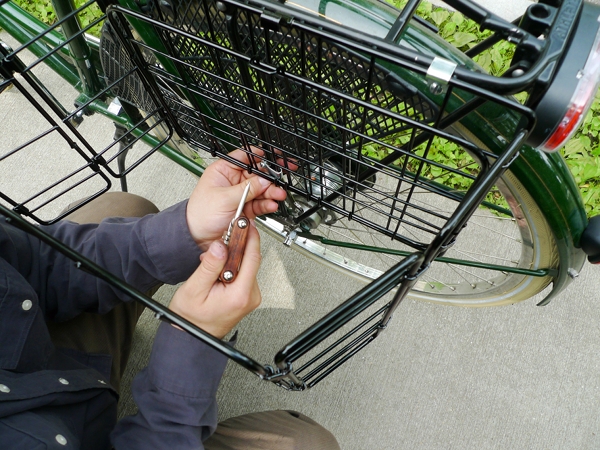 Here is the bottom one. Some people use zip ties in addition to or instead of the brackets.
 The baskets lie flush with the bicycle's rear rack when folded. To unfold, you lift a metal tab on top and pull out the sides.
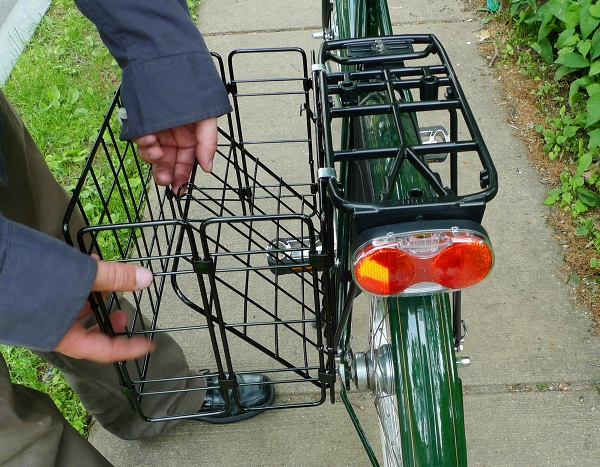 Then lower the bottom, click it into place, and voila!
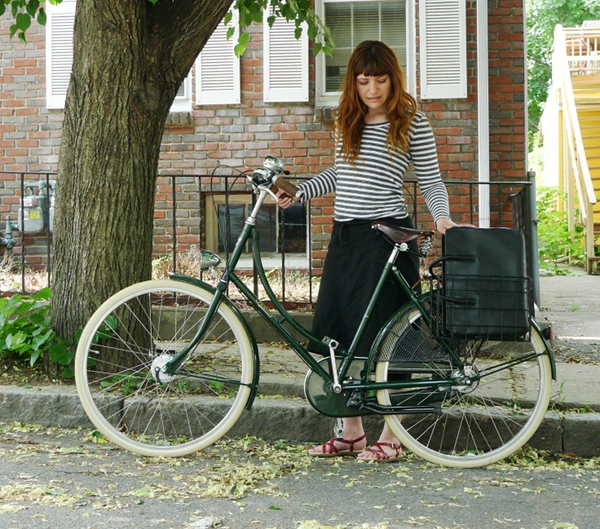 Here is the basket transporting my workbag - which houses my laptop, documents, and about a dozen other things. The bag is very secure in there, much more so than in the front wicker basket of yore. For me, this system really works. When cycling for transportation I prefer to keep my things in my normal, favourite workbag, and then to be able to place the bag into some form of container on the bicycle. Click-on panniers that double as laptop bags or handbags don't really do it for me, because I want to be free to carry any bag I want when off the bike - including my photo bag. Of course, an additional benefit of a metal basket, is that I can leave the bike anywhere and not worry about its bags being pillaged or removed.
 Here you can see the position of the baskets in relation to the rider. It's a very tidy system.
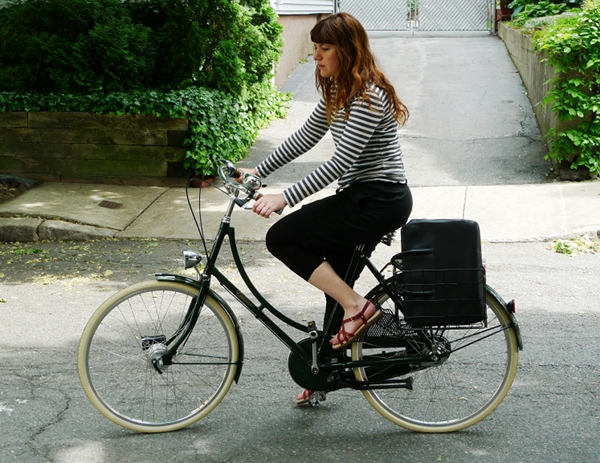 On my Pashley there is no foot strike or leg rub when pedaling, but this really depends on a bike's geometry.
 When I was explaining to the Co-Habitant months ago that the Princess feels slow to accelerate from a stop compared to my other bicycles, he immediately suggested that the basket might be at fault - producing wind resistance at slow speeds with its dense wicker enormity. I dismissed this idea for a while, because the basket is just so nice. I did not want to believe it could have any significant role in slowing me down.
 But after the de-basketification procedure (we finally got some wrenches that allowed us to remove the handlebars and take off the entire basket support system), I have to admit that he was right. Without the basket, the Princess is faster to accelerate from a stop, and it is also easier to maneuver. I guess I am just not a "front basket kind of girl" despite liking them aesthetically. I miss the basket being there, but the handling and speed of the bicycle are so improved by its absence that I just can't see myself willingly re-attaching it. Instead, I will get some roomy panniers for the rear rack to increase load capacity.
 In addition to the de-basketification, we changed the angle and rise of the handlebars some more, so that they resemble a vintage roadster set-up and allow for a more aggressive - yet still upright and comfortable - posture. This has further improved things, and I prefer the look as well - reminds me of a path racer!
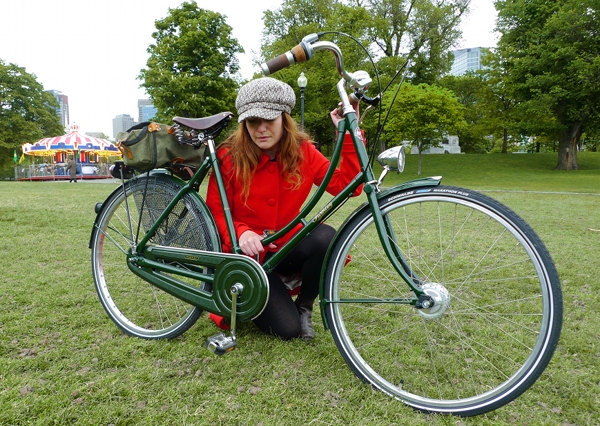 With these changes and the effects they've had, I think I will keep the bicycle and continue tinkering with it. I would like to replace the Marathon Plus tires with cream Delta Cruisers, and I think this will make the Princess zippier still. This bicycle may not be super fast or light, but it is undeniably safer and more comfortable in bad weather than any other bike I have been on, and that is no small thing.
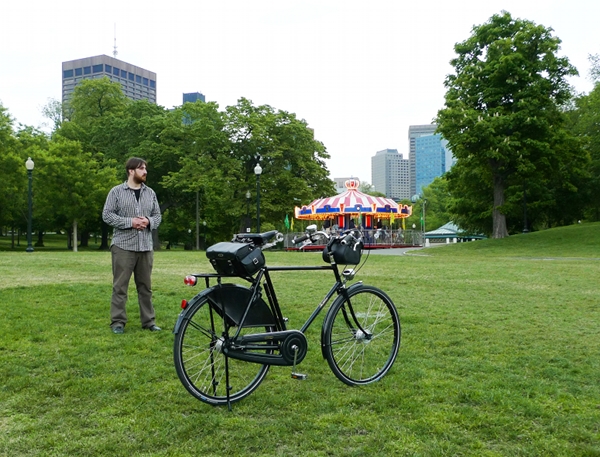 The Co-Habitant's Roadster is happy that the Princess will be staying, and he assures her that she looks just as good without the basket as with. If anything, her graceful long neck is now more visible and all the better to admire. What a flatterer!