Showing posts with label seven. Show all posts

Tuesday, July 5, 2011

Bikes, Trains, Sailboats

T-Warf, Rockport MA
After months of deliberation and procrastination, we've finally done it: Traveled by train with our bikes. For a while now we have wanted to cycle around Cape Ann, which is a beautiful area about 40 miles North of Boston - accessible by the MBTA Commuter Rail via the Rockport line. A number of people we know have taken this trip with their bikes, so it seemed doable. Also, I was delighted to spot the following notice on the MBTA website: "Commuter Rail re-introduces The Bike Coach on the Rockport line for the summer season." Bike coach! No other information was provided, so I did some research. Turns out they have commuter trains with special cars dedicated entirely to bikes - with bike racks as far as the eye can see, like this. But I could not find any information regarding its schedule, and it seemed that only some weekend trains were Bike Coach trains. A call to the MBTA was fruitless, so we decided to just show up and hope for the best.
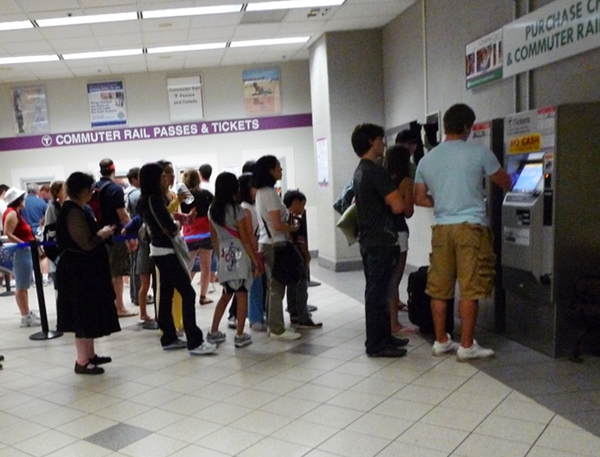
The commuter train to Cape Ann leaves from North Station, a 3.25 mile bike ride from our house through some of the busiest parts of Boston. I don't like cycling through the city on a roadbike, but on a Saturday morning the traffic wasn't bad. We arrived early, which was good as there was a line at the ticket machines. There were plenty of other people with bicycles. When our train arrived, the conductor came out and announced that all those with bikes must proceed to the first car of the train. Only those with bikes were allowed in that car. Only those without bikes were allowed in the other cars. The segregation gave us hope that this was the fabled Bike Coach, and we happily headed for the front car along with the procession of other cyclists. 

What happened next was rather stunning. The car we were ushered into had no accommodations for bikes what so ever - just a small corner of space at one end where a couple of handicapped seats had been removed. This was definitely not the Bike Coach. Nonetheless, everybody proceeded to drag their bikes on the train - more and more of them, until not only this corner, but the entire aisle was filled with bikes. When even that space ran out, new passengers began to pile their bikes on top of other bikes. Loud clunking noises filled the train as tubes smashed against derailleurs. 
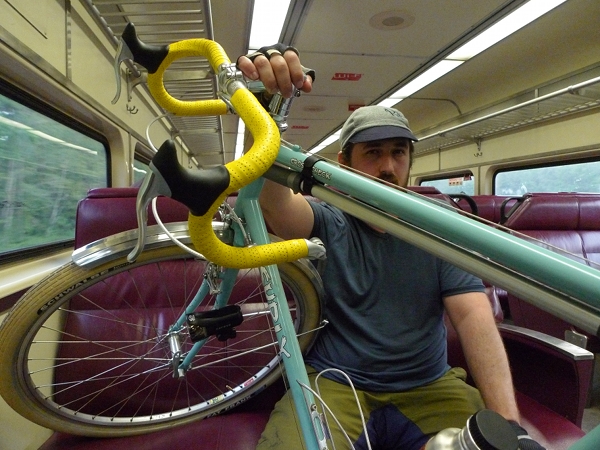
Not wanting our bikes damaged in the velo moshpit that ensued, we found a seat near the exit and sort of held our bikes on our laps the entire time. As you might imagine, it was uncomfortable to sit that way for an hour. But the alternative was to accept that a dozen 50lb mountain bikes would be thrown on top of our bicycles - which was not a viable option. So we tried to have a sense of humour about the whole thing and looked forward to reaching our destination while seriously discussing the possibility of Bromptons in the future. 
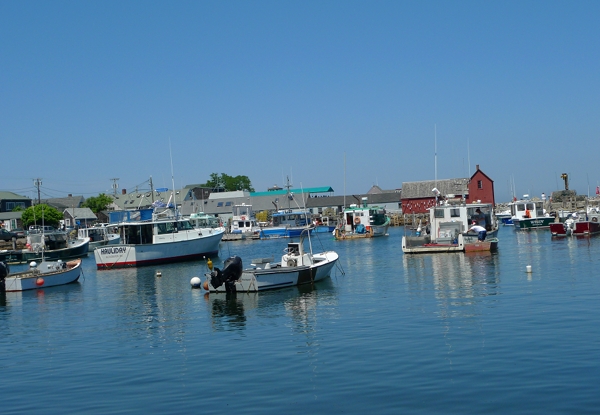
But no sooner had we reached Rockport than the train trauma was forgotten, as we were greeted with perfect weather and glorious coastal views. 
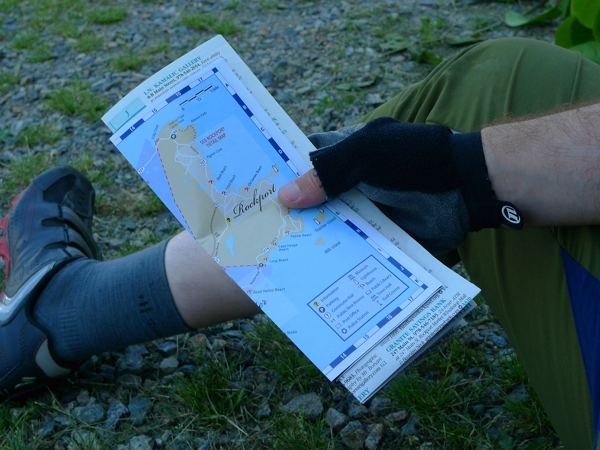
The Cape Ann peninsula consists of Rockport, Annisquam Village and Gloucester - each of them with beautiful scenery. Severed from the mainland by the winding Annisquam River, water views are everywhere. This was our first time in the area and we decided to do an exploratory loop along the coastline instead of a long-distance trip. The Cape Ann loop is about 20 miles, with mild but constant rolling hills, alternating between open water views and tree lined country roads. Especially considering the 4th of July weekend, the area was not crowded. Drivers were courteous everywhere except for the traffic circle in Gloucester, but even that was not too bad. Roads were good on the eastern side of the cape, but terrible on the western side. Navigation was intuitive - just follow the coastline! 

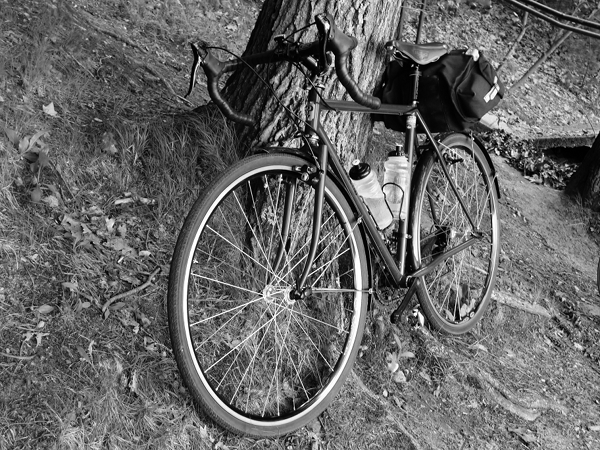
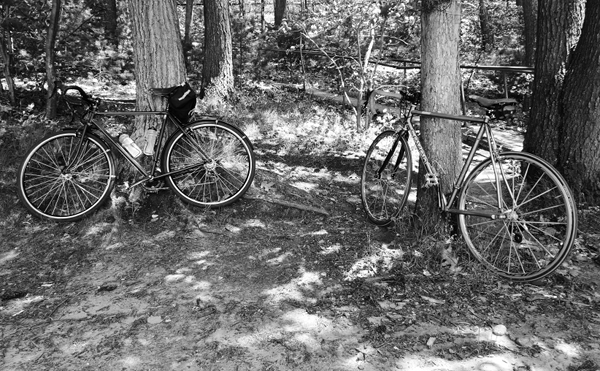
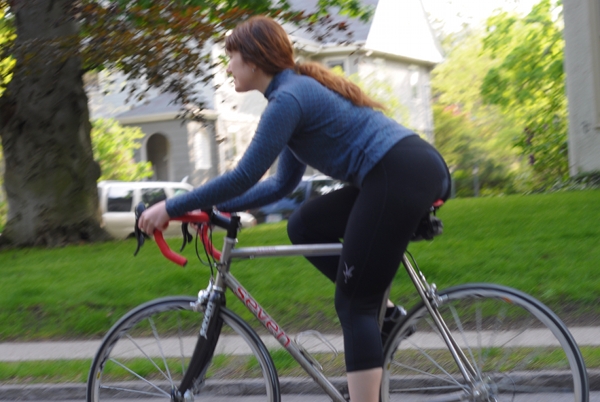
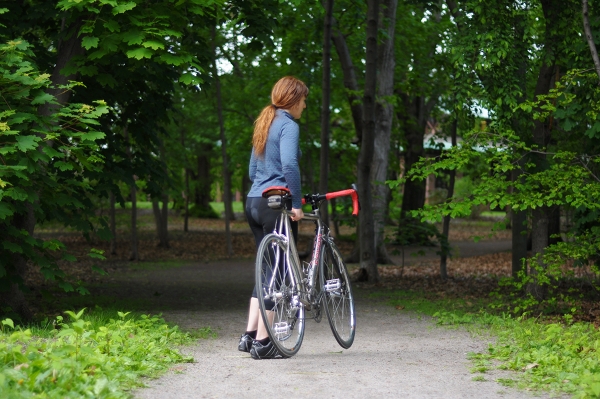
My Rivendell is in the midst of a small (but exciting) make-over, so I took the loaner Seven on this trip. Overall it was pretty good, though a burlier bike might have been a better choice on the pothole-ridden roads. We also ventured off road a bit, which was "interesting" on 23mm racing tires!
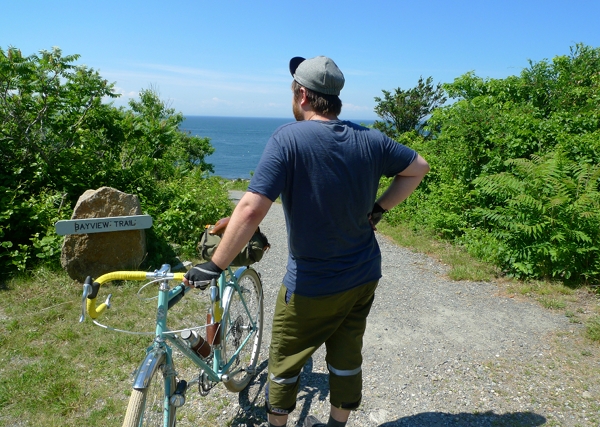
Cape Ann is even quieter and less commercially developed than we expected, a pleasant surprise. Lots of parks, meadows and nature reserves. Not too many parking lots. And "motel sprawl" is virtually non-existant - at least compared to places like Cape Cod, the NH Seacoast, and much of coastal Maine. 

Also, there are apparently sailboat races happening in Rockport - wonderful!
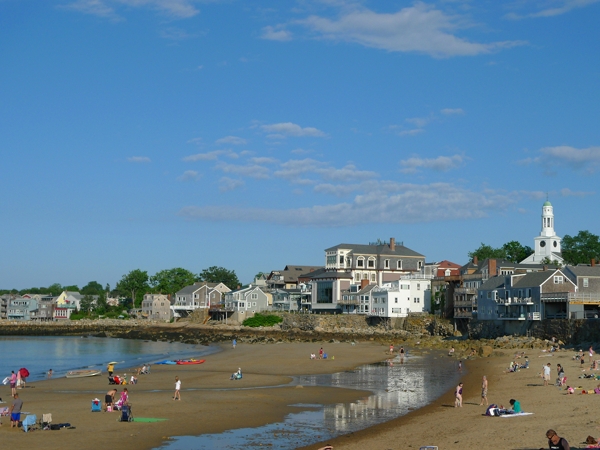
All in all, we loved the area and are now considering staying there for longer, instead of venturing further from home on vacation later this summer. After all - just load up our bikes on the commuter rail, it's so easy! Of course we'd forgotten about our train experience earlier that day. Or at least, we thought, there would surely not be as many bikes on the return trip. Or maybe we would finally get the mythical Bike Coach?
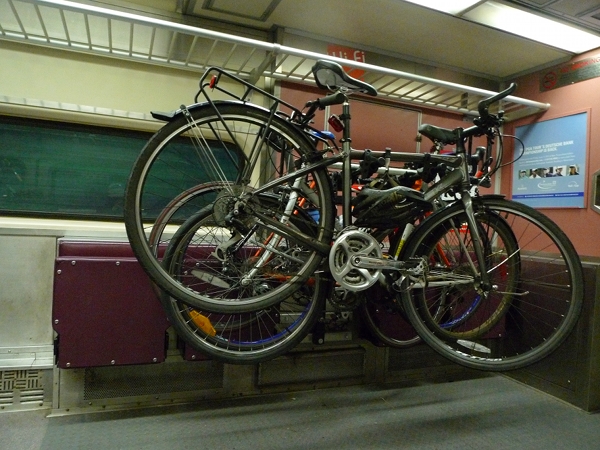
Nope, no such luck. On the return trip, passengers were once again segregated into those with bikes and those without, and this time the "bike car" had a car rack attached in the handicapped seating area. It accommodated 4-5 bikes, tightly squeezed, and was filled as soon as the train began to board.
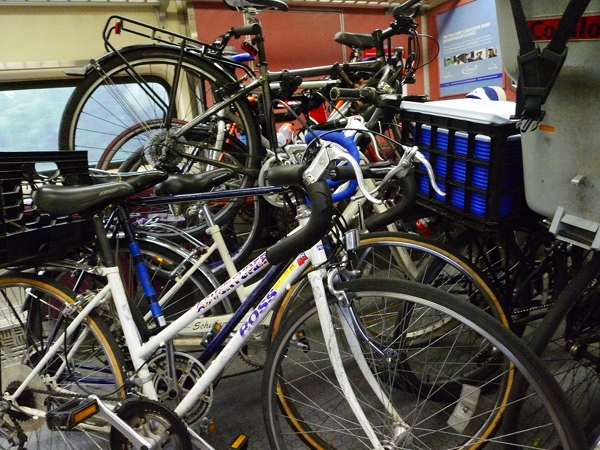
Minutes later, that pathetic little bike rack was surrounded by dozens of other bikes, stacked and thrown against one another haphazardly. 
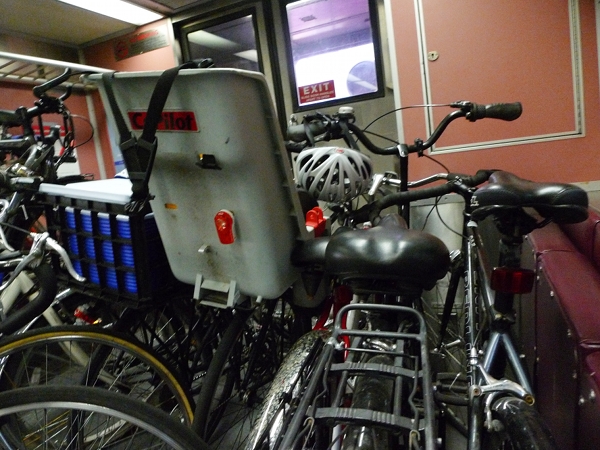
Exits were blocked, aisles were blocked - no one seemed to care. When passengers with bikes needed to get on or off, they would simply throw the other bikes out of the way and the whole thing was like one huge pile of scrap metal. So we held our bikes on our laps again - hugging them ever closer to our bodies as other passengers kept trying to pile their bikes on top of ours (yes, even while we were holding our bikes on our laps!). It was a madhouse and probably violated all sorts of safety regulations. The MBTA clearly needs to have these alleged Bike Coach cars run with more frequency and on a predictable schedule. As we now understand it, the schedule is random and there is no way to time your trip to ensure that you will get a Bike Coach. Sounds improbable, but that's how it is!
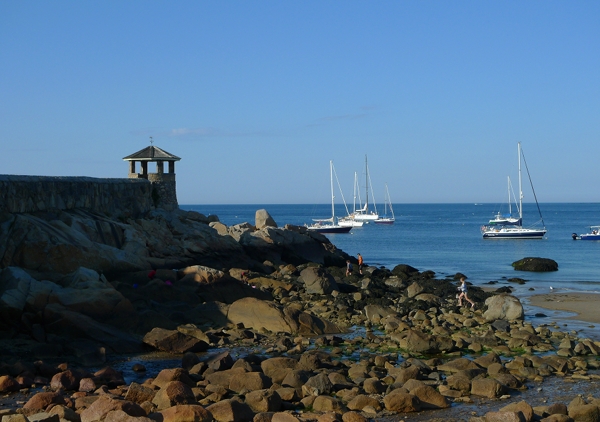
Late in the evening, we rode home from the station along mostly empty city streets, recuperating from the train but also satiated from a day of exploring such a beautiful new place by bicycle. We only cycled 30 miles over all, and the point of the trip was mainly to hang out and get to know the area. Next time we will plan for a longer route. The North Shore is a great starting point for long distance touring: While there is no pleasant bicycle route North out of Boston, from Cape Ann we could just continue to cycle along the coast to Maine. Definitely something to consider, despite the less than ideal commuter rail experience.

What is it like to travel on a train with a bike where you live, and do you do it often?
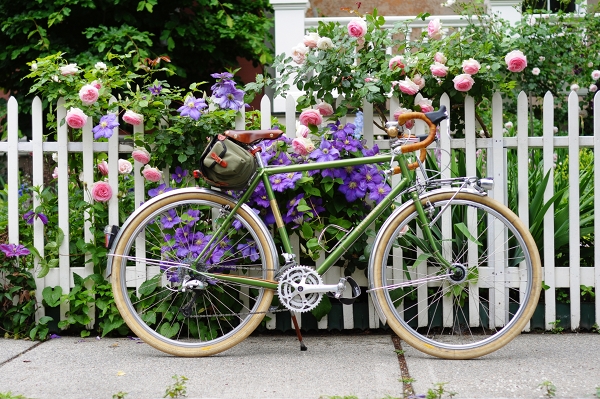
Tuesday, June 21, 2011

Back and Forth: Lessons in Positioning

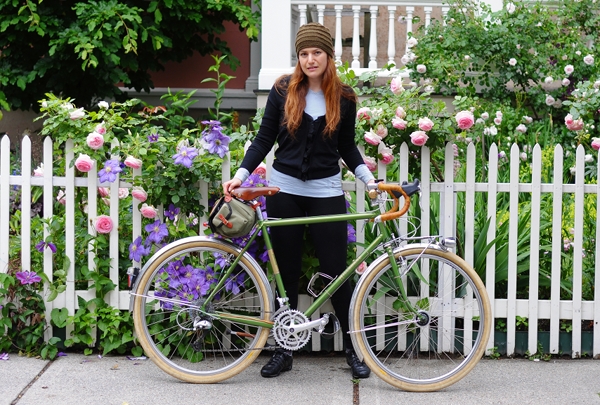
Last week I rode my Rivendell Sam Hillborne for the first time in three weeks after riding exclusively the loaner Seven on a close to daily basis. It's hard to believe that the body can adapt to one position so quickly as to find other positions unnatural. I confidently got on my bike, expecting that old familiar feeling of riding it to welcome me back. But I was in for a surprise. The ride was as comfortable as I remembered, but everything felt off. It took me a while to understand what was wrong. Initially it was just a vague sense of not feeling as connected to the road and as much in control of the bike, which was disconcerting. As I kept cycling, I became aware that it was really two specific things: I felt that I was seated too far back, and that I wasn't out far enough over the front wheel. I kept wanting to shove my weight forward, and it was frustrating to feel almost as if I were sitting "behind" the bike. 

Looking at the way the two bicycles are set up, the difference makes sense. On the Seven, the saddle sits further forward and the handlebars are further out. I was aware of this difference before, but assumed that I would find the Seven's set-up aggressive and uncomfortable, while the Rivendell's set-up a welcome relief. Instead the Seven's set-up now feels "right" and anything deviating from it feels "wrong" - as if I don't have sufficient control of the bike. That feeling is hard to shake. I think my Rivendell needs a little make-over. 

While moving the saddle forward is easy enough, changing the handlebar set-up will be messy, because I will have to replace the fairly short (6cm) stem with a longer one. When I fist began trying to ride with drop bars, I found it extremely difficult and a short stem was recommended to make the transition easier. I cannot say that it was a poor recommendation, because it worked. I rode with this set-up for a year, gradually becoming more comfortable with the whole idea of a roadbike, and feeling increasingly natural in a forward-leaning position. Some would look at my bikes and point out that my stems are too short, and I was perfectly aware that by most standards they are. But these things are highly personal, and last year I was concerned not so much with speed and agility, as with just being able to ride the bike. The way a bike balanced with a shorter stem felt better to me at the time. For what it's worth, I see many roadbikes from the 1970s-80s that were ridden by women set up with short stems. My previously owned vintage Trek had an even shorter stem than this bike, and that was the original owner's doing.

Going back and forth between the Seven and the Rivendell has been educational; each has what the other lacks. It is fairly clear to me that I "need" a lightweight, purely-roadish roadbike like the Seven and that I also "need" a wide-tired, befendered, dynamo-hub, luggage-bearing long distance bike like the Rivendell. I would not want to turn one into the other, or to combine them into something in-between. If I could make changes to the Seven, it would be to magically decrease its size. If I could make changes to the Rivendell, it would be to alter its positioning and to make it lighter. The former we will be doing shortly. The latter is not really possible without getting rid of the very things that make this bike practical. But I am very curious now whether it is the positioning, more than anything else that accounts for the difference in speed between the two bicycles. I am also wondering what the "ideal" stem length for this bike would be. The top tube is unusually long, so it would have to be 8-9cm tops. It's frustrating that experimenting with stems is not easy, but I will report the results of my trial-and-error fumblings. 

Thursday, June 9, 2011

Paceline Ride, Take 2... or How I Psyched Myself Out, Then Had Fun After All

After two weeks of cancellations due to inclement weather and a week skipped due to injury, I finally did my second paceline ride. Because so much time passed since the previous one, the whole thing had gotten completely blown out of proportion in my mind, and I was even more nervous than before. I was now convinced that it wasn't being on a touring bike that made the ride strenuous for me last time - it was just me, being hopelessly out of my league. Was I prepared to face the embarrassment of arriving on my 110% appropriate loaner Seven just to have the same experience as before?

But moreover, as time passed I began to question whether pacelines were really a good idea for "someone like me." Since my write-up about the first ride, I've been warned by readers and acquaintances alike about how unsafe pacelines are, how ruthless the members of this particular cycling team supposedly are, and how there was no need to go to extremes - why not join a nice social group ride instead? I've even received links to videos of paceline crashes, just to make sure it sunk in what sort of danger I was exposing myself to. Though I took it all with a grain of salt, I would be lying if I said it didn't get to me. When I arrived to the meeting point for the ride, I was so nervous that I had to practically shove myself toward the group of women sitting on the grass. I can't believe that I managed to psych myself out to that extent. I did the ride, and it was great.

To clear up a misinterpretation of my previous post on the part of some readers, I never meant to suggest that the atmosphere of the last paceline ride was anything but welcoming. The leaders told me I had the wrong bike not because they were being unfriendly, but because I did have the wrong bike for that type of ride. This was an introduction to a sport and I basically showed up with inappropriate equipment. This handicapped me in comparison to the other participants, and they were simply letting me know that. My description of doing the previous ride on a touring bike was meant to show the humour of the whole situation, and not to criticise the nature of the ride or its organisers - for whose guidance and time I am genuinely grateful.

This time around, the difference in speed was so obvious that it is hardly worth discussing. Yes, a Seven Axiom set up for racing is faster than a Rivendell Sam Hillborne set up for touring, and to frame this as some profound realisation would be absurd. Still, I was tremendously relieved to have real evidence and not just assurances that "the right bike" would make such a difference. The right bike does not have to be a Seven of course. But it needs to be a light, aerodynamically set-up roadbike with closely spaced gearing and modern combination levers. When that's what every single other person in the group has, then that's what you need to have in order to be on equal footing.

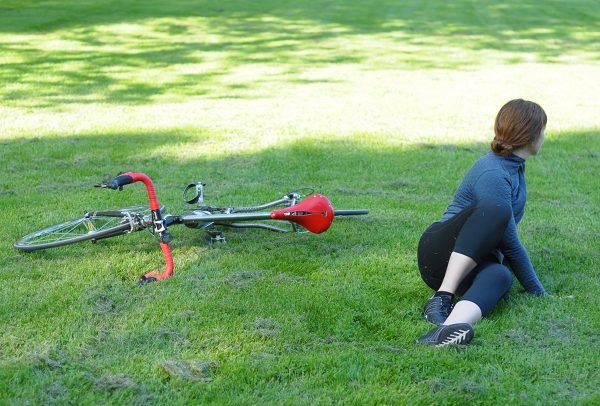
Our group was larger this time and by the middle of the ride it was evident that a gap kept forming in the same spot. So we split into two groups and I ended up in the faster one. This was fantastic. I was mostly in the big ring for the rest of the ride, took more turns in the front, and practiced rotating while going full speed downhill. One of the leaders made sure to pull up alongside me and cycle as closely on my left as possible on the descent, having noticed that I am scared of that kind of proximity. With no way of escaping, I thought I'd lose my marbles and crash into a tree out of sheer fear of sensing her elbow 1" away from mine. "Oh my God, you're too close to me!" I pleaded. "No I'm not. Keep going. You need to get used to this." And I guess she had the right idea for how to deal with me: I got used to it.

At this point I am probably horrifying some of you again and making you wonder what on earth attracts me to this type of cycling. Honest answer: I don't know. But something definitely does. I like the speed. I like being in a paceline. I like receiving straightforward feedback about what I am doing wrong. I am relieved to know that my speed and endurance are up to par. My technique needs a lot of work, because I am still somewhat scared of the bike, scared of downhill speeds, and not entirely comfortable with constantly shifting gears. But all of that can be improved if I am willing to practice. The funny thing about human psychology, is that we tend to do what feels good without really knowing why, then construct elaborate rationalisations of our actions after the fact. But right now I'm too tired and confused to rationalise. I don't fully understand why I like the paceline rides. But I know that I want to keep doing them.

Thursday, June 2, 2011

Cycling Partners and Sketchy Rides

When describing my lone bicycle rides over the past two years, I was often told that, all romance of "the lone cyclist" aside,  I won't improve if I don't ride with others. With all my might I resisted this idea. But, big surprise: It's true. Having finally gathered enough courage to start cycling with others, I notice that I tend to ride further, put in more effort, and generally push my limits more when I am egged on accompanied by other cyclists - particularly those who are better than I am. Luckily, finding stronger cyclists to ride with is easy, since by roadie standards I am terrible. But finding stronger cyclists to ride with whom I feel comfortable with and who won't outright laugh at my ineptitude? Not so easy at all.

That's why I was grateful when Jim A. (the owner of this bike) invited me to join him on a ride. Given that Jim is a bicycle mechanic and a life-long cyclist, I knew that I would embarrass myself on this ride despite his description of it as easy-going. But Jim is such a nice guy, that I was okay with that.

I was also looking forward to seeing his Sketchy bicycle.

A-ha!

Sketchy bikes are made by Mike Salvatore, a framebuilder at Seven Cycles. I only had my point-and-shoot camera with me, so no good photos this time. But Susan of Twelfth Bike has lots of beautiful pictures of her pink one here. Jim's bike is brown.

So my loaner Seven and Jim's Sketchy are essentially related and possibly built by the same person. They even have a family resemblance, including the curved stays.

However, the Sketchy is steel, not titanium. Next time I'd love to try this bike.

Despite a minor injury a few days ago, I felt good and was ready for our easy-going ride... which, by the time I got home, ended up being 50 miles. That is the longest single ride I've taken on the Seven so far, and it's safe to say that any remaining anxieties I had about its handling have been alleviated. Apparently, a racing bike with 23mm tires can be comfortable for 50 miles: I have no hand, neck, back, or any other pain what so ever. And apparently it can do 30mph downhill on a criminally pothole-ridden road without anything terrible happening to the fork or wheels. Good to know!

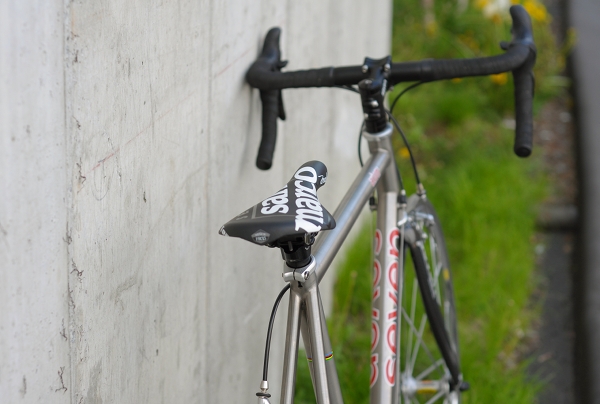
I am also generally more confident on the bike. Last time I was at the Ride Studio Cafe we lowered the handlebars so that they are now a couple of cm below the saddle. Since the frame is too big for me, this was accomplished by placing all the spacers above the stem and flipping the stem over so that it points down. The tall stack of spacers looks funny, but I am glad to have the handlebars in this position.

So, how terrible am I compared to Jim? Unfortunately, it's hard to say! He is so polite that I have no way of knowing to what extent he was taking it easy for my sake. The ride ended up being longer than we planned and more strenuous than I anticipated - which is good! I am starting to understand that I need other people to motivate me, push me, and help me improve as a roadcyclist. 

Tuesday, May 24, 2011

I am Curious, Yellow

Obscure film references aside, the past week for me has been dominated by equal parts anticipation and anxiety. I've ridden my loaner roadbike for 120 miles in preparation for the next paceline ride... which, ironically, was cancelled for the second time in a row due to rain. The more time passes, the more my anticipation builds and the more exaggerated my anxieties become.

The Co-Habitant and I did two fast-paced, hilly rides over the weekend - he on his Surly Cross Check and I on the borrowed Seven. We went over the same hills where he has previously passed me nonchalantly regardless of which bikes we were both riding... only this time our positions were reversed dramatically. I shot past him while exerting little effort, continued to merrily cycle uphill, and then waited for him to catch up as I sipped water and sniffed flowers.

Of course we expected that a racy roadbike would be faster than a heavier and more relaxed cyclocross bike with wide tires and a saddlebag. But since he is a stronger cyclist than I am to begin with, I thought that the discrepancy would level the playing field between us. Neither of us thought that it would make me this much faster uphill.

The interesting thing is that on downhills and flats there was not much difference between us; it was uphill that the bike really began to matter. This parallels my experience of the paceline ride on my Rivendell, where it was specifically on the uphill portions that I felt a disadvantage to the others.

But while I am now confident in the bike's climbing ability, this is tempered by a fear not only of its speed on descents, but also of my relative unfamiliarity with its handling. After putting nearly 2,000 miles on my Rivendell I pretty much know how it behaves across a wide range of situations. The 120 miles on the Seven are just not sufficient for that kind of comfort to develop. I don't mind admitting that I'm plain scared when riding it at 25mph+ downhill - scared of the narrow tires, scared of the carbon fork, and scared of its precise but aggressive cornering. The fear saps away my confidence, making me squeeze the brakes and cycle more conservatively than I am capable of.

Being 100% comfortable with a bicycle is not something I can force; it takes time. My curiosity is a strong motivator to keep riding and practicing, specifically seeking out those situations that still make me nervous.

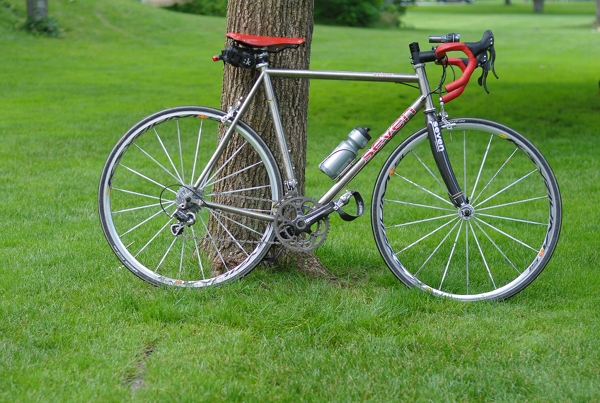
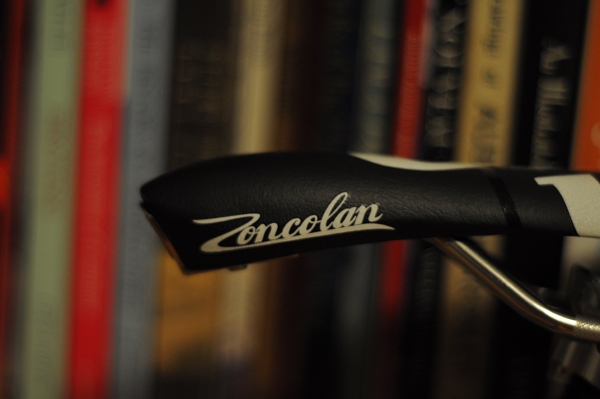
While the bike is in my possession I've fitted it with my own saddle, which has made it more comfortable to ride long distances. I've also installed my pedals (the narrow MKS Streams) and PowerGrips. This looks silly on a bike that is typically ridden clipless, but I don't care: I need to ride it in a way that makes me comfortable. I've also now raised the saddle another 5mm from how it's shown in this picture, which almost makes it look like the standover is not too high. Almost. The length of the toptube and the handlebar set-up work well for me (the Ride Studio Cafe matched the configuration to one of my own bikes) and it's only the seat tube height that's off. The result is that the bike fits me extremely well when I am riding it, but looks too big when I am not. Ideally, the frame would have the same virtual top tube length, with the actual top tube just a little bit sloped in order to reduce standover. Given the available demo models I prefer this set-up over a smaller frame, because I don't like toe overlap. All in all I feel good on this bike, which is what matters.

I really hope they don't cancel the paceline ride next week; the anticipation is getting ridiculous. In the meantime, all I can do is keep riding.

Friday, May 20, 2011

Tentatively Titanium

As many have figured out by now, I am being loaned a Seven roadbike as part of a sponsorship deal with the Ride Studio Cafe in Lexington, MA. I will have it for a few weeks, and it is the bike on which I will attempt future paceline training rides - if it ever stops raining long enough for them to resume!

My acquaintance with this bicycle goes back to last Autumn, when I first discovered the Ride Studio Cafe and the Seven demo models that dwelt within its space.

I half-joked with the owner then, that I would like to test ride one: Some of my friends in Europe are big fans and they were excited to learn that I lived in such close proximity to Seven Cycles. He was on board with the idea, and eventually the test ride took place. That was two weeks ago, and I intended to post a test ride report earlier. But now that I have the bike for longer, I will wait to write a proper review until after I return it - in the meantime offering some initial thoughts. 

Seven Cycles are built in Watertown, MA - which is 5 miles from where I live. And it seems like every local bicycle mechanic and framebuilder I know has either worked for them or has some sort of connection with them, and almost certainly owns at least one of their bikes. This creates a weird discrepancy: Knowing so many people who own them, I cannot help but think of Seven bikes as commonplace. But then I also keep hearing oohs and aahs from non-locals about how expensive and precious they are. 

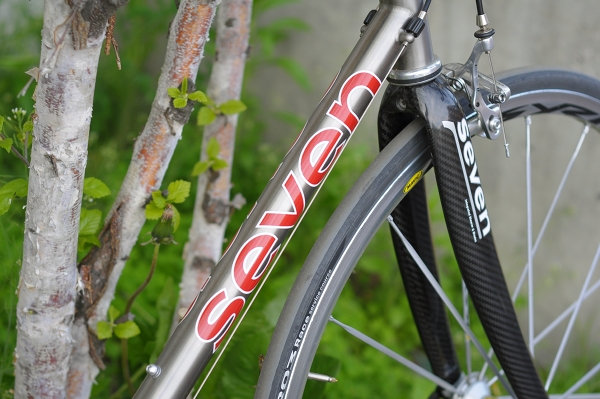
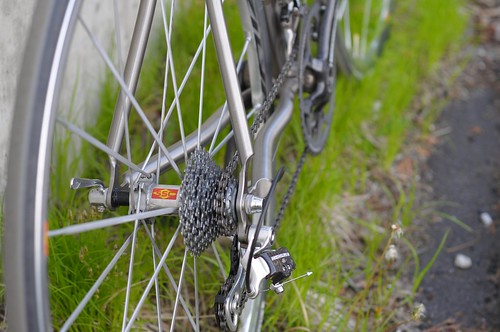
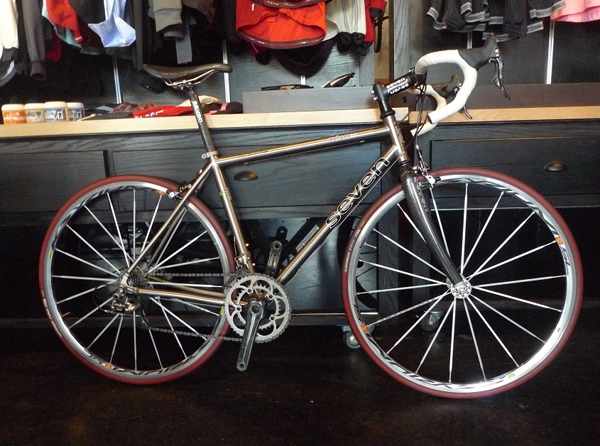
The model I rode is the Axiom S: titanium frame with carbon fiber fork, fitted with the Campagnolo Chorus component group, Mavic racing wheels and 23mm tires. More than a little intimidated by the set-up, I expected the bicycle to ride like my idea of a racing bike: stiff, harsh, aggressive. In fact, I half expected not to be able to ride it at all, not to feel comfortable with the handling. But the handling was easy, and the ride quality was not what I expected.

I don't know how to describe the Seven without a reference point. Ideally, I would like to have something to compare it to other than lugged steel and a couple of very brief aluminum and carbon fiber experiences. But speaking from my current, limited viewpoint, I can only describe the sensation as "extreme road dampening" - to the point of not being able to feel the ground. This is a different feeling from the way fat tires roll over potholes, or a flexible steel frame dampens shock. This is something else, and it feels weird. It's like the ground isn't there. I see the bump. I see my 23mm front tire start going over the bump. But I don't feel it. Throughout this, the frame and fork are very stiff - there is hardy any flex at all. Having thought that flexible frames dampened shock and stiff frames translate into harsh rides, I am a little confused.

Furthermore - and this is even harder to put into words - it is as if I can't feel the bike while I am riding it. I feel the cranks being turned by my legs, I feel the handlebars at the points where I am holding them, and I feel my butt on the saddle... but the frame feels almost absent. 

The combination of these sensations leaves me with a disembodied feeling - as if I am floating above the road instead of making contact with it. Is that a good thing? 
  
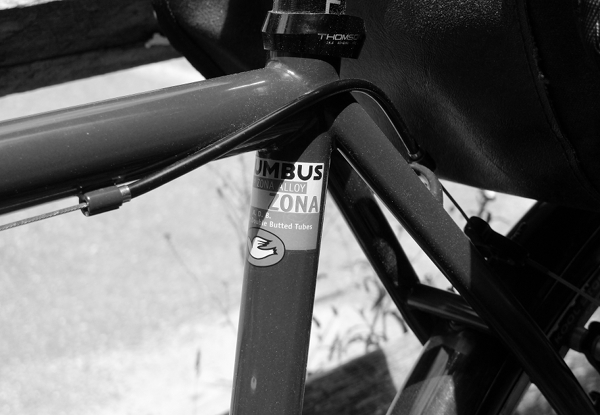
With its sleek titanium surface, curved stays and ethereal ride quality, the Seven to me is like some alien machine rather than a bike. I've gone on four rides on it so far, and I feel comfortable with its precise, stable and distinctly non-twitchy handling. But the "floaty" feeling puzzles me.

It's been raining here non stop for over a week, yet I've been stubbornly cycling. Covered in a layer of crud after such rides, the Seven seems more down to earth and I find myself welcoming that. When clean, the titanium has an almost clinical quality that intimidates me, but the dirt makes it warmer and less machine-like. Maybe it is a bike after all.

Hopefully the rain will soon stop, so that I can practice some hills and see how the Seven really compares to my other bikes. I am sure it will be faster, but will it feel safe? The fact that I am comfortable riding it in the rain is a good sign, but I'd like to learn more about its handling, especially on descents. And I would love to know how a bicycle this stiff and aggressive can produce such an extreme road dampening effect. 

What are your thoughts on titanium frames? 

Tuesday, October 5, 2010

The Bicycle Boutique: a Prognosis of the Future?

Bicycle shops in the US can be divided into several categories. Typical local bike shops sell a wide range of bicycles, from road, to mountain, to utility bikes and beyond. Then there are the specialised bike shops that stock only a specific kind of bicycle - for example, European city bikes. There are also the community co-op bike shops and the used bike shops. And finally, there are the bicycle boutiques.

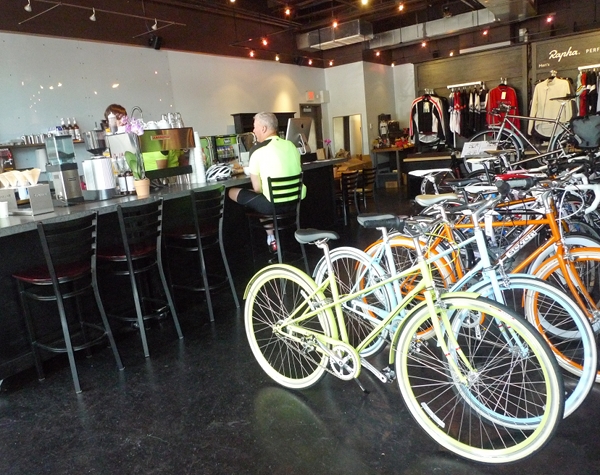
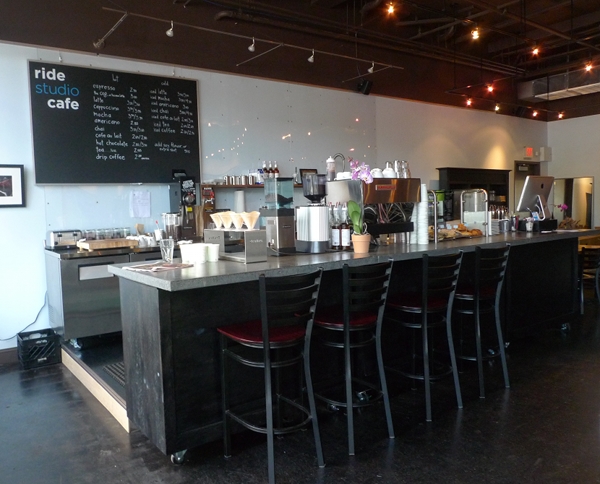
The boutique bike shop is a relatively new phenomenon. It is designed to resemble a gallery space rather than a store, and often incorporates a coffee shop or a lounge area.  The space features an open floor plan and minimalist decor. The stock of bicycles and accessories is kept intentionally sparse, so that each item receives individual attention. The staff usually have a personal connection to the shop. Instead of sales pitches, there is a calm curatorial demeanor. And the careful selection of bicycles tends to be on the high-end side.

In the Boston area, the latest and much talked about bicycle boutique is the Ride Studio Cafe in Lexington, and I have stopped by a couple of times when cycling through the area.

The Ride Studio Cafe sells mainly two types of bicycles. There are high end road bikes by the world-famous Seven Cycles that are built right here in Watertown, MA.

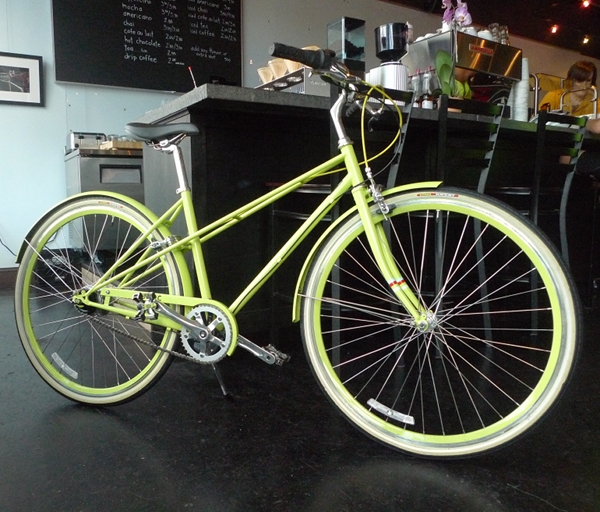
And there are budget city bicycles (diamond frame and mixtes) from the San Francisco-based Public Bikes.

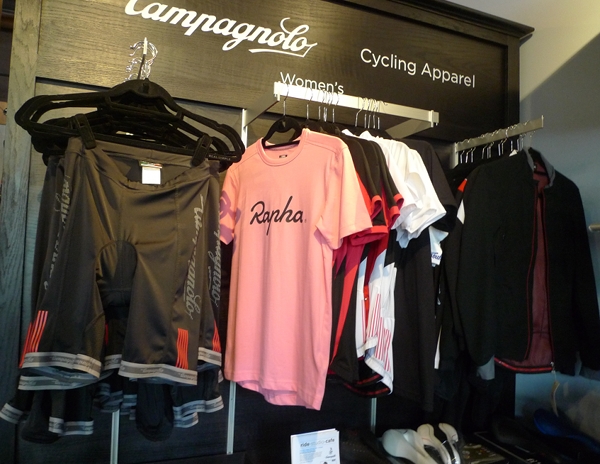
There is also apparel by Rapha and Campagnolo, as well as a variety of chamois creams and embrocation lotions. 

In the back is a small workshop and storage area that is separated from the main floor, but accessible to visitors.

My first reaction upon entering the store, was an intimidated amazement upon seeing so many (titanium?) Seven bicycles in the same place, casually propped against walls here and there. Though I am not normally attracted to modern, non-lugged roadbikes, there is something about Seven Cycles that is just so impeccable that my eye cannot help but be drawn to them. I moved one of the bikes aside in order to photograph it, but got so nervous touching and positioning the beautiful, feather-light and extremely expensive machine, that after one picture with shaking hands I decided to put it back. Later it occurred to me that these bicycles are floor models and people probably test ride them all the time. Not sure whether I would be able to handle that, but the idea of test riding a Seven is tempting.

During the several months of its fledgling existence, the Ride Studio Cafe has been a frequent topic of conversation among local bicycle enthusiasts, with speculations regarding its long-term feasibility. Is the population of Lexington and the surrounding towns really so affluent as to keep the boutique afloat with regular purchases of Seven bicycles and Rapha gear? And while the affordable Public bikes are a good way to diversify, is it enough?  If the answer to all of that is "yes", I think it is a fantastic sign of changing priorities among the segment of population with disposable income. Interestingly, the worse the economy is doing, the more of such boutiques are opening up. Could that indicate that more affluent suburban residents are choosing to purchase a silver Seven instead of the usual silver Lexus