Showing posts with label social commentary. Show all posts

Thursday, June 30, 2011

Writing on the Wall

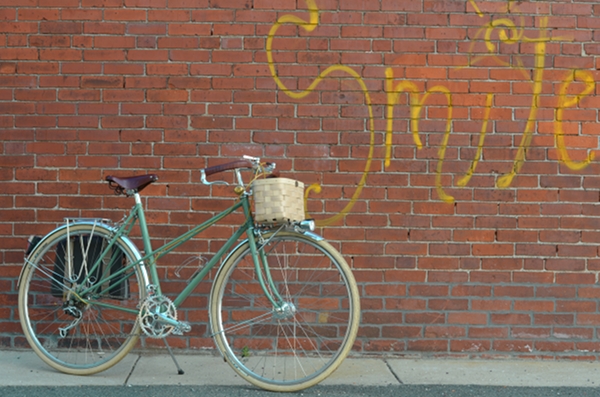
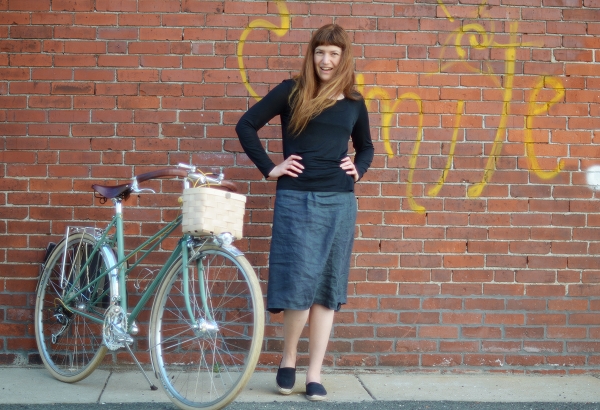
About a week ago, I left the house in the morning to discover the wall of a nearby building covered in graffiti. Screaming for attention with its searing yellow hue and the swirly sunshine dotting the "i" the graffiti tells the residents of our little neighbourhood to "smile." Very funny, we think. Smile because they defaced property? Smile because someone will have to spend time cleaning that up in mid-summer heat and humidity? Smile because this action rubs it in our faces that we are powerless to prevent others violating our living space?

Then a funny thing happens. As we continue to live with the graffiti (the building's manager has not had time to clean it up), the initial feeling of indignation recedes and we begin to take the message literally - to respond automatically to the word's actual meaning, instead of responding intellectually to the symbolic meaning of it having been spraypainted there. Smile! The vandal (artist?) has managed to elevate our mood in spite of everything.

I am not comparing cycling to graffiti, really I am not. But it is impossible not to notice that those who don't ride bikes often feel threatened and, yes, even invaded by the appearance of bicyclists and (gasp) bike lanes in their neighbourhoods. These are strong feelings that those of us who cycle can too easily dismiss. But look at it this way: If after some time a vandalised wall can make us smile because of its sunny message, then surely the fun of cycling can be contagious enough to override any hostility toward it as well.

Along the main street around the corner from our house, from 5 pm to 6 pm on any given weekday there is a continuous parade of cyclists traveling home from work. They are all sorts, and most wear their regular clothing - including women in colourful dresses and crazy footwear. Two years ago, not nearly as many cyclists rode through that street - a quarter of the number I see today, at best. There was also a lot of honking from drivers, hostile insults exchanged as a matter of course. Now it hardly happens at all. I see business owners sitting on the front steps and watching the cyclists as the sun sets. It really is a sight when so many different people pass through on their bikes; there is a festive feel to it.

Maybe our neighbourhood has internalised the bicycle as part of its character, as opposed to thinking of it as a hostile foreign body. Maybe drivers and cyclists both have decided to lighten up and smile.

Monday, June 20, 2011

Vehicles of Equality

[image via cnn]

Last week many of us were following the #women2drive campaign in Saudi Arabia - a move organised via social media, where about 40 Saudi women drove cars in protest of their country's ban on female drivers. Saudi Arabia is the only country where it is currently prohibited for a woman to drive. The ban has become a symbol of gender inequality, while driving has become a symbol of freedom and women's liberation. It is unclear as of yet what effect the protest will have on Saudi policy toward women drivers. Meanwhile I've received an email from a cycling activist, asking whether I thought bicycles would at any point be incorporated into the movement.

[image via wn]

To clarify, women in Saudi Arabia are not permitted to cycle just as they're not permitted to drive. That is, they are allowed to be passengers on a bicycle, but not operators. The point of the ban is to prevent women from going off on their own, and so it applies to any vehicle that facilitates travel. However, I doubt that Saudi women will be getting on bicycles and staging a #women2ride movement any time soon. While in some cultures there is now a trend to associate cycling will freedom (freedom from dependence on fuel, from being stuck in traffic, from having to find parking, from hour-long commutes, from financial strain, etc.), the bicycle does not symbolise any of those things in Saudi Arabia. Neither does it symbolise travel, in the contemporary sense: A car can travel further and more efficiently if fuel is not an issue. In order for a group to protest not being able to engage in an activity, that activity has to be perceived as desirable. And I just don't think cycling has that status in Saudi Arabia.

[image via rfe/rl]

There are other issues to consider as well. Operating a bicycle is deemed "too sexy" by some government and religious figures in conservative Middle Eastern countries. In Iran there is technically no travel ban in effect for women, but the Iranian Women's Cycling Team was stopped by the police while training last October and told that the activity is not permitted in public, as it is too provocative.

There is also the question of safety. Driving in protest is safer than cycling in protest, as on a bicycle a person is more vulnerable to recognition, apprehension, and potential attack.

[image via bikehugger]

While in Western cultures the bicycle became a symbol of gender equality in the Edwardian era, I don't think that this can be applied to today's situation in countries where basic women's rights are being debated - particularly in the Middle East. The circumstances are too different. Should cycling activists feel threatened by the #women2drive initiative? I think that would be highly misguided. But the question of how to make bicycling more accessible to women in this region is worth considering.

Friday, June 17, 2011

A Handful of Rust: Bicycles As Waste

One argument made in favour of the bicycle, is that it is a machine that is timeless. With proper maintenance and care, a bicycle can last for many generations. And those of us who own functional bicycles from as far back as the 1930s know that to be true - at least in theory. However, in practice garbage dumps throughout the country are full of discarded bikes. Countless abandoned bicycles rust away locked to urban fixtures until the city removes them. New bicycles are churned out by factories every day as old ones become junk. The bicycle's resistance to obsolescence is a heavily stressed selling point in today's green-hued marketing... and yet reality does not reflect that. When I am asked how I feel about that contradiction, it is not easy to respond without ruffling feathers.

Looking at bicycles that are rusting away abandoned, I notice a trend: It is not the oldest bicycles that are being treated as junk. In fact most of the bikes are relatively modern. The factors they have in common are awkward construction, crude workmanship, low-quality components, and a certain overall genericness that just seems to make them impersonal and unloveable. These are mostly bicycles from big box stores, or lower-end models from popular manufacturers sold at dedicated bike shops. The truth is that even when new these objects do not look "timeless" to me. They look cheap and destined for the dump within several years - seemingly by design. So when I am asked why I do not promote "more accessible" (mass-produced, lower-end, lower-priced) bicycles, that is why. I sincerely feel that the vast majority of those bikes are designed to be bought on a whim (why not? they are affordable!) and be discarded shortly thereafter.

Bicycles that are produced thoughtfully and with care cost more, because they are more costly to make, and there is just no way around this reality. But it is not such a bad thing if we perceive a bicycle as special and expensive. When an object is meaningful to us and takes time to save up for, we value it more. Even if the bicycle ultimately does not work out (or even if we lose interest in cycling altogether), we will be unlikely to discard or abandon it. Instead we will sell it or pass it on to somebody else - just as with any other valuable, well-made object that we no longer need or want. I think that I have a pretty good idea which of the bicycles marketed today will end up in the garbage dump 5 years from now, and which will be cherished and ridden, even if not by the original owner. The latter is the kind I want to promote and the former is the kind I do not.

For the same reason, I am conflicted about the bike share programs that have been popping up in major cities. My enthusiasm for the idea of bike sharing is dampened by firsthand knowledge of what happens to many of these bikes, and how quickly it happens. I have seen large municipal pickup trucks in Vienna come by the CityBike stations on a regular basis and cart away dozens of damaged bikes, replacing them with new ones. The wastefulness of the Parisian Velib system has been well documented as well. The sad truth is that people do not treat well objects that do not belong to them. And as much as I don't want to rain on the bike share parade, I find this problem difficult to side-step. There have been grassroots initiatives to use second-hand bicycles for bike share programs, but as far as I know they have been consistently rejected.

Do you feel that the current trend for all things bicycle will just generate more waste down the line, or is that a cynical view? How do you feel about bike share and the various methods of bicycle production in relation to this question?

Wednesday, May 18, 2011

On Beginners Helping Beginners and the Paradox of Expertise

[image via Thomas Hawk]

It's been over two years now since I began cycling as an adult and writing this blog, and I still think of myself as a novice: Two years isn't much. Looking at some of the other female-authored cycling blogs that appeared around the same time as mine, I see a similar pattern: The authors start the blog not to give advice, but to share their experiences as eager, clueless beginners. And over time they become more knowledgeable - helping their readers along the way just as much as their readers help them.

This approach tends to evoke polarised reactions. On the one hand, I've noticed that beginners - and particularly female readers who are just getting into cycling - respond to blogs written by other beginners more than they do to blogs written by experts. On the other hand, there is a great deal of scorn aimed at such blogs in some internet circles - mainly on male-dominated cycling forums. The other day I received a link to a venomous thread where the forum members basically take turns quoting snippets from my posts and mocking my writing. It might have upset me, if I hadn't witnessed a near-identical thread attacking another woman's blog on a different cycling forum several months earlier. The bashing we get from these guys is predictable: We are silly, we are consumerist, we know nothing about cycling yet presume to advise others, and our writing is annoying. Whether they have a point is not for me to judge, and it's useless to defend myself against grown men who get off on mocking other human beings. But I'd like to explore the question of why a beginner's writing about cycling can be more compelling to some audiences than that of an expert.

[image via acme59]

Beginners are enthusiastic. 
When we are in the process of learning about something new that excites us, we tend to be more interested in that thing than once we already know everything there is to know about it. The eagerness to learn is what drives us to research and experiment, and then to share our discoveries with others. Once the learning is done, that eagerness subsides and we become less motivated to discuss the topic. We become jaded, we know it all. Why bother write about something that is old news to us? Enthusiasm is contagious, and so is jadedness. That is why a beginner's blog - that gushes about things that seem boring or even silly to experts - is more engaging for those who are trying to learn about the same topic.

[image via simplybike]

Beginners offer documentation. 
Blogs written by novices are a bit like note-taking sessions made public. When was the last time you felt compelled to take notes on a process you already knew by heart? There is no motivation for it. Doing things like taking pictures of yourself on your bicycle and describing short rides in elaborate detail seems ridiculous to someone who has done it all thousands of times. But to those for whom cycling is a learning process, documentation is helpful. Novice readers seek out blogs that provide detailed documentation, and those blogs are usually written by other novices, precisely because experts wouldn't bother.

[image via mtwash125]

Beginners are more relatable to other beginners. 
Today's post from Dottie on Let's Go Ride a Bike provides some great insight into this one. Dottie describes a commute to work that to her was "just perfect," yet to a novice cyclist was an absolute nightmare. It was a funny discrepancy, but also a telling one. After several years of cycling for transportation, we no longer even notice things like exhaust fumes, vehicles blocking the bike lane, car doors suddenly swinging open into our path, and cars cutting us off.  Our methods of dealing with these problems become so automatised that we take them in stride: Overall, it is still a great commute, because nothing unusually horrible has happened. But to beginners who are just mustering up the courage to cycle for transportation, other cyclists are no longer relatable once they reach that level of comfort. And this goes for everything - from transportation cycling, to roadcycling skills, to understanding frame geometry, to being able to work on our own bikes. Little by little, we begin to take stuff for granted and stop bothering to explain it, losing the readers who find our very ineptitude relatable. Paradoxically, while experts know more, they also come across as less approachable and they often write about things in a way that is difficult for non-experts to understand.

[image via Bart Omeu]

Beginners are unselfconscious. 
As we gain knowledge in any given topic, there is often a degree of self-cosnciousness and competitiveness that sets in. We want to show that we are not "newbies" anymore and so we become more careful about what we write and how we present ourselves - lest the "cool people" make fun of us. But the nice thing about blogs that haven't reached that stage yet is their sincerity. They don't even know what the right vs the wrong thing to say is, so they express what they actually think.

Despite my two years of writing Lovely Bicycle, I feel that I have somehow managed to remain in that state. I am so remarkably uncool as far as "cycling culture" goes, that I cannot even fathom the full extent of my uncoolness. That's one of the things that keeps me going and allows me to continue writing this blog, so as far as I'm concerned it's for the best. I enjoy novice cycling blogs of all types. And I hope that beginners continue to feel motivated to document their growing love of bicycles in their unique, authentic voices without worrying about coming across as silly. Beginners helping other beginners can be of greater value than expert knowledge.

Wednesday, May 4, 2011

If Not Bike Month, Then What?

A couple of weeks ago I wrote this post explaining why I do not believe that "Bike Month" is effective at making transportation cycling accessible to non-cyclists and beginners. In the discussion that followed, many different opinions were expressed - which I appreciate. In addition, a couple of readers suggested that, since I criticised the approach, perhaps I could follow up with my own ideas. If not bike month, then what alternative would I propose? That was a good point, and I have now prepared my response. This is far from the first time I've considered the issue. But it's one thing to have my head full of ideas, and quite another to express them lucidly. Let me give it a try.

A Support System for Cyclists
If the goal of a city, community, or organisation is to make cycling an accessible form of transportation, I propose a year-round support system permanently in place. This support system could exist in the form of a small department within the local government structure, or in the form of an independently funded non-government organisation. The sole mission of this department or organisation would be to provide a range of services - in the form of literature, materials, counseling, classes and workshops, and more - to persons interested in transportation cycling. It is crucial that the office or organisation providing these services be non-partisan - which includes independence from political groups, environmental organisations, or any other entities with specific agendas to pursue. The goal of this office or organisation would not be to promote cycling, but to support cyclists or those considering cycling - which is a crucial distinction. Trained employees would work with person, families, and groups to determine their level of comfort, their concerns and their goals - responding appropriately and providing them with relevant resources. The existence of this office or organisation would be made known to the public via an online presence, via brochures available at relevant local venus, and via announcements in the local media.

While I have quite detailed and concrete ideas of how this fictional entity would function, outlining all of them would require its own post - or more like a multi-page proposal. But I think you get the gist of what I envision. Having a solid, well-developed support system in the community that any cyclist can rely on is, would in my view, be more effective than a month-long annual event that is dense in activities while it lasts, only to end abruptly. A year-round support system would also send the message to the community that cycling is an accepted and attainable means of transportation.

A "How, Not Why" Approach
It is my belief that the chances of non-cyclists finding the idea of transportation cycling appealing are diminished, rather than improved by the "hard sell" tactics employed by the majority of bicycle activists (and by the very notion of bicycle activism, for that matter). When people try too hard to convince us that something is "good for us" or morally superior, our natural response is to be skeptical, to resist. After all - if it's so wonderful, then why are they trying so hard to persuade us and why isn't everyone already doing it? For this reason, I think it is misguided to "sell" cycling. Moreover, cycling doesn't need to be sold: It is a trend on the rise, particularly in large cities that are centers of popular culture. People everywhere are already enjoying riding their bicycle for transportation, and we need merely to communicate this fact as a given. Instead of telling people why they should cycle, make it an implicit assumption that they already want to do it (of course! doesn't everyone?) and focus on the how. I believe that this approach must underlie any initiative or outreach program designed to encourage new cyclists.

Ideas for a How-To Brochure
One thing discussed with particular zeal in the comments of my post about bike month, was the Bike to Work Week commuter booklet - a transportation cycling guide offered as promotional literature by the organisers of Bike Month. Here I described the ways in which nearly every page of the brochure portrays transportation cycling as a challenging and possibly dangerous athletic activity, which I believe makes the brochure intimidating rather than inviting. In response, I will outline my vision for an alternative brochure.

Title:
"A Guide to Cycling for Transportation"

Introduction:
Start by mentioning that cycling for transportation is becoming increasingly popular, and many people are wondering how to go about starting. This brochure is for them.

How to begin:
Explain how easy it is to commute by bicycle, dispelling myths that athleticism, energy bars, or special cycling clothing are necessary in order to commute to work on a bike.

Choosing a bicycle:
Inform of the existence of comfortable transportation bicycles, and explain which accessories are necessary in order to commute in work clothing. List bicycle shops that specialise in commuter bicycles and perhaps websites that focus on reviewing them.

Road rules:
Using clear and simple language, outline the basic cycling laws in your area, providing link to full version.

Safety:
Be objective and positive. Cite statistics that reveal bicycling to be a relatively safe activity. Stress the necessity of good brakes, proper lighting, and adherence to road rules first and foremost. Explain that opinions on helmets are mixed, and while some choose to wear them, others do not.

Illustrations:
Choose appealing images where persons are shown cycling at a relaxed pace while wearing street clothing and riding transportation bicycles with appropriate accessories. Include signs of normal, everyday activities: parents transporting children, persons in suits cycling with briefcases strapped to rear racks, grocery panniers with flowers sticking out, and so on. Images should communicate that cycling is easy, convenient and pleasant. Helmet use can be portrayed in a manner that represents freedom of choice: Some cyclists can be shown wearing one and other cyclists not, in a way that both come across as natural (see image above, or this image from a recent bike advert).

Further Resources:
Provide a list of popular websites focusing on transportation cycling.

Given that small, specific things are easier to implement than grandiose plans, I think that creating a brochure such as the one I outlined to counteract the one promoted via Bike Month would in itself be useful to those who are considering cycling for transportation and do not know where to begin. But making one - as well as thinking up the means of distributing it - is a project that would require hours of my time and is beyond the scope of this blog. Putting forth ideas is far more difficult than merely criticising, and I am exhausted from writing this post. Your thoughts on all of this are, of course, welcome.
Monday, May 2, 2011

Why Not Here? Pondering the Ingredients of a Cycling Town

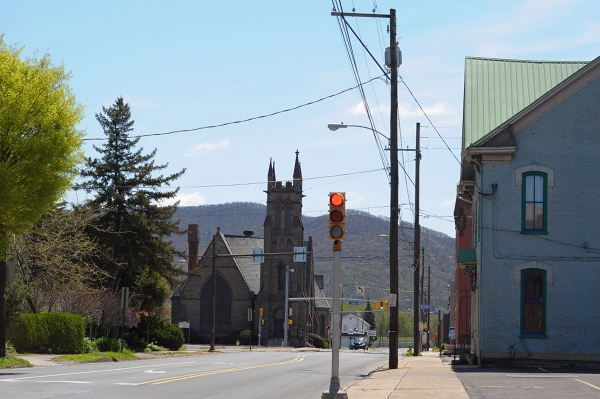
Having just returned from Central Pennsylvania, I am still trying to makes sense of my impressions. I was familiar with Lancaster County and the Poconos, but had never ventured west of these areas until now. While I'd imagined a wholesome and fertile land with dramatic mountain views, the landscape we encountered looked bare and depleted. We saw fairly few farm animals, and minimal vegetation. Many of the farms we passed seemed outright abandoned. Later we were told about the extraction of natural gasses that has become popular in the region, so perhaps this could account for it. It would also explain the enormous, brand-new-looking hotels that stood in sparsely populated areas, towering above the Methodist churches and the dilapidated barns.

In the midst of all of this, we came upon a lively small town - a town with historical buildings, tree-lined streets, an active downtown area, and a picturesque Liberal Arts college with manicured grounds. Surrounded by mountains and farmlands, the town forms a microcosm of "culture" - offering the only sidewalks, storefronts, restaurants and cinemas for miles around. Exploring it with curiosity, it occurred to me that this was the sort of place a friend of mine refers to as "cycling-prone" - his theory being that "cycling culture" tends to develop in places that are structurally prepared for it, and where the population could benefit from it.

Among examples of structural preparedness he includes things like one-way streets with low speed limits. Check: This town is big on one-way streets, with speed limits under 30mph. Frequent street lights and well-designed intersections are also crucial, and this town has them. Large intersections involve dedicated left turn lights, which is helpful for cyclists as well.

There is also the concept of "manageable scale:" The argument is that cycling tends to be popular in small cities or towns with self-contained economies, because most commutes will be fairly short - yet still not quite convenient to make on foot. This town fits the bill perfectly: The population is around 30,000 and a great portion of the residents seem to live, work, and seek entertainment within the town's confines, simply because there is not much beyond it. And being in a valley, the terrain is mostly flat - making even the simplest single speed bicycle sufficient for commuting.

And then, there is the college - a small undergraduate institution with 2,000 full-time students who live on or close to campus year-round. College towns are supposed to be especially prone to embracing cycling, because it makes for a quick and inexpensive means of local transportation. College students also tend to be concerned about the environment, and some are drawn to cycling for those reasons. A quick glance at the college website shows that environmental issues are indeed prominent: Projects to reduce carbon footprints are announced, the benefits of a new recycling program are touted.

In short, all the ingredients are there for this to be a cycling town... and yet, it is not. I saw not a single transportation cyclist on the streets, and not a single bicycle locked up near the college campus or elsewhere in town. To me, this is interesting. Why no cycling here, but yes cycling in places like Hanover, NH and Ithaca, NY - where the towns and the surrounding landscapes are demographically and geographically similar? Sure, Central Pennsylvania can be called "old fashioned," and one could argue that cycling is a contemporary trend that will take a long time to reach here. But the same can be said of Northern NH: You won't see any locals outside of Hanover cycling, but within the town itself it is popular. Also, while I have not been to State College, PA - which is not far away - my understanding is that some students do cycle there for transportation as well.

I suppose my point is not so much to analyse this particular town, as to point out that the popularity of cycling cannot be explained with geography and demographics alone. Even with all the ingredients present, there is no guarantee that they will be utilised and combined into a cycling cocktail, if you will. I can only conclude that, in addition to the ingredients, there needs to be a catalyst to make it happen. To shake things up and get things started. And that catalyst could be anything - from an incoming class of trendy freshmen bringing their fixies to campus, to the college instituting a semester-based bicycle rental program, to the town suddenly deciding to paint bike lanes. I wonder whether that could happen in the coming years in this central Pennsylvania town and others like it.

Thursday, April 28, 2011

On Weddings and Bicycles

[image via BEG Bicycles]

We are going to a wedding this weekend, where I don't expect to encounter any bicycles. But increasingly, bicycles and weddings are becoming an iconic combination - seen on wedding photographer and bicycle manufacturer websites alike. What is it about weddings and bicycles? There is, of course, the ever-popular Daisy Bell song, which keeps the association alive. Plus, the start of "cycling season" corresponds with the start of "wedding season." And while I put these in quotation marks, because both getting married and riding a bicycle are things that can be done year-round, any wedding photographer and bicycle shop owner will tell you that they get most of their business in April through October. Spring symbolises renewal, optimism, and a fresh start - which is appealing to cyclists and newlyweds alike. 

[image via Retrovelo and Velorution]

Would you believe that in 2010 I received half a dozen emails from readers asking for bicycle suggestions for their weddings? One couple was looking specifically for a vintage tandem, others were hoping to find matching cruisers, and one inquiry came from a wedding planner who was looking to rent several dozen bicycles, so that the entire wedding party could ride them. A wedding peloton? Would love to see that. I even know of a couple who are planning to purchase a black roadster and a cream lady's roadster from the same manufacturer. They will ride them for the first time at the wedding, then continue to use them for everyday transportation. I think that's an exceptionally cute idea - but then I love "his and hers" bicycles.


Last May, I tried my hand at professional wedding photography. It was a large wedding, but I would be working with two other photographers, so how difficult could it be? Well, oh my goodness! Without exaggeration, I was on my feet from 12:00 noon until 12:00 midnight with a 15 minute break for dinner. By the end, I was dehydrated, delirious, could hardly see straight and nearly sprained my wrists from holding up the heavy camera with enormous telephoto lens and flash unit. Things were spilled on me and my toes were stepped on. I dealt with drunken guests. I dealt with screaming children. I dealt with drunken guests holding screaming children... In short, yikes. The photos came out well, but I learned that I am not a wedding photographer - at least not of the sort of large and tightly choreographed weddings that have been popular in the US over the last couple of decades.

[image via Sheldon Brown]

But an interesting trend I observe, is that over the past years there has been a move away from the exuberant, stressful weddings and toward something simpler, more spontaneous and more tranquil. To some extent, I am sure this is due to the economy. But I also think that the trend reflects a change in priorities: It's the same desire for the simpler, the more natural, and the more genuine that we see across a wide range of lifestyle choices, from food selection, to interior design and home decor, to transportation. This May, an acquaintance of mine will be getting married and I happily agreed to be the photographer. It will be a tiny, unscripted ceremony involving a tandem bicycle, and I can't wait.

Tuesday, April 26, 2011

When Cyclists Complain About Cyclists

Copenhagen - Strandvejen 1955
[image via Copenhagenize]

Spring is here and the number of new cyclists is multiplying rapidly. It's fantastic to see so many people in Cambridge and Somerville going about their day on two wheels, as if this were entirely normal and natural - which of course it is. But with more bicycles on the roads, this is also the time of the year for complaints: motorists complaining about "scofflaw cyclists" and cyclists themselves complaining about "newbies."

While motorist hostility is nothing new or surprising, there is somewhat of a debate in the bicycle blog world as to whether it's right for cyclists themselves to criticise other cyclists' behaviour. On the one hand, when cyclists don't follow traffic laws and behave recklessly, they not only "make all of us look bad," but actually endanger us. The biggest example of this that I experience in Boston, is when I am intentionally riding toward the left of the bike lane in order to avoid the door zone, and a cyclist passes me on the right. I have also had cyclists nearly crash into me as a result of their running a red light: Ironically, those who do so tend to watch out for cars but not for other bicycles. Naturally, I find such actions disconcerting. I feel no common bond with those who jeopardise my safety - regardless of what mode of transportation they are using.

But when cyclists criticise other cyclists, I wonder about its overall effectiveness. Do the scofflaws feel shamed and curb their transgressive behaviour in response to the critical rants of law-abiding cyclists? Or is it more likely that they carry on just as before, and it's the timid, fledgling cyclists who are scared off from even trying to navigate such a treacherous landscape? This is what I was thinking while reading this post on BostonBiker this morning. While I actually agree with most of the points the author made, the tone just seemed so hostile. It also made me uneasy that the author criticised "new cyclists" - while themselves having only begun cycling this past winter. I have been cycling for over two years in Boston, including winters, and still consider myself to be fairly new at it. While I am safe, law-abiding and friendly, I am not perfect and sometimes make mistakes despite my best intentions. Is there a cyclist ranting about me on their blog because I neglected to signal a right turn last Thursday? A depressing thought.

I would not go so far as to suggest that cyclists must not criticise other cyclists, as part of some Velocipedean Brotherhood Code of Honor. But there has to be a way to discuss these issues in a more constructive manner. Do you complain about other cyclists when you think they are behaving recklessly, or do you opt for a united front? Is there an approach that accomplishes both?

Monday, April 25, 2011

On Living Locally and Seeking Continuity

I was having a political discussion with a friend over email, and in response to something I wrote he replied: "You know, it's really starting to show that you haven't been out of the US in almost a year." Ouch... But the "insult" aside, I realised he was correct: I haven't been out of the country since last July, which is unusual for me. Moreover, we have been without a car since December, making our travel radius limited to cycleable distances. Without explicitly being aware of it, I have transitioned from living "globally" to living "locally," and my friend's insinuation was that this has made me narrow-minded and provincial. Has it? I think not, but I also realise that I don't really care. My quality of life has improved as a result of the changes I've made since last year, and that's difficult to argue with.

We could go on forever debating the "moral" and "social responsibility" implications of living locally vs globally. On the one hand, those who lead lifestyles that rely on air travel are doing a great deal of damage to the environment. On the other hand, one could argue that some international jobs are "important" in their contribution to society, and the scale of this contribution outweighs the degree of environmental damage. But the trouble with these arguments, is that they inevitably lead us to a slippery slope. Who determines what's important? Who has the right to pass that judgment on others, and using what criteria? Are UN workers "good," but fashion reporters "evil"?  Is it "wrong to endanger the environment" by traveling to Shanghai just for fun, or is that outweighed by the positive effect of experiencing another culture, growing more tolerant and open-minded as a result? Impossible to say, without imposing our subjective sense of logic on others' sovereignty, which is not something I wish to do.

But the issue of living locally vs globally has personal, psychological implications as well, and these have been on my mind lately. I have an unusual personal history, and have basically never lived in any one place for more than several years at a time. As a result, my life has been fragmented and unstable, which I do not feel is ultimately good for me. When I remember things from my past, I sometimes get confused about the location of an event, and even about the language that was spoken. With my friends, relatives, experiences and memories scattered all over the world, it is difficult to maintain a sense of continuity and even a coherent sense of self. Forming healthy attachments to new people and places is challenging, and replacing the physical reality of personal interaction with virtual communications is isolating.

As we lose our sense of "continuous living," our notions of contact grow increasingly abstract - and not just contact with other people, but contact with our surroundings. I remember a post by Dottie at Let's Go Ride a Bike some time ago, where she describes the lifestyle of her family in the North Carolina suburbs as "traveling from pod to pod." The home is a pod. The workplace is another pod. The restaurant, also a pod. And because of the vast, highway-navigated distances between each, there is no clear sense of what happens in between; it is kind of a dead space, almost a virtual space. I found this imagery to be both frightening and relatable - a reflection of my own anxieties about what our lifestyles are doing to the way we connect with the physical world.

I thought that I might feel limited and stir-crazy once I stopped traveling abroad, and even more so once we began living without a car. Instead I am feeling as if some long-neglected human aspect of me is waking up. Living locally and all that it entails - seeing the same people, experiencing the change of seasons while staying put, and developing a feel for manageable distances - is giving me a sense of continuity that I have been lacking.

Thursday, April 21, 2011

Every Month Is 'Bike Month'

With so many press releases for "Bike Month" events circulating as May approaches, I am starting to feel like a real grouch deleting them or replying "No thank you." But I have to stand by what I believe, or else where would I be? And I believe the idea of "bike month" to be damaging to the very thing it aims to achieve - which is making cycling accessible to the non-cycling population. It seems to me, that the nature of the event, as well as the tone of the promotional materials that accompany it [note: link added 4.23.2011], reinforce, rather than dispel the notion of cycling as something out of the ordinary - an activity reserved for special occasions and organised events.

Granted, "Bike Month" has a festive ring to it that may increase the immediate visibility of cycling. But, as someone with professional experience in the psychology of marketing, I question whether the results are ultimately positive. After all, how useful is this increase in visibility if all it does is reinforce the "cycling = a once-in-a-while activity" or "cycling = weird fringe subculture" associations that the non-cycling public already holds?

It is my view, that in order for cycling to be accessible to the general population, it needs to be normalised and depoliticised.  "Anybody who wants to ride a bike can do so any time they like," is the only message I see as being productive. You do not need to wear special clothing. You do not need to wait for a special month. You do not need to be "community oriented," athletic, health-minded, or an environmentalist. And you do not need official propaganda to tell you it's "good for you," accompanied by paradoxical instructions that make the whole thing sound complicated and dangerous.

Cycling is not a cult, political group, or evangelical religion that requires recruitment events with free food and trinkets. Every month is 'bike month.'

Thursday, April 14, 2011

That Fateful Click

[image via GarySe7en]

So you're pedaling along a bike lane. Ever vigilant and keeping out of the door zone - or at least so you hope. And then, as you are cycling past a particular car - right at the very moment you are parallel to it - you hear that sound... that fateful click which accompanies the pulling of a car's door handle and precedes the flinging open of the door itself. You hear it, and your body reacts before you even have time to register a thought, let alone evaluate the situation and make a decision. Am I in the door zone? Will the swinging door hit me? If I swerve to the left, will I be in the path of car traffic? It hardly matters. The reaction to that click is a knee-jerk response. And what will it be?

Hurrying home at dusk with a pannier full of hot Indian take-out, I heard the blood-chilling click whilst passing a blue sedan. My knee-jerk response was to let out a pitiful yelp and hammer down on the pedals with all my might. I heard the door swing open a fraction of a second later. Would I have cleared it anyway? Very possibly. I really do my best to stay to the left in the bike lane. But our danger-evading instincts are strong and do not always work in our favour. I could have slammed the brakes. I could have swerved into traffic. We can't always control how we react when adrenaline floods our system.

It's times like these I wish that bike lanes weren't placed directly in the door-zone half the time. I know, what a tiresomely clichéd complaint.

Thursday, April 7, 2011

Bicycle Blogs and Social Media

Ah, social media. We use it, enjoy it, allow it to take over our lives, and then complain about it. How wonderful it is to be human. A few weeks ago, London Cyclist published their "Top 50 Bicycle Blogs" list and for the first time I made it, coming in as the lucky no.13. As you can see, the list has two columns: one with the name of the blog and the other with its twitter url - mine being conspicuously absent. In the days following the list's publication, a number of "OMG, you need to get on The Twitter!" emails arrived from readers and acquaintances. Yet I was unmovable. Need I? But I've resisted for so long! Then several days ago I received a spoof message that threatened to start a twitter account in my name promoting hybrid comfort bikes. It was a cheap, dirty trick, but it worked: Lovely Bicycle is now on twitter.

In a general sense, I have no problem with social media such as facebook and twitter per se. As long as we are able to control ourselves from becoming full-blown addicts who document every private thought and behaviour via these platforms, I think they offer a novel and useful way of sharing information. Particularly when it comes to businesses, organisations, institutions, and other public entities, facebook and twitter can be essential in facilitating and democratising the process of gaining a following.

But here is where it gets tricky: On the one hand, blogs can be considered such entities, and so it would appear to make sense for them to take advantage of social media. On the other hand, blogs are unique in that they offer not just a product or a persona, but specifically writing. Free-access, web-hosted writing. Promoting one's blog on facebook and twitter can have the ironic effect of readers spending more time on these social media outlets than on the blog itself. There may be more visits to the blog than ever as a result of the promotion, but often this is accompanied by a decrease in active readership: less time spent on the blog, and fewer comments. The bulk of reader participation ends up happening off-site, which is usually not the effect intended by the blog author.

For those who are considering supplementing their blog with facebook or twitter, I think it's important to understand what it is that you wish to accomplish. Do you want to just generally increase your web presence, or do you want readers to actively engage with the content of your blog? If the latter, then I think facebook can act against your best interest, by encouraging you to share too much of the blog via its interface, thus fragmenting your content and reader participation. Twitter works differently in that it simply doesn't allow you to do more than share links and quick one-liners, making this pitfall more avoidable - but one must still be cautious. I plan to use twitter for link sharing, and for quick announcements that would not warrant their own post on the blog. Hopefully, it will serve as a supplementary, but not a competing channel of communication. My biggest concern is spreading my content thin, and this is something I will actively watch out for. We'll see how it goes. What's your view on blogs and social media? Do you find it helpful, or distracting, when a blog uses twitter or facebook?

Thursday, March 31, 2011

Design for Use versus Posturing

[image via thefixfixfix]

For some time now, there has been debate as to whether the rise of "cycling culture" is positioning the bicycle as primarily a fetish object, with functionality a mere afterthought. As with any trend, the marketing industry harvests the readily identifiable, superficial aspects of a phenomenon, enhances them to the point of vulgarity, then sells to the eager public an attractive empty shell, devoid of any actual substance. BikeSnobNYC has been waxing lyrical on this topic since the start of his blog, satirizing a "bike culture" where sullen boys walk their brakeless neon fixies to the nearest cafes while airhead girls pedal their 70lb Dutch bikes at 5mph against traffic in billowing designer frocks - all of them laden with hundreds of dollars worth of cycling-specific accessories. 

[image via republicbike]

While I am accustomed to the Snob's endearing rants on this topic, reading Rivendell's version of the same complaint the other day was more novel. In several recent posts, Grant Petersen describes going to a bicycle trade show and being taken aback by the abundance of over-designed and impractical objects, such as rhinestone-encrusted lugs, heavy leather saddlebags and absurdly complicated toe clips. "A bag that weighs more empty than the contents it carries is quite a bag. A rack that shows off its beauty and never covers itself with a bag or basket is quite a rack. A bike and every part on it should serve a function." Agreed. But the irony of it - and I am sure Mr. Petersen is not blind to this irony - is that Rivendell played a role in these fancy/useless things being on the market today. Creating an interest in elaborate lugwork, leather, twine, and "old timey aesthetics" was a key part of Rivendell's marketing from the start. Now, it seems that the message has gotten away from them. Form is being imitated without substance.

[image via bornrich]

"A bike should look only so fancy," Petersen writes.  "There's a line. It's easy to cross it." Problem is, who draws that line, and where? Is it just one of those things where we know it when we see it? I am not  against extravagance in the bicycle industry per se: Ultimately I think it's marvelous if "luxury bicycles" become status symbols instead of luxury cars and electronic gadgets. But I guess for me, it's important that the bicycle be designed for actual use and with longevity in mind first and foremost. If I see a diamond encrusted bike and it's a good bike - quality construction and finishing, comfortable, great handling - then its excess does not annoy me. It amuses me, but I don't get mad thinking "how dare they make a diamond encrusted bike." On the other hand, if I see a bike where all the money went into the embellishments and the bicycle itself is shoddy or ill-conceived, that does bother me quite a bit: At that point it's not a bicycle, but a "BSO" (Bike Shaped Object). It may be expensive, but to my eye it is no different from those horrid things sold for $60 at big box stores: not a functional bike, but a sad waste of resources and human labor.

[image via bikehugger]

Of course, all of this does not just apply to luxury bicycles. Often I see bikes in the $400-700 range, where it is so plain that the majority of the manufacturer's budget went into simulating the aesthetics of high-end bikes and then marketing the heck out of the product, while paying only scant attention to things like geometry, quality of construction, and component choice. These bicycles are designed to look good in catalogues, but not to benefit the cyclist. They are essentially disposable.

[image via wallbike]

And I think the theme of disposability is also what's behind my dislike of the recent proliferation of leather saddles that come in neon colours and wild motifs. Admittedly I am being hypocritical here, because the saddles are well-made and perfectly functional - what's the harm in them being flamboyantly colourful or embossed with skulls and bones? I guess I feel that the styling trivialises a product that is made from an animal and is meant to last a long time. My intent is not to be political with the animal thing, but on a personal level I do feel bad when I see these new models. Will a cyclist really keep a neon saddle for the rest of their lives? For the next several years even? It seems to me that the flamboyant styling introduces an element of built-in obsolescence into a product that is otherwise intended to last. It's a contradiction in design that I find jarring.

The point where a bicycle-related product stops being merely fancy or trendy and becomes offensive is different for everyone; we'll never agree. Still, it can be interesting to evaluate one's personal parameters and to hear others' opinions. What's your view?

Monday, March 21, 2011

The 'Backlash': Why Are We Surprised?

[image via nytimes]

For the past couple of weeks, cycling blogs have been abuzz with news of a backlash in New York City against bicyclists and bicycle infrastructure. Police are overzealously handing out traffic tickets to cyclists. Members of the community are demanding the removal of bike lanes. Protests are underway. Anti-cycling op-ed pieces are appearing in respectable publications. Alarmed and disappointed, cyclists all over the country are wondering what the heck is going on.

But what I'm wondering is: Why are we surprised?

Think about it objectively. Since when has society embraced sudden change? Since when have the values of a minority been unquestioningly accepted by the majority? Since when have people welcomed ideas that they believe threaten their own lifestyles? Since never. That's not how things work. And cycling - a fringe activity that over the past couple of years has attempted to torpedo itself into the North American mainstream - is no exception. The "cycling culture" is not so special as to be immune to the laws of social psychology. Ingroup-outgroup bias, prejudice, stereotyping, and all that good stuff, apply to the interactions between non-cyclists and cyclists just as they do to interactions between other social groups with conflicting goals and value systems. It was naive on our part to believe that sweeping changes could be imposed on our neighbourhoods - both in the form of bicycle infrastructure and even just in the form of increasing numbers of cyclists on the roads - without non-cyclists feeling threatened.

The incident that took place in Boston several months back illustrated this point perfectly. Just weeks after bicycle lanes were installed in Charlestown, the local residents had a Council meeting, voted to have them removed, and swiftly did so. Many cyclists were outraged by the events, and in a way so was I - The waste of government funds this battle of wills involved was unacceptable. But the reaction of the Charlestown community in of itself was understandable to me. Adequate research was not done to determine whether neighbourhoods through which bike lanes were planned wanted them or not in order to gauge possible resistance or hostility. No effort was made to establish good will with the neighbourhoods, and so there was no good will. The community felt that something strange, foreign and dangerous was being shoved down its throat by the big city planners, and they wanted none of it.

I think that we, as cyclists, need to be aware (1) that we are in the minority, (2) that cycling is perceived as weird and dangerous by the majority, which means resistance to it will be high, and (3) that we live in a democratic society where we cannot impose our beliefs on others no matter how right we think we are. There needs to be sincere and open dialogue (as in two-way conversation) with the non-cycling community, free of smugness, slogans and arrogance. It is not productive to tell people that "Everyone can cycle," that "You too can live without a car if you tried," or even that "Cycling is good for you." Rather than encouraging, those messages are perceived as threatening, making people feel as if they are being told that their way of life is inferior and that some bizarre social engineering project is unfolding against their will. I don't think that most cycling activists even realise that, because those are the only types of messages I see when attempts are made to reach out to the public.

What I suggest instead is sending messages that don't just focus on ourselves and our point of view, but on the community at large - and especially on those who don't ride a bike and don't plan to. Why not spread information that bike lanes make neighbourhoods safer? That bike lanes help small businesses? That bike lanes help motorists? Imagine a public service announcement commercial that goes something like this:
A man gets out of his sedan in front of an office building. He looks at his watch, then faces the camera with a smile. "Finally got to work on time!" The camera pans out to show the road with freely moving car traffic, and a bike lane with lots of bikes. "With the new Main Street bike lane, more people are choosing to ride their bikes, leaving the roads clear for those who prefer driving. No more traffic jams, that's for sure." And a caption underneath reads "Traffic congestion in Neighbourhood A has decreased X% since bike lanes were installed."
Sure it's simplistic, but so was "Got milk." To avoid a backlash, we need to show that cycling is good for everyone.

Thursday, March 17, 2011

Undercurrents

[image via reuters]

I have tried to distract myself from dwelling on the situation in Japan, but I am finding it difficult to concentrate on other matters. So I am going to go ahead and share some thoughts here, and I thank you in advance for bearing with me.

My thoughts are disorganised and saturated with emotion: a horrible sense of dread that I try to bury or rationalise away without success. The earthquake and the subsequent tsunami experienced by Japan are an indescribable tragedy and I've yet to determine whether any of my acquaintances have been affected. And unless nuclear disaster from the damaged power stations is averted, the situation will become considerably worse. Not only will thousands of unfortunate people trapped as a result of the earthquake be immediately exposed to radiation, but who knows how many thousands (millions?) of others may not be able to evacuate in time. And it is impossible to predict (or even to calculate after the fact) how many of those living further away will suffer long-term health damage.

When the Chernobyl disaster occurred in 1986, radiation spread over a huge area, encompassing much of Eastern and Northern Europe. As a child living within this greater region at the time, I remember vividly my second grade teacher explaining the effects of radiation to the class. We were told about what happens to the body and what kind of illnesses one could develop. We were warned to stay indoors, to keep the windows closed, and not to eat any fruits and vegetables for the time being. For years afterward, no matter where in the world we lived, my parents carefully read food labels just to make sure they weren't imported from anywhere near "there." When one experiences this type of event at a young age, it gets incorporated into their world-view as part of the psychological development process and stays there. The inherent trust between human and nature is broken.

The Fukushima Nuclear Power Plant is not Chernobyl. For one thing, as I understand it, graphite is not used in Fukushima's reactors - which is what was responsible for creating such a massive explosion in Chernobyl and carrying the radiation over large distances. Still, it is impossible to accurately predict how events might unfold, should the worst happen this time around. And while many dismissed the Chernobyl disaster as something that could only happen under the Soviet regime, that certainly no longer appears to be the case.

I don't want to venture out of my depth here and express opinions about the pros and cons of nuclear power, government transparency and so on. I only wish to say that this could happen anywhere, in any region, and it can impact the regions around it. It can impact us all - physically and psychologically. As I follow the progress of Japan's containment efforts, all I can do is try to control my anxiety and think positively. With all my might, I hope for the best for the people of Japan. Thank you all for reading this. Lovely Bicycle is not a forum for environmental issues and I recognise that this post is tangentially appropriate at best. I hope that getting this off my chest will help me continue with regular posts.

Tuesday, March 8, 2011

On Bicycles, Women and Politics

[image via Mattijn]

Today is the 100th anniversary of International Women's Day - what began as a European political movement in 1911, but evolved into what is now more like a "women's appreciation day," or, in the former socialist countries, a sort of Mother's Day and Valentine's day rolled into one. As ironic gestures, friends have sent me cards with messages such as "Woman, With Your Daily Acts of Goodness You Inspire Us!" showing a Polyanna-esque maiden feeding forest animals amidst flower blossoms.

[image via I am Cheapskate]

Though I am fairly well versed on gender in the academic sense,  I did not personally care much about gender "issues" until I became interested in bicycles and cycling. Something about the latter turned the former into a more poignant topic, and I find myself writing about gender-oriented themes here that would not have been on my mind a few years ago. I feel vaguely unsettled about the way female cyclists are perceived and depicted by the very cycling community they belong to. I get the same feeling of unease from the pictures on Copenhagen Cycle Chic as I do from that Woman's Day card showing the angelic girl feeding forest animals.

[image via Julie Tjorneland]

Equally distasteful to me is the school of thought that women cyclists "bring it upon themselves" by being all sexy and frivolous on their bikes wearing skirts and high heels. If they want to be taken seriously as cyclists, they must don practical shoes and high-vis wear. It's been decades since similar rhetoric about women has been acceptable in Western society. But apparently the cycling community is an exception.

[image via R A C]

Besides, don't roadies and tri-athletes wear far more revealing clothing than women going grocery shopping in a dress and heels? At the heart of it, it's really all about how one chooses to twist it politically, which in turn is based on personal preferences and prejudices.

[image via macfred64]

And what is the difference between politics and personal philosophies? Let's Go Ride a Bike has a post today where they ask "Is bicycling political?" - which I think is more or less a trick question: a contemporary truism, whereby any "no" answer will inevitably be demonstrated to be just as political as a "yes" answer. It reminds me of the arguments I had in college with people who would tell me that being a woman is political, whether I wanted it to be or not. According to those arguments, everything I do is inherently political because I am a woman, and I have no way of escaping that. But don't I?

I think that in order for the political question to be addressed meaningfully, we have to distinguish the way others perceive us from our inner world - and while the two are connected, they are not one and the same. Any action on our part, as well as our very existence, can be perceived as political by others. But if we don't experience it politically, then it is a basic human right for our inner experience to be recognised as valid. A woman's cycling and her gender may be politically perceived by others, but they may not be politically experienced by her - with both points of view having equal merit.